Physics explores the fundamental laws that govern matter, energy, motion and the forces that shape the universe. From the smallest particles to the largest galaxies, it helps explain how the natural world works while providing the foundation for technologies that improve everyday life.
As a physics major at Oregon State University, you can study mechanics, electricity and magnetism, optics, quantum physics, astrophysics, computational physics and advanced materials while building connections to mathematics, engineering, computer science and other scientific disciplines.
Physics graduates bring in-demand skills to many growing fields.
The U.S. Bureau of Labor Statistics projects strong job growth in most physics-related career fields, with software development-related careers expected to grow 5x faster than average and industrial engineering careers growing 3x faster.
106K
Software developer, QA analyst and tester job openings expected yearly in the U.S.
23K
Industrial engineer job openings expected yearly in the U.S.
What career pathways do Oregon State physics graduates pursue?
Explore where Oregon State physics graduates work and the career paths they've taken. Discover real alumni outcomes, including job titles, employers and educational pathways, to see where your degree could take you.
- Semiconductor technology and advanced manufacturing
- Optics, imaging and hardware systems
- Software, computing, AI and data
- Scientific research
- Aerospace, defense and space systems
- Education and academic careers
- Health, biomedical science and medical physics
- Business, quantitative careers and entrepreneurship
Read more
Median annual wages in 2025 (and the typical degree needed to enter this career) included:
- $172,250 for physicists (Doctoral degree)
- $135,980 for software developers (Bachelor’s degree)
- $120,230 for data scientists (Bachelor’s degree)
- $112,860 for materials engineers (Bachelor’s degree)
- $102,440 for industrial engineers (Bachelor’s degree)
- $100,310 for college-level physics teachers (Doctoral degree)
These are national occupational figures, not earnings specifically reported by our alumni. Actual compensation will depend on the career you pursue, your education and where you work.
Career Pathways
Semiconductor technology and advanced manufacturing careers
Semiconductor and advanced manufacturing careers apply physics to the materials and processes used to produce increasingly complex technologies. Understanding fundamental scientific concepts supports work in fabrication, testing, process improvement, product development and equipment systems.
Intel is the largest individual employer of physics alumni, alongside semiconductor, electronics, materials and equipment companies throughout Oregon and across the United States.
Pathway: The Applied Physics option combines upper-division physics with engineering-focused coursework, perfect for students interested in semiconductor technology, instrumentation and advanced manufacturing careers. A Materials Science minor adds preparation in electronic materials, solid-state physics and materials characterization, while a Computer Science or Chemistry minor can strengthen computational, process or materials-focused learning. Many physics grads go on to get a graduate degree in physics or engineering.
Our graduates have worked as:
- Process and process development engineer
- Manufacturing specialists and engineers
- Engineering, process and equipment technicians
- Product development and testing engineers
- Fault isolation engineer
- Photomask inspection engineer
- Supplier industrialization engineer
- Technical support specialist
- Laboratory engineers
At these employers (and more):
Intel, Lam Research, Micron Technology, SkyWater Technology Foundry, KLA-Tencor, Lumencor, nLIGHT, onsemi, Phoseon Technology, SolarWorld, Nanoverse Technologies, HP, Linear Technology, IBM, RLA Engineering, Lyten
Optics, imaging and hardware systems careers
Many technologies depend on precisely controlling, measuring or detecting physical phenomena such as light, electricity, motion and temperature. Physics alumni have applied their understanding of these systems to develop, test and improve cameras, lasers, electronics, scientific equipment and other advanced technologies.
Our graduates have worked across consumer technology, medical and research equipment, transportation and industrial systems, applying physics to optical engineering, imaging, electronics, controls, testing and product development.
Pathway: The Applied Physics option provides excellent preparation for work involving optics, imaging, electronics, instrumentation and other hardware systems. Consider the Materials Science minor to deepen understanding of optical and electronic materials, or a Computer Science minor in preparation for image processing, controls and technology development. Many physics grads go on to get a graduate degree in physics or engineering.
Our graduates have worked as:
- Camera hardware engineer
- Optical systems engineer
- Laser engineer
- Image science engineer
- Electrical engineer
- Control systems engineer
- Quality engineer
- Senior research engineer
- Engineering supervisor
- Technical trainers and specialists
At these employers (and more):
Apple, Onto Innovation, SA Photonics, nLIGHT, L3Harris Technologies, Axiom Engineers, Summit Wireless Technologies, Peterson Pacific, Crane Aerospace & Electronics, Kenworth, Wētā FX, EV Group and Hitachi.
Software, computing, AI and data careers
Computational careers use programming, mathematical modeling and data analysis to understand complex systems and develop tools that solve technical problems. Physics provides extensive practice translating physical questions into models, working with data and using computation to test possible solutions.
Our graduates have combined physics with programming, modeling and analytical skills to develop software, analyze data and work in artificial intelligence, scientific computing and simulation.
Pathway: The Computational Physics option combines upper-division physics with computer science and computational coursework, making it the most direct option for software, modeling and data-intensive careers. A Computer Science dual major or minor can provide deeper preparation in software development, while a Data Science or Mathematics minor can strengthen statistical, analytical or mathematical skills. Graduate education is typically not needed for entry-level software and computing careers, but many of our alumni went on to get advanced degrees.
Our graduates have worked as:
- Software developers and engineers
- Systems and applications engineers
- Programmer analyst
- AI research engineer
- Data scientists and analysts
- Modeling and simulations engineer
At these employers (and more):
Amazon, Nike, Intel, Boeing, Keysight Technologies, Pacific Northwest National Laboratory, Foothold Labs, OSU Open Source Lab, ICF, Clarity RCM, USNR, Dimer Instruments, Kforce, Colorkrew, Callisto Integration, OREPAC Building Products, Thermo Fisher Scientific.
Scientific research careers
Scientific research uses observation, experimentation, modeling and computation to investigate how physical and natural systems behave. Physics provides an excellent foundation for research across many disciplines. Our graduates have applied their physics learning to research in advanced physics, materials science, biology, medicine, energy, engineering, oceanography and many other areas in universities, national labs, medical research centers, scientific institutes and private companies.
Pathway: Students interested in research should choose the Physics option that best matches the questions they want to investigate. Applied Physics supports experimental and instrumentation-focused work; Astrophysics, Biological Physics, Chemical Physics and Geophysics provide preparation for research at the intersections of those disciplines; Computational or Mathematical Physics can strengthen preparation for modeling and theoretical research. A Mathematics or Computer Science minor can provide additional quantitative depth, while a minor or dual major in a complementary science such as Biology, Chemistry or Geology can support interdisciplinary research. Hands-on experiences while at OSU can help narrow (or broaden!) interests and prepare for graduate education. A Ph.D. is a typical requirement for independent or lead research work at companies and universities.
Our graduates have worked as:
- Physicists
- Research and quantum research scientists
- Staff and senior scientists
- Materials scientists
- Research faculty and assistants
- Research technologist
At these employers (and more):
U.S. Air Force, Lockheed Martin, Los Alamos National Laboratory, Pacific Northwest National Laboratory, ColdQuanta, Saint-Gobain Crystals, nLIGHT, Vadient Optics, Thermo Fisher Scientific, MIT, Virginia Tech, Sungkyunkwan University, Naval Postgraduate School
Aerospace, defense and space systems careers
Aerospace, defense and space technologies bring together physics, engineering, computing and advanced instrumentation. Work in these fields may involve modeling physical systems, developing or testing hardware and software, analyzing images or sensor data, or designing technologies that must operate reliably in demanding environments.
Pathway: The Applied Physics option is well-suited to aerospace hardware, instrumentation and systems work, while the Computational Physics option supports simulation, modeling and aerospace software. Students interested specifically in space science or astronomical research may consider the Astrophysics option. A Computer Science dual major or minor can strengthen preparation for software and simulation, while the Materials Science minor or Nuclear Science and Engineering minor can complement work involving advanced materials, radiation, energy and technical systems. Graduate education is common in highly specialized research and modeling careers but is not required for many software, testing and technical positions.
Our graduates have worked as:
- Software engineer
- Radio-frequency system engineer
- Application engineer
- Materials, process and physics engineer
- Quantum modeling engineer
- Physicist
- Mechanical engineer
At these employers (and more):
Blue Origin, Boeing, Northrop Grumman Aerospace Systems, HRL Laboratories, Lockheed Martin, General Dynamics, Epic Aircraft.
Teaching and education careers
Physics education careers combine scientific expertise with the ability to explain complex ideas, support learning and help students develop quantitative and problem-solving skills. Our graduates have taught physics and science in public schools, international schools and universities and have supported students and technical learners in other educational environments. Some have combined teaching with research or other academic responsibilities.
Pathway: Students preparing for middle or high school teaching can pair Physics with a second major in Secondary Education and its Physics Teaching option. Public-school teaching requires state licensure. College and university teaching typically requires graduate education. A master’s may qualify for instructor or community-college positions, while a Ph.D. is generally required for tenure-track and research-focused faculty careers.
Our graduates have worked as:
- K-12 physics and science teachers
- College-level physics instructors
- Tenure-track physics professors
- Student support specialist
- Education company founder
At these employers (and more):
Oregon State University, University of Washington Bothell, Troy University, SUNY Korea, San Juan Unified School District, Linn Benton Lincoln Education Service District, Dipont Education, Data Driven Ed, Naval Postgraduate School, Linn-Benton Community College, Solomon International School
Medical physics, biomedical technology and research careers
Physics provides tools for measuring, imaging and modeling biological systems and for developing technologies used in scientific research and patient care. Work in this field can include clinical medical physics, biomedical imaging, medical and life-science technology development and quantitative biomedical research.
Pathway: The Biological Physics option provides strong preparation for studying biological systems through physics, while Applied Physics supports work involving imaging equipment, instrumentation and technology development. Computational Physics can prepare students for quantitative modeling, image analysis and AI-assisted imaging. A second major in Bioengineering can add deeper learning in biomedical signals, sensors, materials and image processing for students particularly interested in health technologies. Consider a Biochemistry and Molecular Biology minor to learn more about molecular medicine, neuroscience and cell biophysics in support of biophysical and biomedical research. Advanced study is common in this field and may be required for clinical-related careers.
Our graduates have worked as:
- Medical physics resident
- Emergency medicine physician
- Medical research scholars, scientists and assistants
- Scientist supervisor
- Modeling and theory engineer
- Applications development engineer
- Bioprocess manufacturing technician
At these employers (and more):
University Hospitals Cleveland Medical Center, Envision, Memorial Sloan Kettering Cancer Center, Oregon Health & Science University, Allen Institute for Cell Science, Thermo Fisher Scientific, Cutera
Business, quantitative careers and entrepreneurship
Quantitative reasoning and technical problem-solving are useful wherever organizations must interpret complex information, evaluate risk, manage technology or make decisions using data. Some of our physics graduates apply their physics background in business, finance, management, consulting and entrepreneurship.
Alumni have founded technology and education companies, managed technical projects, worked in financial services and led analytics or quantitative research. Others moved from engineering or software into management positions.
Pathway: The Mathematical Physics option or Computational Physics option provide strong preparation for careers involving quantitative analysis, modeling and data. A Finance or Data Science minor can add preparation for financial and analytical careers, while the Innovation and Entrepreneurship minor can help students develop skills related to creating and managing new ventures.
Our graduates have worked as:
- Founders and business owners
- Financial advisor
- Director of analytics
- Senior data manager
- Head of quantitative research
- Technical program manager
- Sales engineer
- Engineering services manager
At these employers (and more):
SigOpt, PVBid, A Seed Forever, Shadowfoil Props, Columbia Bank, Benson Hill, AlgoChains, Edward Jones, Willamette University, Lululemon, Agility Robotics, Intel, Lam Research, DEGCON Industries, Microsoft
Career Preparation
Related career paths across the College of Science
Many career paths pursued by physics graduates overlap with those of other majors in the College of Science. Programs such as mathematics, chemistry, data science and others share analytical foundations with physics and can lead to related careers.
Common questions
Skills developed through Physics coursework and related hands-on experiences include:
- Quantitative reasoning
- Mathematical and computational modeling
- Experimental design and analysis
- Laboratory techniques and scientific instrumentation
- Data collection, analysis, interpretation and uncertainty
- Technical problem solving, testing and quality assurance
- Scientific communication and collaboration across diverse disciplines and audiences
Your coursework, degree option and experiences outside the classroom will all shape the skills you develop while at Oregon State. Research, internships and other experiential learning can provide additional experience with specialized techniques, scientific investigation, teamwork and professional practices.
Coursework provides the scientific and mathematical foundation for careers in physics. Employers and graduate or professional programs also value experiences that help students apply what they learn, explore career interests and develop professional skills.
Oregon State students build experience in many ways while earning their degrees, including research, internships and leadership. The examples below illustrate some of the ways Oregon State students have prepared for careers in physics.
Undergraduate research
Research provides opportunities to investigate open scientific questions while developing the experimental, computational and analytical methods used by physicists. It also provides opportunities to work with faculty mentors and contribute to new scientific knowledge. Research is especially valuable preparation for graduate study and scientific R&D.
Oregon State students have conducted research in areas such as:
- Laser physics, nonlinear optics and photonics
- Optical communications, imaging and sensing systems
- Semiconductor manufacturing, materials characterization and process improvement
- Nuclear reactor modeling and simulation
- Space-based infrared sensing and payload systems
- MRI physics and medical imaging
- Glaciology, radar remote sensing and ice-sheet modeling
Internships and professional experience
Internships and professional experiences allow students to apply their scientific knowledge in industry, government and research settings while exploring different career paths and building professional connections.
Oregon State students have gained experience with organizations such as:
- NASA
- Siemens Healthineers
- Hewlett-Packard
- TRI Corporation
- Lam Research
- Qorvo, Inc.
- Onto Innovation
- Framatome
- Spectra-Physics
Leadership, service and campus involvement
Communication, teamwork, leadership and collaboration are valuable in every physics career. Campus involvement provides opportunities to develop these professional skills while contributing to the university and the broader community.
Oregon State students have also built experience through:
- Physics and other science organizations
- Student club leadership
- Entrepreneurship
- Study and research outside the United States
- International teaching experiences
Many OSU physics alumni entered software development, semiconductor manufacturing, engineering support, technology and business careers with a bachelor’s degree. National data show a similar range of opportunities.The American Institute of Physics found that just under half of new physics bachelor degree recipients enter the workforce within a year of graduation, while 47% continue their education. Among those that entered the workforce directly, 43% work in engineering or computer software.
Graduate education is more common in careers that require advanced specialization, clinical preparation or original research. A master’s degree or doctorate is typically needed for:
- University or college teaching
- Advanced or original scientific research
- Medical or clinical physics
Graduate study is common amongst OSU Physics graduates, especially in physics and engineering related fields. Our alumni have continued their education at Oregon State and at universities across the United States and internationally.
Representative universities
- University of Washington
- Stanford University
- Cornell University
- University of California, Berkeley
- University of California, Los Angeles
- Purdue University
- Georgia Institute of Technology
- University of Texas at Austin
- Oregon Health & Science University (OHSU)
- Christian-Albrechts University of Kiel
Common areas of advanced study for physics grads:
- Physics and specialized physics areas
- Materials and semiconductor related study (like materials science, semiconductor technology engineering, condensed matter/materials physics)
- Optics and photonics-related study
- Electrical and computer engineering
- Mechanical engineering
- Bioengineering
- Education
Our Alumni
See where they are
These physics alumni started out right where you are.
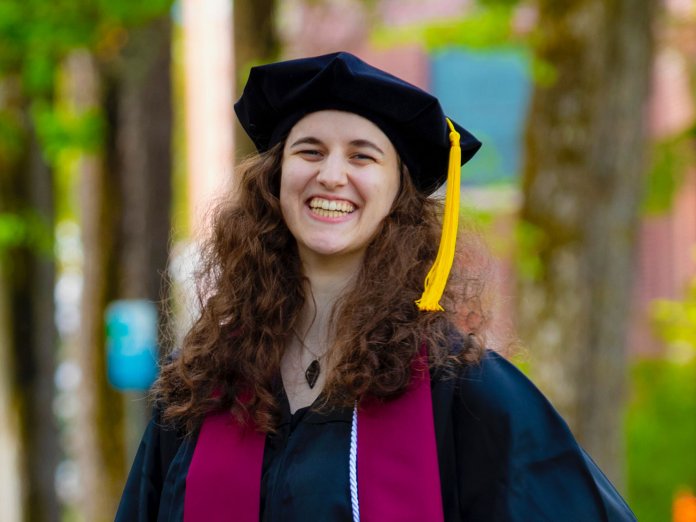
Undergrad research prepared this alum to solve healthcare problems at tech company
Undergrad research prepared this alum to solve healthcare problems at tech company
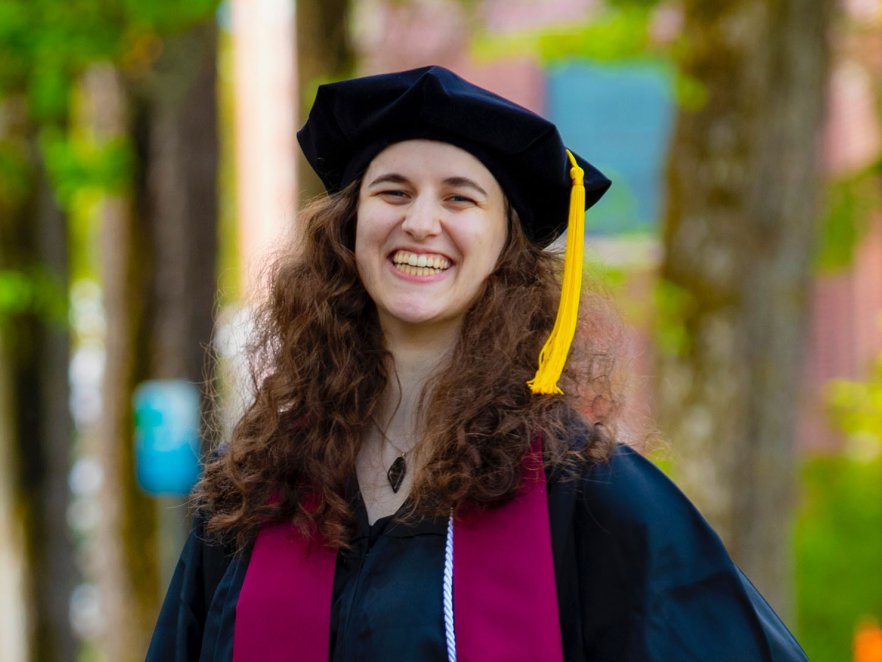

From a construction job to Hewlett Packard: father takes unconventional degree path
From a construction job to Hewlett Packard: father takes unconventional degree path


Alumna plays integral role in Perseverance landing as NASA mission investigator
Alumna plays integral role in Perseverance landing as NASA mission investigator


Putting crystal science to work in medicine, defense and semiconductors
Putting crystal science to work in medicine, defense and semiconductors


High-achieving student earns triple undergrad degrees, returns to OSU as a professor
High-achieving student earns triple undergrad degrees, returns to OSU as a professor


A surprising start in physics leads to a high-tech career in semiconductors
A surprising start in physics leads to a high-tech career in semiconductors