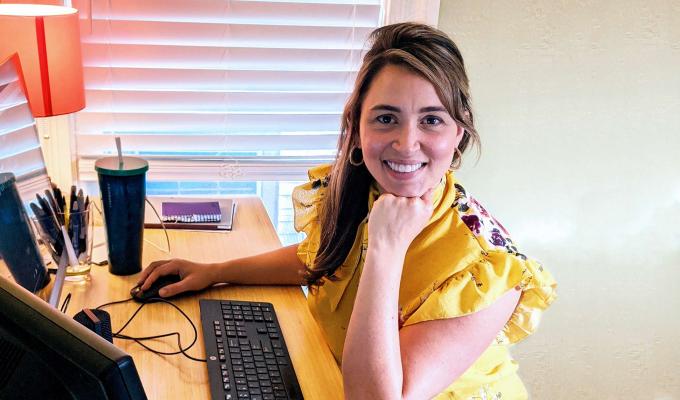
College of Science head advisor Heather Arbuckle has been instrumental in connecting students in need with the College's Equity Promise Emergency Fund. Since the onset of COVID-19, the number of applications for scholarship funds has skyrocketed.
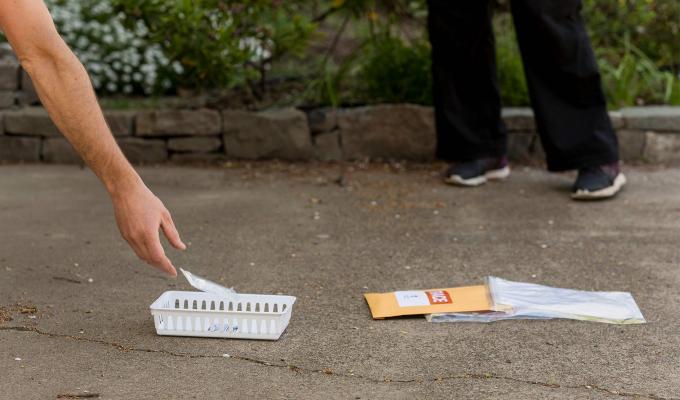
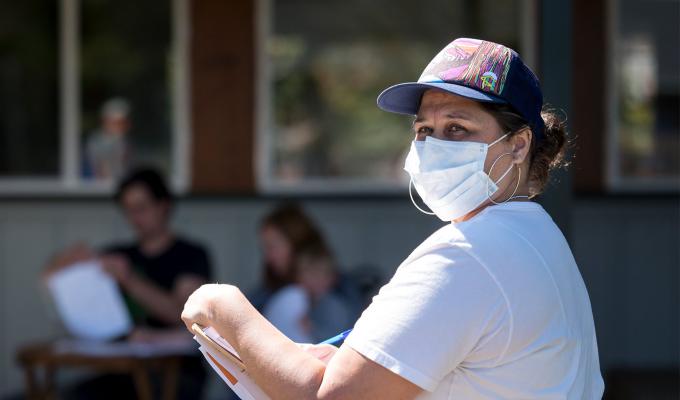
TRACE-COVID-19, the groundbreaking Oregon State University project to determine community prevalence of the novel coronavirus, is expanding to include two days of sampling in Bend.
Results from the second weekend of door-to-door sampling May 2-3 by Oregon State University suggest that about one person in 1,000 in the Corvallis community had the novel coronavirus that causes COVID-19 during that period.
For Rusty Root, trekking a few miles off campus to Printing and Mailing three mornings a week to retrieve the mail for the College of Science isn’t drudgery.
The College of Science is proud to congratulate Charlotte Wickham, an assistant professor in the statistics department, for receiving the 2020 Ecampus Excellence in Online Teaching and Student Engagement Award.
Results from the first weekend of TRACE-COVID-19 door-to-door sampling by Oregon State University suggest that about two people per 1,000 in the Corvallis community had the novel coronavirus that causes COVID-19 when they were tested.
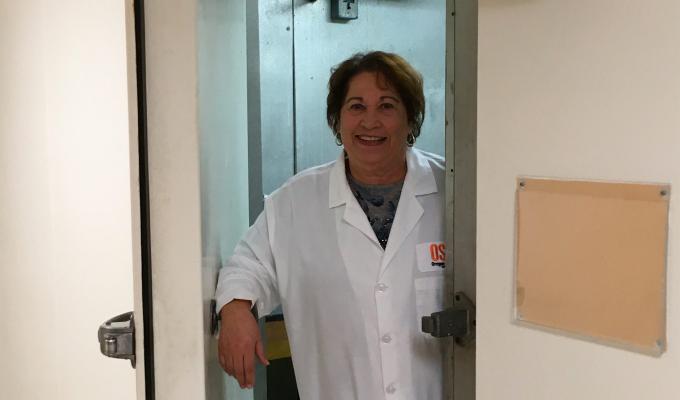
In Nash Hall, the Microbiology Department has 30 labs and auxiliary spaces spread over four stories. When most researchers are staying home or only visiting their labs once a week, Cindy Fisher, Nash Hall building manager, is walking the halls weekly ensuring decades of research is safe and sound.
Mas Subramanian, distinguished professor of chemistry at Oregon State University, has received a special $200,000 grant from the National Science Foundation to pursue the holy grail of color research: an inorganic red pigment that’s vivid, safe and durable.
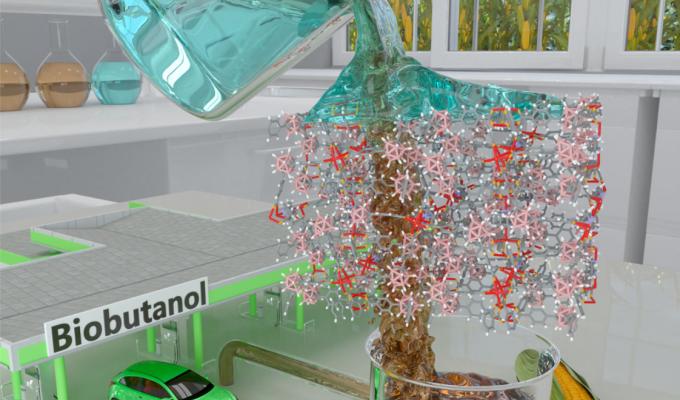
An international research collaboration, led by Kyriakos Stylianou, an assistant professor of chemistry at Oregon State University, has taken an important step toward the commercially viable manufacture of biobutanol, an alcohol whose strong potential as a fuel for gasoline-powered engines could pave the path away from fossil fuels. The researchers are now looking to partner with industry to try to scale up the separation method using the new metal organic framework, says Stylianou, the study’s corresponding author. If it scales well, it could be an important milestone on the road toward non-reliance on fossil fuels.
Marine ecologist Bruce Menge was elected a member of the American Academy of the Arts & Sciences. He is only the sixth OSU faculty member to earn this distinguished honor.