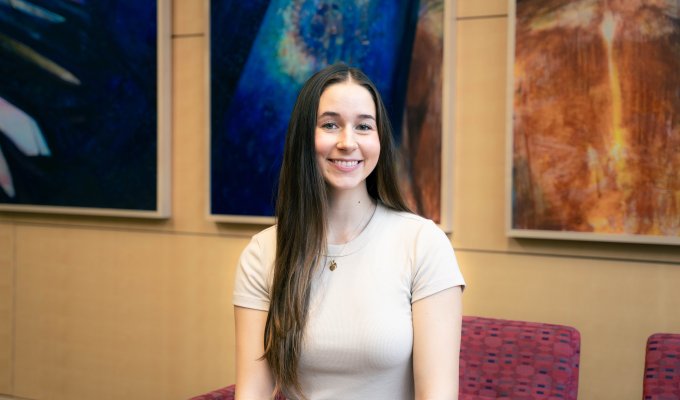
Anna Benson, a student majoring in Marine Biology and International Studies at Oregon State, studied abroad last fall at James Cook University in Townsville, Australia. While she was there she had the opportunity to take a variety of coursework pertaining to her interests in marine biology and indigenous peoples studies. Benson shared her experiences with OSU Global Opportunities.
"Math circles are for kids who like math and for kids who want to like math, so it's possible that they just don't like the math they're doing in classes, and they'll enjoy this more,” said founder Nathan Gibson.
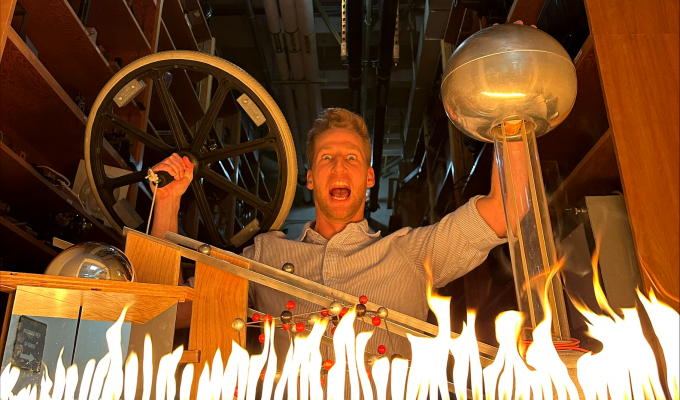
A spinning bicycle wheel can flip your expectations—and your sense of motion—on its head. At Oregon State, hands-on physics demonstrations are making complex concepts tangible while a new effort aims to ensure every student can experience them.
The Wei Family Private Foundation supports Oregon State students working on complex problems across disciplines – from tracking PFAS in urban environments and studying Alzheimer’s disease at the molecular level to modeling vaccine protection and developing new battery materials – advancing work that addresses global challenges in health, the environment and energy.
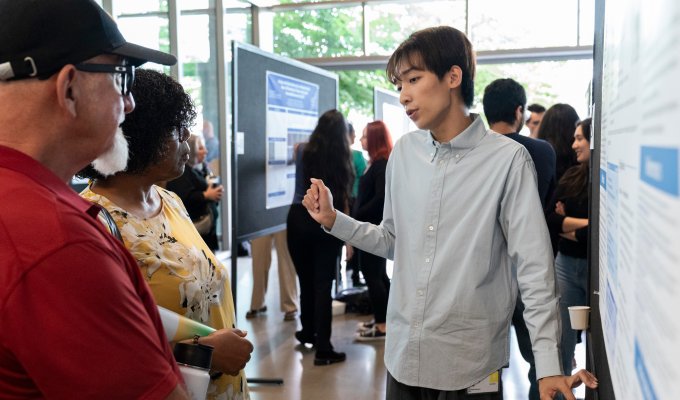
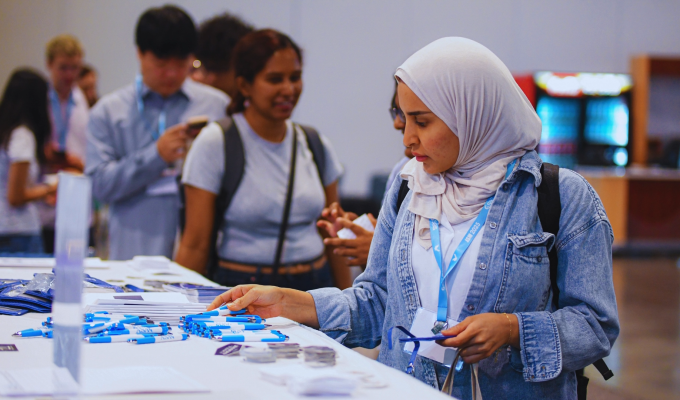
How statistics students can land jobs at top companies like AbbVie — the power of conferences at Oregon State University. Alumna Chenyang Duan (Ph.D. Statistics, ‘23) landed a full-time position as senior statistician at AbbVie, one of the top pharmaceutical companies in the world.
The world’s most urgent challenges are no longer held back by a shortage of data. They’re limited by our capacity to understand the mountains of information we generate every day. From climate modeling and environmental policy to biomedical research and artificial intelligence, data now underpins nearly every scientific and societal challenge. Preparing students for today’s careers, no matter the field, now requires fluency in data. It requires graduates who can move confidently between disciplines, translate complex analysis into clear decisions and understand the ethical responsibility that comes with influence.
After being mentored by an orthopedic surgeon and witnessing her first joint reconstruction in the operating room, Kennedy Duff's preceptorship at the Good Samaritan Regional Medical Center left a life-changing impression.
What do ocean currents, baseball statistics and insect populations have in common? These real-world systems have all become living datasets — transformed by students into interactive apps and digital stories in a new course in data visualization.