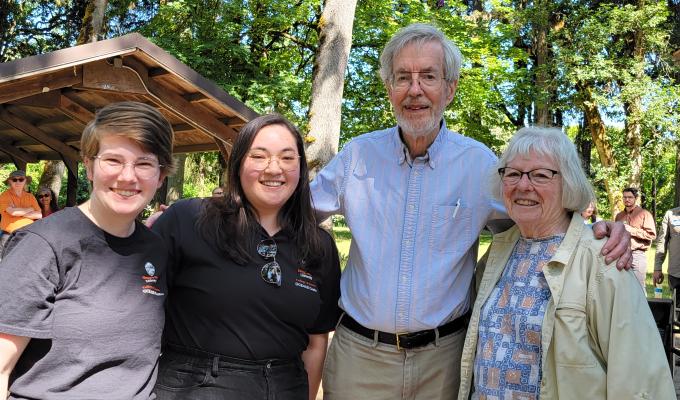
Rather than being swayed by conventional markers of success such as titles and salaries, Parisa Khosropour (B.S., ‘89) advocates for the relentless pursuit of personal excellence. Khosropour is the recipient of the 2023 Distinguished Alumni Achievement Award for her professional accomplishments and mentorship that has brought honor, distinction and visibility to the College of Science.
Five faculty members in the Department of Microbiology were part of a research group that analyzed how the the world’s largest dam removal and restoration project, currently underway on the Klamath River in Oregon and California, will aid salmon populations that have been devastated by disease and other factors.
Biochemistry & biophysics Ph.D. student Sarah Louie has been selected as this year's Mathews Fellow. Louie is working with Professor Rick Cooley of the Center for Genetic Code Expansion.
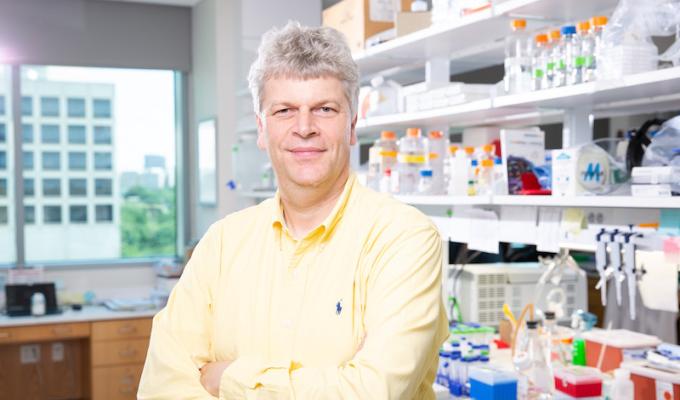
Biophysicist Gaudenz Danuser will present the 38th annual Yunker Lecture, “Cell Shapes Keep Cells in Shape,” focused on the interplay between cell shape and molecular action that governs function, particularly in cancer cells. Monday, Oct. 9 in the Memorial Union Horizon Room at Oregon State University’s Corvallis campus, the lecture will begin at 5 p.m. with a light reception beforehand at 4 p.m
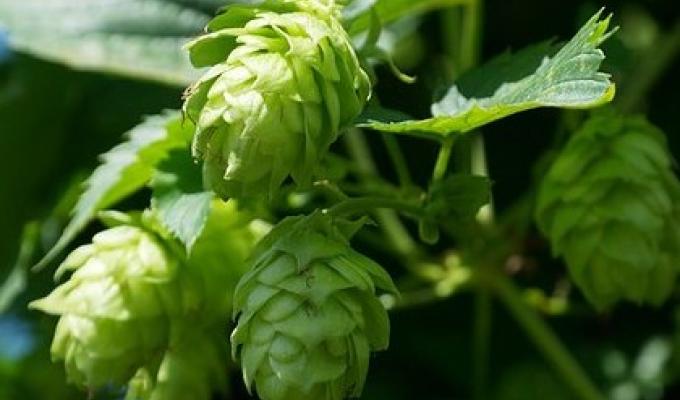
Oregon State researchers, including a member of the College of Science, have shown in a mouse model and lab cultures that a compound derived from hops reduces the abundance of a gut bacterium associated with metabolic syndrome.
Over the 2022-2023 fiscal year, College of Science researchers received $24.2 million in research grants to support groundbreaking science, up 31% from the previous year.
Every student deserves hands-on research opportunities. But how can that be a reality with limitations on time and available faculty?
Alysia Vrailas-Mortimer, College of Science associate professor and principal investigator with the Linus Pauling Institute, and her colleagues in the Fly-CURE consortium stumbled upon a solution they hope to expand across the U.S.
Shaping challenges into opportunities is what chemistry Ph.D. student Abdikani Omar Farah has done nearly all of his life. After growing up in East Africa and experiencing firsthand what it meant to lack access to medicine, Farah now wants to use his career to fill this drug scarcity and give back to his communities.
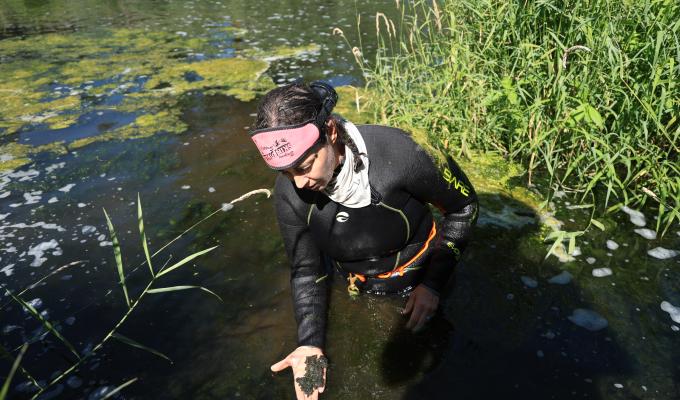
Researchers at Oregon State University have developed a new way to monitor the danger associated with algae blooms: “sniffing” the water for gases associated with toxins.
One hundred million years ago, as iguanodons and triceratops fled from hungry tyrannosaurs, another biological drama played out on the ground where the giant reptiles trod: Male beetles using their supersized antennae in combat for mates.
Four College of Science graduate students were selected for the prestigious NSF Graduate Student Research Fellowship Program in the 2022-23 school year. The program recognizes and supports outstanding graduate students in STEM who are pursuing research-based master’s and doctoral degrees in the U.S.