Graphic showing pulsar light traveling to Earth amid a sea of gravitational waves.
News

Gravitational wave search finds hopeful new clue

An international team, which includes Oregon State graduate and undergraduate students, has gotten closer than ever before to detecting evidence of supermassive black holes.

Chris Beaudry working in a lab with a student
Faculty and Staff

Grants to boost advances in mental health and cancer research

The College of Science awarded two interdisciplinary teams funding to pursue promising leads in mental health and cancer research. One team will investigate the role of the gut-brain axis on sex differences in anxiety, and another will explore ways to develop an synthetic version of HHT-- a rare plant alkaloid that is showing great promise in the development of new medicines for multiple forms of cancer.

Valviloculus pleristaminis.
Integrative Biology

New flower from 100 million years ago brings fresh holiday beauty to 2020

Emeritus Biology Professor George Poinar Jr., has identified a spectacular new genus and species of flower from the mid-Cretaceous period.

Malgorzata Peszysnka standing in front of a tree.
Faculty and Staff

Applied mathematician elected 2020 AAAS Fellow
Malgorzata Peszynska, elected in the section on Mathematics, is the 18th faculty member in the College of Science to be elected as AAAS Fellow.

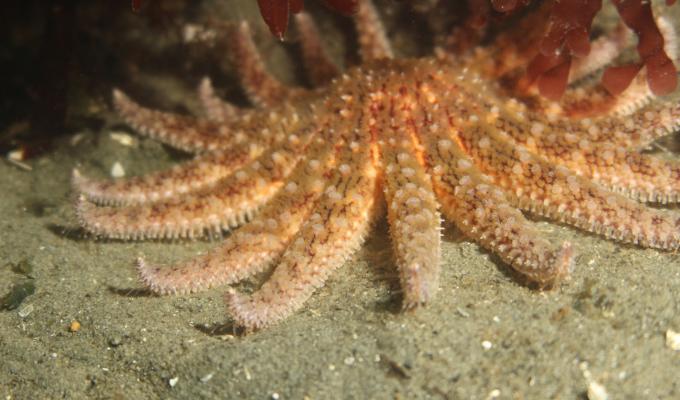
Sunflower sea star
Climate and Oceans

Sea star listed as critically endangered following research by OSU marine ecologist

The iconic sunflower sea star has been listed as critically endangered by the International Union for Conservation of Nature following a groundbreaking population study led by Oregon State University and The Nature Conservancy.

Corals along seafloor in Lizard Island.
Research

Scientists awarded grant to investigate how microbiomes can help species withstand climate change

A pivotal National Science Foundation award will enable Oregon State scientists to investigate how microbes influence their wildlife host’s sensitivity and resilience to disruptive changes in the natural environment.

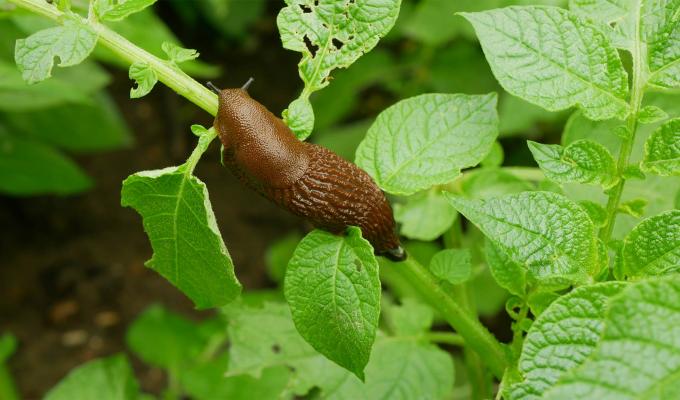
Invasive slug
Integrative Biology

Nematode discovered by scientists to prevent crop damage by invasive slugs

OSU scientists have discovered a microscopic nematode that could be an important biological control against invasive slugs that cause billions of dollars a year in agricultural damage worldwide.

Diseased and healthy corals sitting in bins.
Climate and Oceans

Coral researchers find link between bacterial genus and disease susceptibility

Corals that appear healthy are more prone to getting sick when they’re home to too many parasitic bacteria, new research at Oregon State University shows. “The clear relationship we’ve discovered between this kind of bacteria and disease resistance in Caribbean staghorn coral is a crucial piece of the puzzle for coral restoration efforts in that region,” said study co-author Becca Maher, a Ph.D. candidate at Oregon State.

Aerial shot of coral reef.
Climate and Oceans

Oregon State University scientists shed new light on viruses' role in coral bleaching

Scientists at Oregon State University have shown that viral infection is involved in coral bleaching – the breakdown of the symbiotic relationship between corals and the algae they rely on for energy.

A student and mentor engage wearing masks in the physical-distancing environment.
Research

Mentored research persists in the adapted learning environment

Mentored research persists in the adapted learning environment.

Ensign wasp
Integrative Biology

Salute the venerable ensign wasp, killing cockroaches for 25 million years

An Oregon State University study has identified four new species of parasitic, cockroach-killing ensign wasps that became encased in tree resin 25 million years ago and were preserved as the resin fossilized into amber.