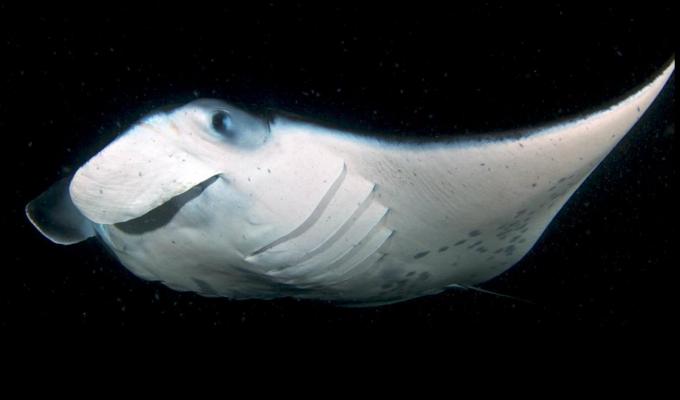
Manta ray swimming in dark ocean
Integrative Biology

Manta rays’ food-capturing mechanism may hold key to better filtration systems

Manta rays’ feeding mechanism may hold clues to a new, improved filtration system.

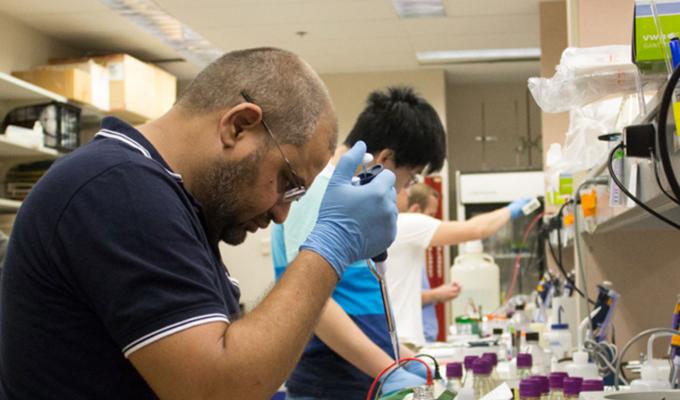
students and volunteers working in genetic code lab
Events

2018 Genetic Code Expansion Conference draws scientists from around the world

The second Genetic Code Expansion (GCE) Conference accelerated fundamental research into the biology of life as well as drug discovery and material science.

track ripped up from earthquake
Data, AI and Robotics

Research finds quakes can systematically trigger other ones on opposite side of Earth

New research shows that a big earthquake can not only cause other quakes, but large ones, and on the opposite side of the Earth.

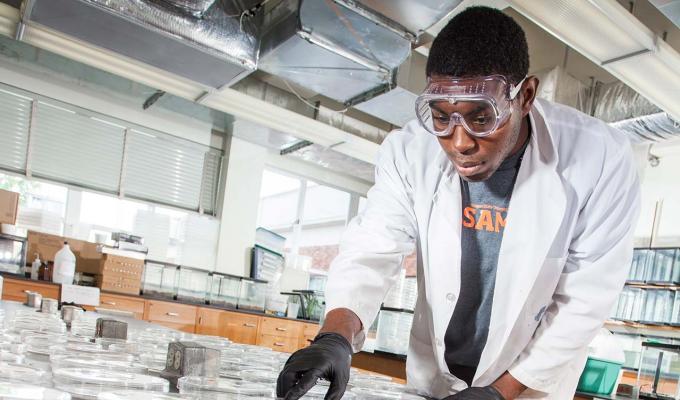
Justin Conner grabbing petri dishes in lab
Faculty and Staff

College of Science research funding from FY18
The College of Science received $11.3 million in research grants and awards in FY18.

microscopic organism on yellow backdrop
Integrative Biology

Those fragrances you enjoy? Dinosaurs liked them first

The compounds behind the perfumes and colognes you enjoy have been eliciting olfactory excitement since dinosaurs walked the Earth.

3D model of blue and purple LC8 protein
Health and Biotechnology

Intrinsically disordered protein mystery solved

Biophysicist Elisar Barbar and team have discovered that the intrinsically disordered state of the protein ASCIZ, a key transcription factor within cells, plays a major role in regulating production of the protein LC8.

colorful RNA and protein DNA sequencing
Biochemistry & Biophysics

Deep learning cracks the code of messenger RNAs and protein-coding potential

Biochemist and biophysicist David Hendrix and collaborators have used deep learning to decipher which ribonucleic acids have the potential to encode proteins.

coral soaking in water on rock
Climate and Oceans

Size the main factor in predicting how calcifying organisms will respond to ocean acidification

Size is the main factor that predicts how calcifying organisms will respond to ocean acidification, according to a new study by biology Ph.D. candidate Allison Barner.

Walter Loveland with colleague receiving award
Chemistry

Famed nuclear chemist elected Fellow of American Chemical Society

Chemistry professor Walter Loveland named a 2018 Fellow by the American Chemical Society.

Amber Vogel sitting in office space
Graduate Students

Amber Vogel selected as 2018 Mathews Fellow in biochemistry to study drug discovery

Ph.D. student Amber Vogel received the 2018-19 Christopher and Catherine Mathews Graduate Fellowship in biochemistry and biophysics.

Detailed model of two cells dividing
Physics

Solved protein puzzle opens doors to new designs for cancer drugs

OSU biophysicist Weihong Qiu has solved a longstanding puzzle concerning the design of molecular motors, paving the way toward new cancer therapies.

Felipe Barreto looking at lab samples with student
Integrative Biology

New species may arise from rapid mitochondrial evolution

Genetic research has shed new light on how isolated populations of the same species evolve toward reproductive incompatibility and thus become separate species.