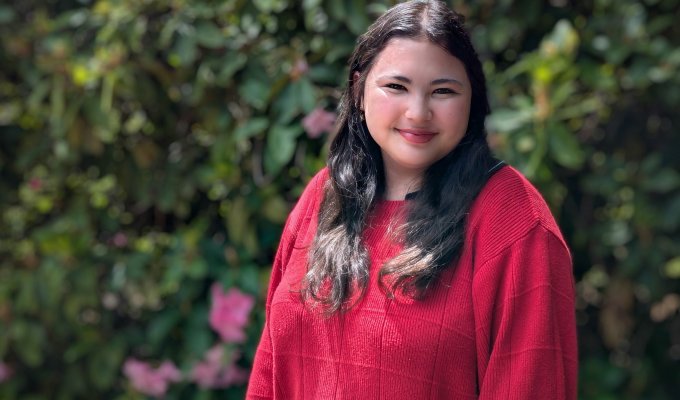
A College of Science alumna and a Ph.D. student have been awarded 2025–26 Fulbright U.S. Student Program grants to conduct research abroad. They join 17 College of Science students and alumni who have earned Fulbright honors over the past decade.
Audrey Bivens combined lab work, language immersion, and cultural exploration in Spain, gaining hands-on experience in crystallography while building confidence and career skills.
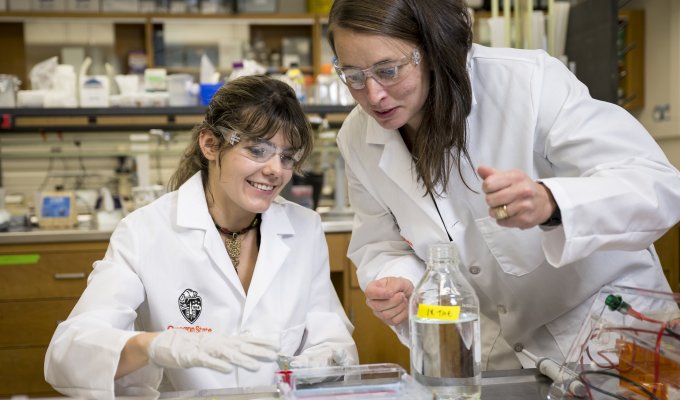
Kelly Shannon, a Ph.D. student in the College of Science’s Department of Microbiology, was awarded a transformative educational award from the U.S. Department of Energy.
A research team in the College of Science has revealed how cells move lipids — essential fats — between membranes, a process fundamental to brain health, metabolism and immunity.
Wine science changed Emily Kaneshiro’s life. From riding bikes in the Netherlands to landing a summer internship at a small, family-owned winery in France’s Loire Valley, she fell in love with fermentation science
Oregon State physicist Heidi Schellman has earned one of science’s highest honors for her pioneering work on the elusive neutrino. Her leadership in the Deep Underground Neutrino Experiment is helping to unlock the mystery of why the universe is made of matter instead of antimatter.
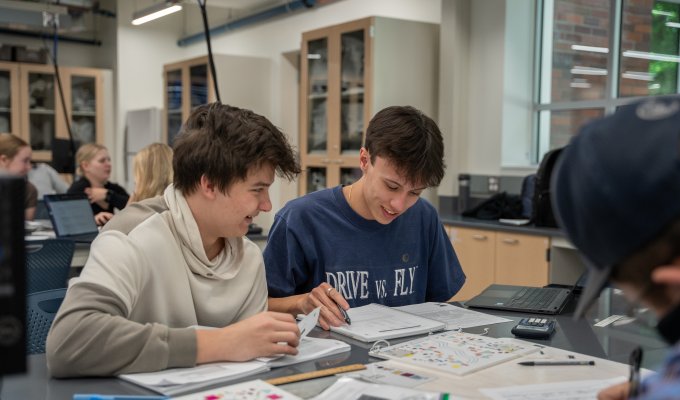
As part of the College of Science's innovative course-based undergraduate research experiences (CUREs), students aren’t just learning about science — they’re doing authentic science. CUREs are an innovative pedagogical model where students engage in original research within the context of a regular course. This offers a research-intensive learning experience that is more accessible than research opportunities outside the classroom.
A graduate student in Oregon State University’s Department of Microbiology working microbiologist Sascha Hallett's lab, Nilanjana Das is using art to give the invisible world of fish parasites new visibility — and new meaning. Through large, glowing sculptures made of tracing paper and reed, she brings public attention to the microscopic organisms threatening aquatic ecosystems.
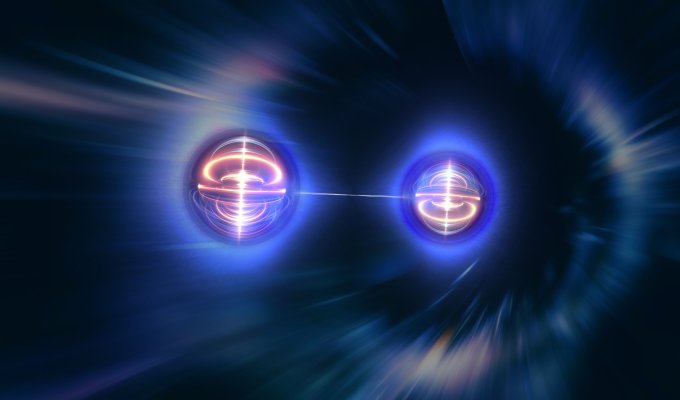
As we mark the 100th anniversary of quantum mechanics and recognize World Quantum Day on April 14, it’s the perfect moment to spotlight Oregon State’s connection to this revolutionary science. Carl Kocher, now professor emeritus of physics, conducted the world’s first experimental observation of quantum entanglement in the 1960s — work that helped lay the foundation for decades of breakthroughs in quantum research.
The College of Science will host its inaugural Graduate Research Showcase from 11:30 a.m. to 2:30 p.m. on Friday, May 16, 2025 in the Memorial Union Horizon Room.
Maude David’s research sits at the crossroads of microbiology, neuroscience and artificial intelligence — an intersection that may hold the key to understanding some of the most complex disorders affecting the human brain and unlocking the secrets of deep-sea ecosystems.