Gabriela Cortes Cortes is proud not to have let any obstacle, including a pandemic or the challenges of a first-generation student, hold her back from earning a four-year degree in the College of Science.
Kendra Krebs's interest in science started when she worked as a hair stylist in a salon. Now, this microbiology senior has her sights set on medical school.
Jennifer Smucker, mathematics senior, heads to Virginia Tech in the fall to pursue a Ph.D. in math. She hopes to be a role model for other women in STEM.
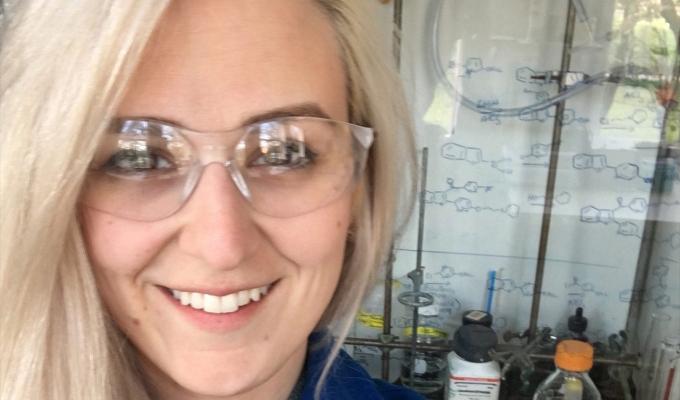
Ilana Gottfried-Lee has spent the past two years performing cutting-edge research in the Unnatural Protein Facility - diving headfirst into a project that has never been attempted before.
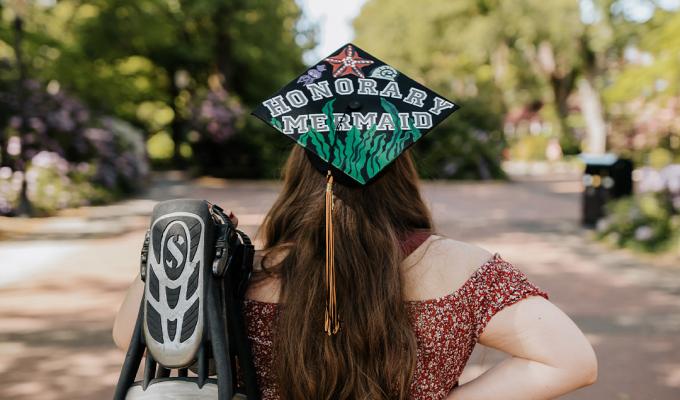
Simone Burton, an Honors biology major with an option in marine biology, has pushed through more obstacles than she could have imagined only four years ago. Now, she is confident that she will find a powerful way to protect marine life through a career in conservation, science communication and outreach.
Biden tapped the celebrated Oregon State marine biologist Jane Lubchenco as one of his top advisers. Lubchenco is deputy director for climate and environment at the Office of Science and Technology Policy.
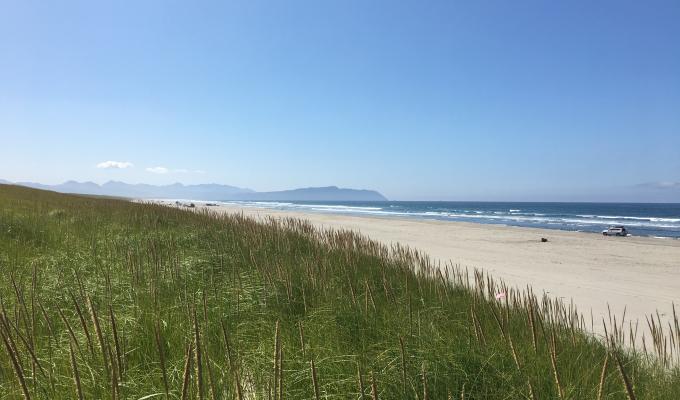
Two species of sand-stabilizing beachgrasses introduced to the Pacific Northwest starting in the early 1900s are hybridizing, raising new questions about impacts to the coastal ecosystems the non-native plants have been engineering for more than a century.
With expertise spanning marine ecology, biofuel development, new modes of energy capture, evolutionary genetics and the microbiomes of coral reefs, OSU is committed to research that puts the environment first.
Malgorzata Peszynska, professor of applied mathematics at Oregon State University, has received the Society for Industrial and Applied Mathematics (SIAM) Geosciences Career Prize.
Biochemists have taken a key step toward new drugs and vaccines for combating COVID-19 with a deep dive into one protein’s interactions with SARS-CoV-2 genetic material.