Five incoming graduate students were awarded 2021-2022 ARCS Foundation Oregon Chapter scholarships. This year, ARCS Oregon is supporting a record number of 79 scholars: 25 at OHSU, 44 at OSU and 10 at UO.
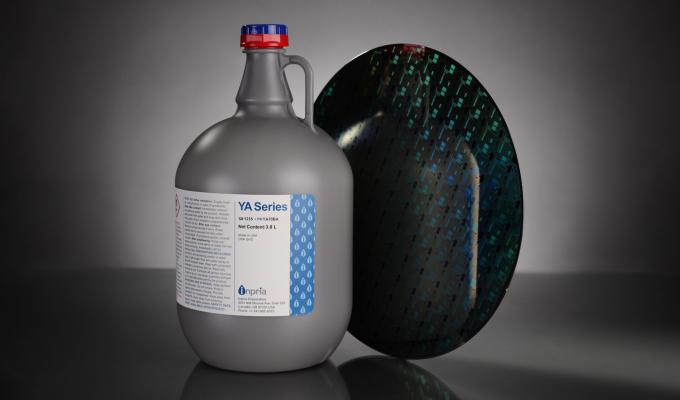
Inpria Corporation, which got its start at Oregon State and which has attracted investors such as Intel and Samsung with its revolutionary material used in microchips, has agreed to be acquired by Japanese firm JSR for $514 million.
College of Science Research and Innovation Seed (SciRIS) awards fund projects based on collaborative research within the College of Science community and beyond.
Oregon State University chemistry professor May Nyman has been selected as one of the leaders of a $24 million federal effort to develop technologies for combating climate change by extracting carbon from the air. The work by Nyman, OSU computational chemist Tim Zuehlsdorff and Argonne’s Ahmet Uysal and Michael Sinwell is part of a nine-project carbon capture and storage mission being funded by the U.S. Department of Energy.
As a senior in Honor's chemistry, Linus Unitan hopes the leadership skills he fostered at Oregon State will make him a strong candidate as he begins applying for medical school this spring.
Chuck Armstrong graduated from OSU with a degree in basic science in 1966, having majored in chemistry. He credits his science education for teaching him how to think and develop the skills he would use in his career. “In the sciences, you are taught how to critically and analytically think,” he says.
A pivotal Oregon State chemistry project – funded by a $493K grant from the M.J. Murdock Charitable Trust – will create a distinctive collaboration center for academic and industrial researchers that will bring synthetic chemistry into the digital age.