On April 22, the College of Science celebrated its 2021 faculty and staff awards in a virtual ceremony, recognizing excellence in teaching, mentoring and advising.
As a member of the Yakama Nation, Microbiology Ph.D. student Corbin Schuster is interested in the study of human diseases that have a higher incidence among Native peoples, such as toxoplasmosis (a parasitic infection), as well as diseases of salmon, which are central to the food, culture and religion of the Yakama people. He is thankful to not have to separate his culture from his career.
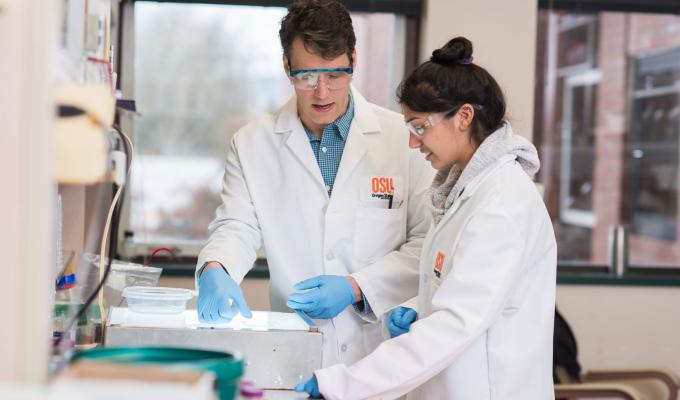
Lab work plays a critical role in many scientific fields – which is why this year, as classes moved online, Oregon State’s science labs moved quickly to adapt.
An increased interest in science and medicine is drawing a new generation of students to enroll in the OSU College of Science pre-med program, where they're gaining real work experiences and receiving strong preparation for medical school and beyond.
Román D. Hernández (’92), an alumnus of the College of Science, received the Diversity, Equity and Inclusion Alumni Legacy Award on the occasion of the 39th annual Dr. Martin Luther King, Jr. Celebration on Monday, January 18, 2021 at Oregon State University.
The College of Science awarded two interdisciplinary teams funding to pursue promising leads in mental health and cancer research. One team will investigate the role of the gut-brain axis on sex differences in anxiety, and another will explore ways to develop an synthetic version of HHT-- a rare plant alkaloid that is showing great promise in the development of new medicines for multiple forms of cancer.
A pivotal National Science Foundation award will enable Oregon State scientists to investigate how microbes influence their wildlife host’s sensitivity and resilience to disruptive changes in the natural environment.
Researchers have found that a type of common gut bacteria sometimes associated with inflammation, abscesses, bowel disease and cancer has a major silver lining: It seems to help prevent cardiovascular disease.
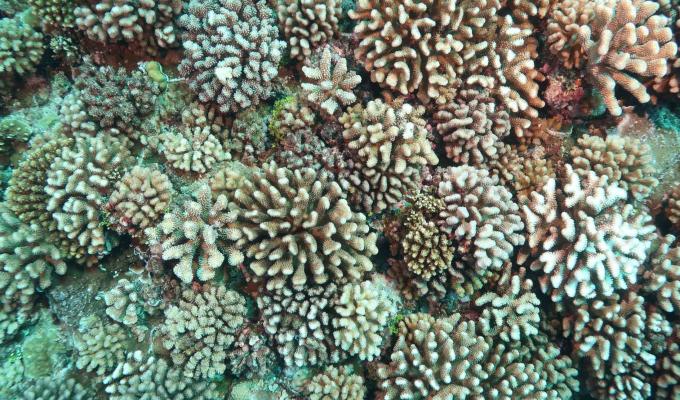
Corals that appear healthy are more prone to getting sick when they’re home to too many parasitic bacteria, new research at Oregon State University shows. “The clear relationship we’ve discovered between this kind of bacteria and disease resistance in Caribbean staghorn coral is a crucial piece of the puzzle for coral restoration efforts in that region,” said study co-author Becca Maher, a Ph.D. candidate at Oregon State.
Scientists at Oregon State University have shown that viral infection is involved in coral bleaching – the breakdown of the symbiotic relationship between corals and the algae they rely on for energy.
The endowed professorship recognizes Rebecca Vega Thurber’s distinguished contributions to several fields of microbiology that encompass coral reef ecology, virology, marine disease ecology and metagenomics.