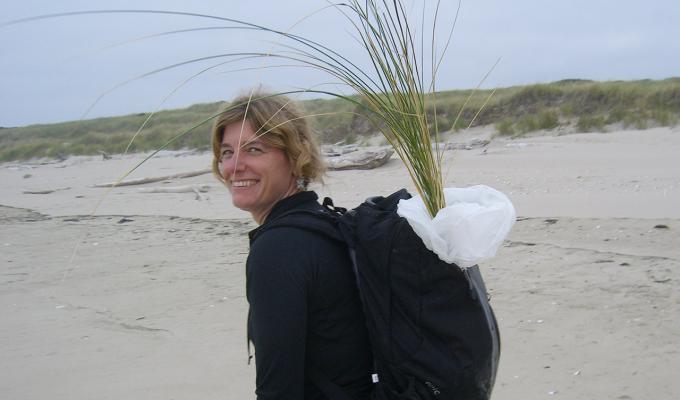
Sally D. Hacker walking though sand dune
Faculty and Staff

Scientist elected AAAS Fellow for distinguished contributions to coastal ecology

The American Association for the Advancement of Science (AAAS) announced Sally D. Hacker, professor of integrative biology, as a 2017 Fellow last week.

ocean wave forming
Climate and Oceans

Biologists find that climate change threatens coral symbiosis

Scientists from the Department of Integrative Biology have found that for reef-building corals, not just any symbiotic algae will do.

tide pool on Oregon Coast
Climate and Oceans

Summer "dead zone" threat rises on Oregon Coast

The Oregon coast is now facing annual threats from hypoxia, or low oxygen, and scientists liken the phenomenon to wildfire season.

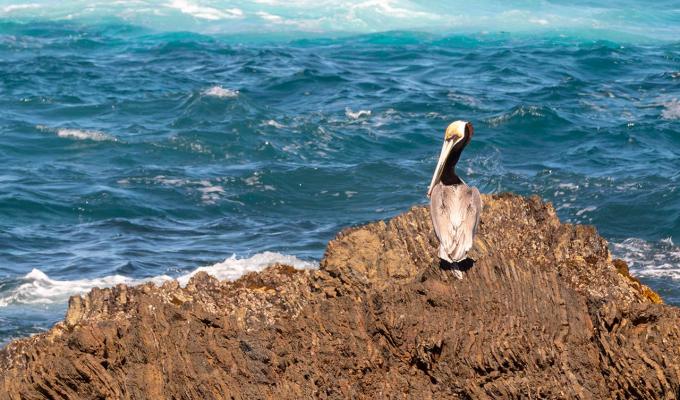
Pelican sitting on rock in front of ocean
Students

SURE Science students spend summer researching oceans, new planets and human health

Thirty-one SURE Science students spent their summers immersed in the beauty and drama of science.

coral at bottom floor of shallow ocean
Students

Marine science student carries on Wei Family Foundation founder's love of travel

Half a world away in Australia, Milan Sengthep, a Wei Family Foundation Scholar, studied with world-renowned marine scientists at James Cook University.

microscopic view of mating diatoms
Microbiology

Diatoms have sex after all, and ammonium puts them in the mood

New research shows a species of diatom, a single-celled algae thought to be asexual, does reproduce sexually—a finding with important biotechnology implications.

Sarah Henkel on a boat working with marine research machinery
Climate and Oceans

Surveying seafloor animals for offshore renewable energy

Marine biologist Sarah Henkel's survey of sea floor animals is helping the development of offshore renewable energy facilities on the west coast.

sea anemone swaying on ocean floor
Integrative Biology

Biologist part of $14 million NSF program for improved genomic tools

Biologist Virginia Weis is one of eight researchers selected for a new $14 million NSF program for enabling discovery through genomic tools.

Jane Lubchenco in front of ice glacier wearing life jacket
Climate and Oceans

Marine reserves can mitigate effects of climate change

Marine biologist Jane Lubchenco and an international team of scientists have found that marine reserves can help protect the planet from global warming.

fish and coral in their underwater ecosystem
Integrative Biology

Marine ecologist finds highly acidified ocean water along the West Coast

A three-year survey of the California Current System found persistent, highly acidified water throughout this ecologically critical nearshore habitat.

Stephen Giovannoni sitting in lobby
Microbiology

Study illuminates fate of marine carbon in last steps toward sequestration

A new study by Oregon State microbiologists reveals how deep-water bacteria's genomes break down carbon molecules.

triggerfish swimming in shallow ocean
Integrative Biology

Detailed study of predators' effects on complex, subtidal food web

In the Galapagos Islands, scientists from Oregon State University and Brown University examined the relationships among predatory fishes, urchins, algae, sea lions and sharks.