Scientists led by an Oregon State University chemistry researcher are closing in on a new tool for tackling the global problem of weedkiller-tainted groundwater.
Kyriakos Stylianou of the OSU College of Science led an international team that identified a material known as a metal-organic framework, or MOF, that showed an ability to completely remove, and also break down, the oft-used herbicide glyphosate.
Congratulations to three Department of Chemistry faculty members awarded endowed positions, recognizing their exceptional contributions to solving major challenges in material science currently facing humankind. May Nyman is the Terrence Bradshaw Chemistry Professor; David Ji is the Bert and Emelyn Christensen Professor; and Chong Fang is the Patricia Valian Reser Endowed Faculty Scholar.
Shaping challenges into opportunities is what chemistry Ph.D. student Abdikani Omar Farah has done nearly all of his life. After growing up in East Africa and experiencing firsthand what it meant to lack access to medicine, Farah now wants to use his career to fill this drug scarcity and give back to his communities.
Researchers in the College of Science have demonstrated the potential of an inexpensive nanomaterial to scrub carbon dioxide from industrial emissions. The findings, published in Cell Reports Physical Science, are important because improved carbon capture methods are key to addressing climate change, said Oregon State's Kyriakos Stylianou, who led the study.
Scientists led by an Oregon State College of Science researcher have developed a new electrolyte that raises the efficiency of the zinc metal anode in zinc batteries to nearly 100%, a breakthrough on the way to an alternative to lithium-ion batteries for large-scale energy storage.
Four-dimensional tissue self-assembly, integrated river health and ultra-tiny spectrometers: The 2022 College of Science Research and Innovation Seed (SciRIS) award recipients will use collaboration to fill critical knowledge gaps across numerous scientific disciplines to drive real-world impact.
For many OSU materials scientists, fighting climate change means finding cleaner energy sources, developing sustainable alternatives to wasteful industry processes, and drawing on unconventional means to reduce the pollution already in the environment.
Seed funding from the College of Science Research and Innovation Seed (SciRIS) program continues to bolster ambitious and expansive research projects across biomedical science, fluid dynamics, quantum mechanics and more.
Path-breaking innovations from the College of Science at Oregon State University hold answers to critical problems in the environment, energy and healthcare.
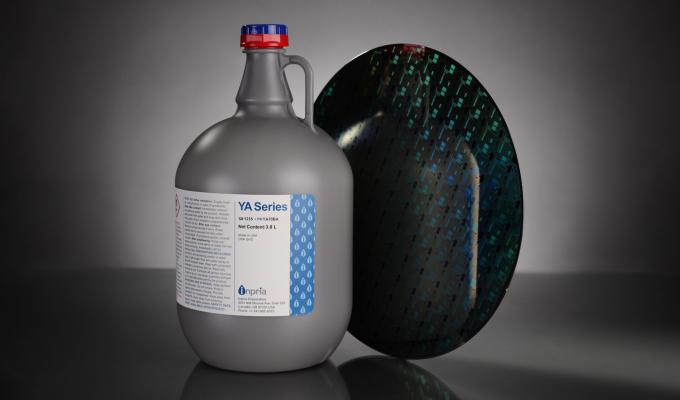
Inpria Corporation, which got its start at Oregon State and which has attracted investors such as Intel and Samsung with its revolutionary material used in microchips, has agreed to be acquired by Japanese firm JSR for $514 million.
College of Science Research and Innovation Seed (SciRIS) awards fund projects based on collaborative research within the College of Science community and beyond.
A pivotal Oregon State chemistry project – funded by a $493K grant from the M.J. Murdock Charitable Trust – will create a distinctive collaboration center for academic and industrial researchers that will bring synthetic chemistry into the digital age.