Path-breaking innovations from the College of Science at Oregon State University hold answers to critical problems in the environment, energy and healthcare.
The NIH will fund Oregon State's GCE4All for a total of $5.6M over five years, solidifying the University as a world leader in GCE protein engineering.
Carbon dioxide can be harvested from smokestacks and used to create commercially valuable chemicals thanks to a novel compound developed by a scientific collaboration led by Assistant Professor of Chemistry Kyriakos Stylianou.
New Excellence in Microbiology Faculty Scholar Kimberly Halsey researches the marine carbon cycle, fosters student engagement and promotes inclusivity in admissions.
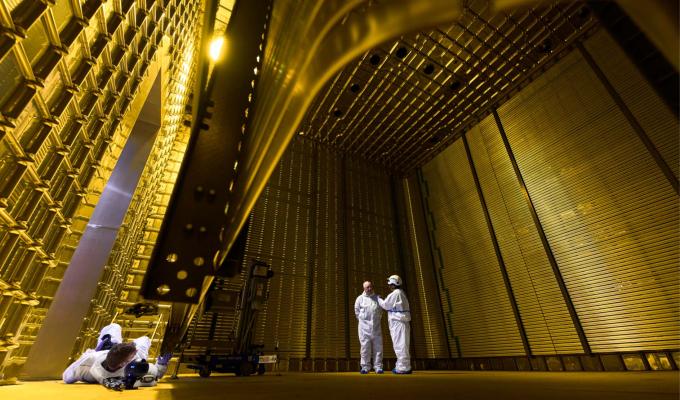
Professor of Physics Heidi Schellman is leading an international experiment to explore the existence of the universe. The project, titled “Essential Computing and Software Development for the DUNE experiment,” has received a $3M grant from the Department of Energy.
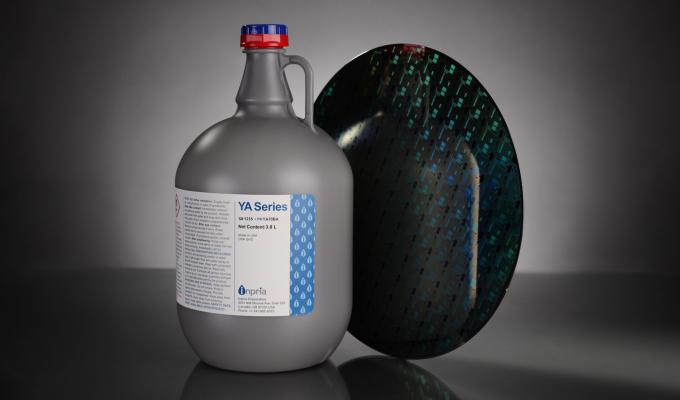
Inpria Corporation, which got its start at Oregon State and which has attracted investors such as Intel and Samsung with its revolutionary material used in microchips, has agreed to be acquired by Japanese firm JSR for $514 million.
College of Science Research and Innovation Seed (SciRIS) awards fund projects based on collaborative research within the College of Science community and beyond.
Oregon State University chemistry professor May Nyman has been selected as one of the leaders of a $24 million federal effort to develop technologies for combating climate change by extracting carbon from the air. The work by Nyman, OSU computational chemist Tim Zuehlsdorff and Argonne’s Ahmet Uysal and Michael Sinwell is part of a nine-project carbon capture and storage mission being funded by the U.S. Department of Energy.
University promotion and tenure criteria and processes should be broadened and made more inclusive to value innovation, entrepreneurship and other forms of scholarly impact, a collaboration led by Oregon State University asserts today in a paper published in Science.
College of Science faculty were awarded $24.4 million in new research grants and awards in fiscal year 2021, a 55% increase over the average of the previous three years and one of the highest award levels ever.
Biophysicist Afua Nyarko has received $820K over a four-year period to conduct research into biological processes important for the regulation of cell growth, memory and kidney function. She hopes that her research will broaden the scope of scientific knowledge, opening new doors for disease treatment.