Jerri Bartholomew, the Emile F. Pernot Distinguished Professor and Head of the Department of Microbiology was selected as a 2019 Fellow of the American Fisheries Society, the world’s oldest and largest organization dedicated to advancing fisheries science and conserving fisheries resources.
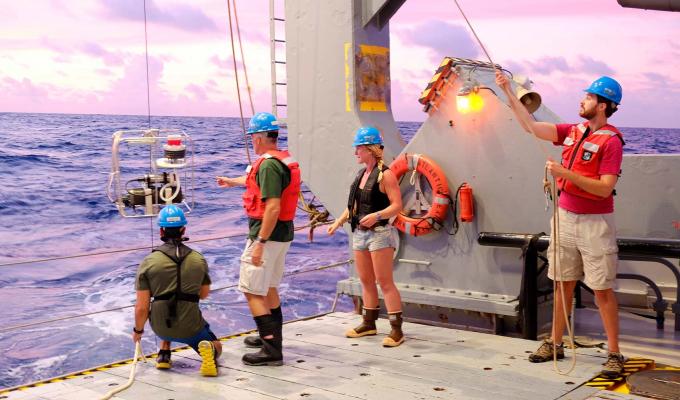
For the first time, scientists have taken a winter sampling of phytoplankton in the North Atlantic. The results revealed that the carbon-absorbing cells were smaller than what scientists expected, meaning a key weapon in the fight against excess carbon dioxide in the atmosphere may not be as powerful as previously believed.
Mathematics graduate student Ruby Chick pursues interdisciplinary research on microplastics through the National Science Foundation Research Traineeship Program at Oregon State University.
Integrative Biology Professor Sally Hacker is one of five Oregon Sea Grant omnibus funding recipients. She will study a new hybrid super beachgrass along coastal dunes in the Pacific Northwest.
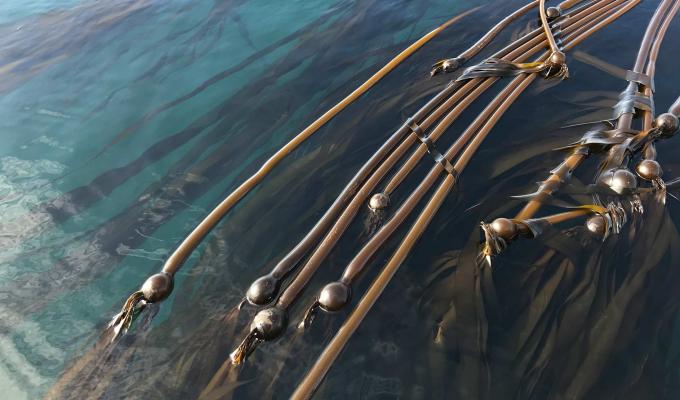
Tapping into 35 years of satellite imagery, researchers at Oregon State University have dramatically enlarged the database regarding how climate change is affecting kelps, near-shore seaweeds that provide food and shelter for fish and protect coastlines from wave damage.
The Science Research and Innovation Seed awards were given to four multidisciplinary research teams working on cancer diagnostics and materials science.
"Saving Atlantis" producers followed coral microbiologist Rebecca Vega Thurber and other researchers from Oregon State and around the world who are uncovering the causes of coral decline and looking to find solutions so they don’t completely disappear.