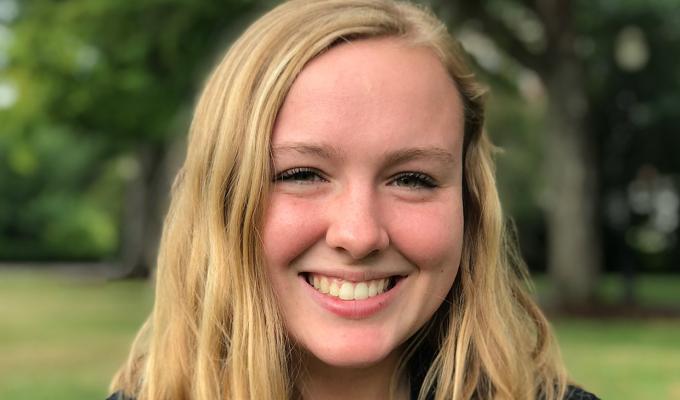
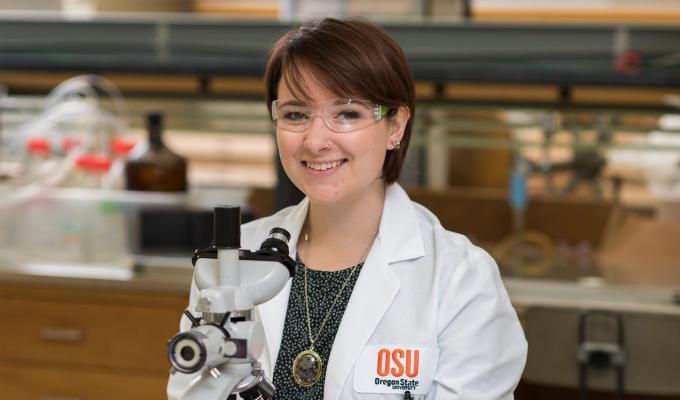
Megan Tucker will graduate next month with a substantial amount of research experience under her belt: She was awarded the Mickey Leland Energy Fellowship, which gave her the opportunity to work on an interdisciplinary team at the National Energy Technology Laboratory (NETL) in Albany, Oregon, during the summer of 2019. The new knowledge gained from her internship helped her land a job as a technical writer with Amazon Web Services — a subsidiary of Amazon that provides on-demand cloud computing platforms to individuals, companies and governments.
Do you have questions about OSU’s College of Science or the chemistry degree? Join us on Tuesday, May 26 at 3:30 p.m. PST for a chemistry Ask Me Anything information session for admitted College of Science students.
A Strawberry Princess who gets excited about roadkill. A valedictorian who doesn’t test well. A photographer who focuses on the unlovely. This is the stuff College of Science presidential scholars are made of.
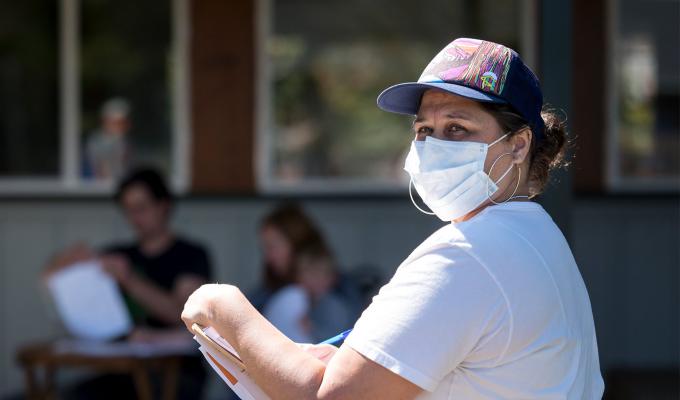
Results from the second weekend of door-to-door sampling May 2-3 by Oregon State University suggest that about one person in 1,000 in the Corvallis community had the novel coronavirus that causes COVID-19 during that period.
For Rusty Root, trekking a few miles off campus to Printing and Mailing three mornings a week to retrieve the mail for the College of Science isn’t drudgery.
Two Ph.D. students in the College of Science— Grace Deitzler in microbiology and John Stepanek in integrative biology — are among three OSU students to receive prestigious National Science Foundation (NSF) Graduate Research Fellowship Program (GRFP) awards in 2020.
The College of Science is proud to congratulate Charlotte Wickham, an assistant professor in the statistics department, for receiving the 2020 Ecampus Excellence in Online Teaching and Student Engagement Award.
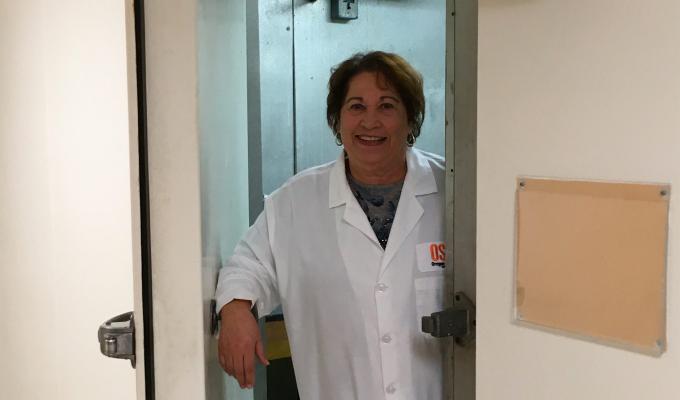
In Nash Hall, the Microbiology Department has 30 labs and auxiliary spaces spread over four stories. When most researchers are staying home or only visiting their labs once a week, Cindy Fisher, Nash Hall building manager, is walking the halls weekly ensuring decades of research is safe and sound.
Results from the first weekend of TRACE-COVID-19 door-to-door sampling by Oregon State University suggest that about two people per 1,000 in the Corvallis community had the novel coronavirus that causes COVID-19 when they were tested.