Photo of Kidder Hall's front door
College of Science

Lending a hand: College of Science donates PPE to help battle public health pandemic

The College of Science is stepping up during this national pandemic, joining in Oregon State’s drive and providing much-needed supplies to the OSU community and healthcare workers here in Oregon. The impact so far? Thousands of donations, including sanitizer, gloves, masks and lab coats.

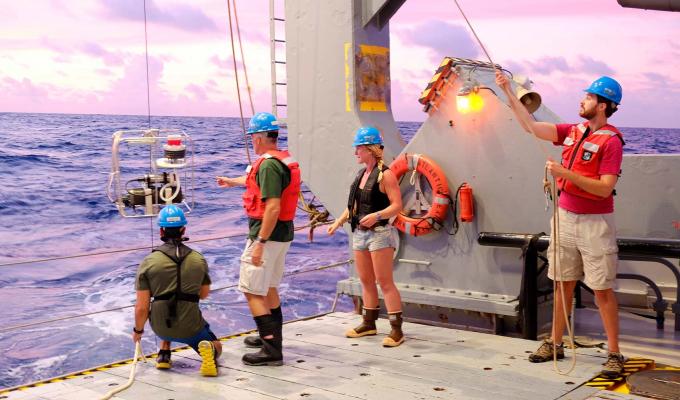
Researchers take a phytoplankton sample on an OSU research vessel.
Microbiology

Smaller than expected phytoplankton may mean less carbon sequestered at sea bottom

For the first time, scientists have taken a winter sampling of phytoplankton in the North Atlantic. The results revealed that the carbon-absorbing cells were smaller than what scientists expected, meaning a key weapon in the fight against excess carbon dioxide in the atmosphere may not be as powerful as previously believed.

Justin Sanders sitting in lab
Microbiology

Microbiology alum helps produce critical COVID-19 test component for Oregon hospitals

When Samaritan Health Services asked Oregon State University last week if there was anything the university could do to help, researches in the Carlson College of Veterinary Medicine realized there was something they could do.

Joaquin Rodriguez
Biochemistry & Biophysics

Finding clarity and calm during a global pandemic

Joaquin Rodriguez, a biochemistry and biophysics senior doing research on viruses, explains why the coronavirus has a high rate of transmission.

Mikayla Pivec standing in outdoor plaza, wearing a USA basketball jersey
Graduate Students

Basketball star broadens her reach

After a sudden and disappointing end to a phenomenal season, award-winning point guard Mikayla Pivec has left a legacy at Oregon State that will be remembered long after she graduates.

Mathematics graduate student Ruby (Ali) Chick
Graduate Students

Mathematics graduate student explores marine systems through an interdisciplinary lens

Mathematics graduate student Ruby Chick pursues interdisciplinary research on microplastics through the National Science Foundation Research Traineeship Program at Oregon State University.

Sally Hacker and a graduate student study beach grasses along the Pacific Northwest coast
Faculty and Staff

Can a new super beach grass save our coastal dunes?
Integrative Biology Professor Sally Hacker is one of five Oregon Sea Grant omnibus funding recipients. She will study a new hybrid super beachgrass along coastal dunes in the Pacific Northwest.

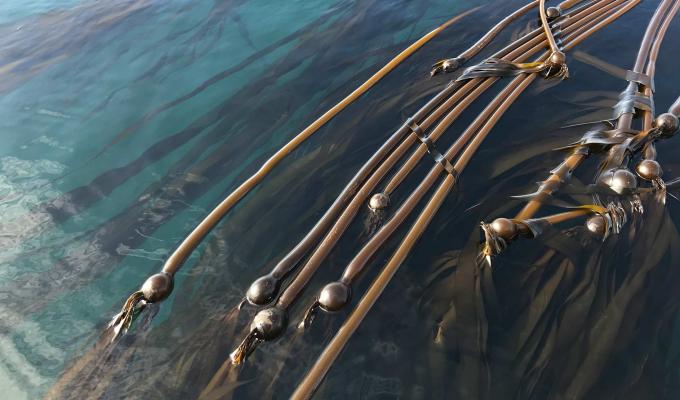
Bull Kelp floating on ocean surface
Integrative Biology

Satellite data boosts understanding of climate change’s effects on kelp

Tapping into 35 years of satellite imagery, researchers at Oregon State University have dramatically enlarged the database regarding how climate change is affecting kelps, near-shore seaweeds that provide food and shelter for fish and protect coastlines from wave damage.

Lori Kayes talking to class from white board
Diversity in Science

Inclusive excellence grant leads to research advances on breaking barriers in STEM courses

Thanks to a grant from the Howard Hughes Medical Institute’s Inclusive Excellence Initiative, faculty have been working toward breaking down barriers some students face when pursuing a STEM education.

blue numbers and code loading on translucent screen with black backdrop
Statistics

International Bayesian statistics and data science conference comes to Oregon

The four-day data science conference, August 11-14, 2020, will include two days of tutorials followed by talks, posters, open discussions and statistical modeling.

Warren Washington pictured with his wife Mary in front of the Valley Library
Diversity in Science

Climate science pioneer extends legacy with scholarship gift

Nationally known climate scientist and Oregon State University alumnus Warren Washington and his wife, Mary, have established OSU’s largest endowed scholarship fund for students engaged in climate studies.

A Chinook Salmon swimming in white water
Microbiology

Unique non-oxygen breathing animal discovered

Oregon State microbiologists have made a stunning discovery. The researchers have discovered the first animal that doesn't need oxygen to live. Their unexpected finding changes one of science's assumptions about the animal world.