Program overview
- Department: Statistics
- Degrees offered: Bachelor of Science, Honors Bachelor of Science
- Minor: (anticipated Fall 2026)

“I felt really supported while I was at Oregon State. They gave me a strong foundation to work with.”
Heather Kitada Smalley (Ph.D., ’18), Associate Professor of Statistics and Data Science at Willamette University
From climate change to cancer research, data is reshaping how we understand the world and respond to its most urgent challenges. As information becomes central to nearly every field, the ability to work with data has become essential. You’ll learn how data uncovers patterns, guides better decisions and supports a more informed and fair society. Your studies bring together computer science, mathematics and statistics to understand how information is built, cleaned and analyzed using computational methods, including machine learning. You’ll also see how data science turns complex information into insights that drive progress in the areas you care about most.
Data is everywhere, and data science is transforming nearly every academic and professional field. Whether you work in science, health, business or public policy, the ability to make sense of large, complex datasets is more crucial than ever ... Yet employer demand for data-savvy college graduates far exceeds the supply of qualified employees. In other words, the world needs more data scientists and data scientist job openings are rising quickly. An Oregon State University data science degree will help you thoroughly prepare for an in-demand career with an interdisciplinary education that connects computing, statistical reasoning and real-world application.
Data scientists go beyond crunching numbers — they craft compelling stories behind those numbers and visually represent their findings in a meaningful way. A data science degree can lead you to impactful jobs in healthcare, technology, sustainability, business, policy and every sector where data powers smart decisions. You could launch your career as a data scientist, driving innovation across disciplines. Or you could work as a data analyst, business intelligence specialist or research associate. You can also use your degree to pursue graduate studies at the cutting-edge of fields like statistics, economics, bioinformatics or AI.
In this major, you’ll master the technical and social impacts of working with data. Your curriculum is formed around four key pillars: mathematics, statistics, computer science and social responsibility. You'll build a strong foundation, then move into advanced courses and hands-on experiences that connect what you learn to real challenges and practice.
A hallmark of the data science major is its capstone project, where you apply what you’ve learned to solve real problems. Working in a team, you'll integrate the technical skills you've learned with your expertise in a particular STEM field to produce a final report and presentation, earning experience in reproducible, socially responsible analysis in the process.
Choose one of five options to specialize your degree based on your interests:
In the Advanced Data Science option, you'll focus on advanced computing, machine learning and statistical modeling. It provides a strong foundation in advanced theoretical concepts, preparing you for graduate studies in fields like data science, statistics and biostatistics.
The Life Science option prepares you to address biological, ecological or health-related challenges using data science techniques. This program provides you with a strong foundation in key life science areas, which you'll integrate with data analysis skills. You'll gain the tools needed to analyze complex biological systems, interpret ecological patterns, and contribute to advancements in health and environmental sciences.
The Economics option provides you with a strong foundation in economic theory and how it applies in the real world. This program is designed to equip you with essential analytical skills, foster critical thinking in both economics and data science, and develop a solid understanding of how economic principles shape the way decisions are made within different contexts.
The Environmental Economics and Policy (EEP) option was developed in collaboration with OSU's Department of Applied Economics. The option provides you the essential knowledge and skills to apply data science techniques to challenges like environmental issues and economic modeling and policy analysis. You'll be prepared to take on complex data challenges found at the crossroads where economics and the environment meet.
The Psychological Science option focuses on the human side of data. Data science majors build on core psychology courses to study how people think, decide and behave, and how those patterns emerge in data-driven research. This option is well suited for students interested in user experience research, human-computer interaction, organizational analytics or graduate study in psychology, and prepares graduates for careers in fields such as technology, business, health care and education.
Wondering what kind of classes you'll take? Your data science major includes in-depth curriculum.
Wondering what your four-year course load would look like as a data science major? Check out the sample plan below for one example of how to map out your academic journey.
Fall Term
DS 101: EXPLORING CAREERS IN DATA SCIENCE (1 credits)
WR 121Z: COMPOSITION I (4 credits)
Core Ed: Communication, Media & Society (3-4 credits)
Core Ed: Arts & Humanities General (3-4 credits)
Core Ed: Transitions (2 credits)
TOTAL = 15 credits
Winter Term
DS 201: INTRODUCTION TO DATA SCIENCE (4 credits)
Core Ed: Arts & Humanities Global (3-4 credits)
Core Ed: Social Science (3-4 credits)
Elective (4 credits)
TOTAL = 16 credits
Spring Term
DS 231: PYTHON PROGRAMMING FOR DATA SCIENCE (4 credits)
Core Ed: Scientific Inquiry & Analysis 4 (credits)
Core Ed: Difference, Power & Oppression Foundations (3-4 credits)
Elective (3 credits)
TOTAL = 14 credits
Fall Term
MTH 231: ELEMENTS OF DISCRETE MATHEMATICS (4 credits)
MTH 251Z: DIFFERENTIAL CALCULUS (4 credits)
CS 162: INTRODUCTION TO COMPUTER SCIENCE II (4 credits)
Core Ed: Scientific Inquiry & Analysis (4 credits)
TOTAL = 16 credits
Winter Term
CS 261: DATA STRUCTURES (4 credits)
MTH 252Z: INTEGRAL CALCULUS (4 credits)
WR 227Z: TECHNICAL WRITING or WR 362: SCIENCE WRITING (3-4 credits)
Elective (3 credits)
TOTAL = 15 credits
Spring Term
MTH 267: LINEAR ALGEBRA FOR DATA SCIENCE (3 credits)
CS 340: INTRODUCTION TO DATABASES (4 credits)
ST 314: INTRODUCTION TO STATISTICS FOR ENGINEERS or ST 351: INTRODUCTION TO STATISTICAL METHODS (3 credits)
Elective (4 credits)
TOTAL = 14 credits
Fall Term
ST 411: METHODS OF DATA ANALYSIS (4 credits)
ST 421: INTRODUCTION TO MATHEMATICAL STATISTICS (4 credits)
Elective (4 credits)
Elective (3 credits)
TOTAL = 15 credits
Winter Term
ST 412: METHODS OF DATA ANALYSIS (4 credits)
ST 422: INTRODUCTION TO MATHEMATICAL STATISTICS (4 credits)
Elective (4 credits)
Elective (3 credits)
TOTAL = 15 credits
Spring Term
DS 350: DATA FOR GOOD (3 credits)
DS 431: STATISTICAL LEARNING FOR DATA SCIENCE (3 credits)
ST 437: DATA VISUALIZATION (3 credits)
Option or Elective Course (3 credits)
Elective (3 credits)
TOTAL = 15 credits
Fall Term
Option or Elective Course (15 credits)
Winter Term
Option or Elective Course (15 credits)
Spring Term
DS 495: CAPSTONE AND CAREER: DATA SCIENCE (3 credits)
Elective (12 credits)
In this video, OSU students and faculty share why data fluency matters in every field. Big impacts happen through data storytelling, whether it's environmental policy, health sciences, business, technology, economics, government or beyond. A data science is a great degree to have on its own, and thanks to strong overlap with existing programs, double majoring still means graduating on time.
What makes a data science degree from Oregon State better? One big reason: Our hands-on learning experiences! Science is often a competitive career field — these experiences allow you to take the skills you've learned and apply them to the real world to support your future goals.
The signature hands-on experience in the data science major is your capstone project, typically completed in your last year before graduation. Capstone projects are team-based experiences where you apply your knowledge to solve a real-world challenge. As a data science major, your capstone project will integrate all the skills you've learned, producing a final report and presentation. Projects may involve industry partners or research labs and will emphasize crucial themes like reproducible analysis and responsible data use.
Take your studies beyond the classroom and contribute directly to real-world research as you work alongside world-class faculty:
Beyond the major's capstone, you can also engage in undergraduate research through College of Science programs such as SURE (Summer Undergraduate Research Experience) and LURE (Launching Undergraduate Research Experiences). Because the program is interdisciplinary, you have opportunities to collaborate on real-world projects in biology, statistics, computer science, economics and environmental science.
Practice your science in a professional setting. An internship with a real-world employer is the perfect opportunity to experience what your future career in science could look like.
Our students’ work spans the globe! Immerse yourself in another culture to gain a global perspective in your studies.
Here’s your chance to discover like-minded communities of peers who share your interests! Come together and engage in meaningful ways.
Team Science is here to help you thrive. Our student support is another reason we always say, "science is better at Oregon State." You'll have access to support services and resources designed to thrive both in and out of the classroom. Here are some places to get started:
At OSU, support comes in a LOT of forms — here's where to start. From our Science Success Center to health and wellness resources, connect with the support you need to thrive as a college student.
Love learning in smaller, collaborative group settings? Our Learning Assistant Program combines small-school attention with big-school resources. Your LA group replaces traditional lecture formats with active learning strategies, maximizing the way you engage with your STEM courses.
Our tutoring centers are welcoming, friendly spaces where peer and faculty mentors offer guidance and share study techniques to help you grasp course materials and improve your academic performance.
Every student has an academic advisor in their major to help them navigate their college experience. Building a strong relationship with your advisor helps you make the most of your academic journey and keeps you on track to graduation. You'll get advice on course selection and scheduling, degree requirements, forms and petitions, getting involved with activities in your major such as clubs, research, study abroad, internships, job experiences, and more.
And of course, you can always reach out to our student Peer Advisors at sciencesuccess@oregonstate.edu with questions, as well! Our Peer Advisor team is friendly, helpful and can share their first-hand knowledge of the Oregon State experience.
Career prospects for data science graduates are exceptionally strong. The U.S. Bureau of Labor Statistics projects 35–36% job growth for data scientists through 2023–33, far faster than most fields. Demand spans nearly every sector, from technology and healthcare to business, government and the environment, as organizations increasingly rely on data to guide decisions.
Here are just several examples of career opportunities for data science grads:

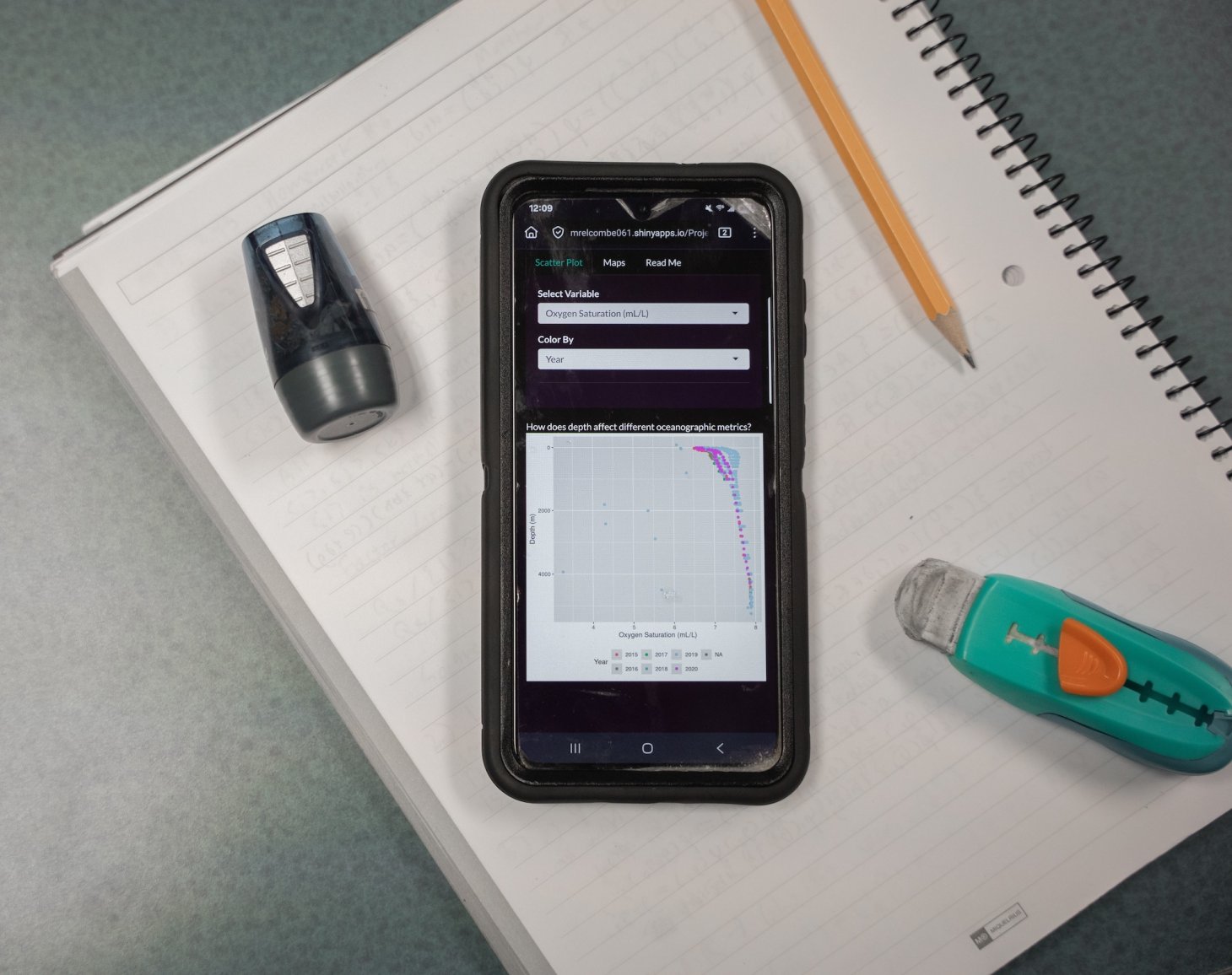
What do ocean currents, baseball statistics and insect populations have in common? These real-world systems have all become living datasets — transformed by students into interactive apps and digital stories in a new course in data visualization.