A group of musicians perform on a stage with instruments.

Multimedia experience in PraX: 'What can a punk-inspired music scene teach scientists?'

By Hannah Ashton

What can a punk-inspired music scene teach scientists? Hannah Stuwe, a Ph.D. candidate in biochemistry and biophysics, will explore that question in the 2026 Inclusive Excellence Lecture, which will feature live music by local artists. A researcher, community organizer and musician, Stuwe’s lecture will cover how values rooted in the do-it-yourself music scene, such as collaboration and public engagement, can inform and strengthen scientific practice.

“Science doesn’t exist in a vacuum. We like to get focused on our work and do cool science. And that’s admirable. But why do we do any of it? I like to think it’s for the greater good and to help your neighbor. And helping your neighbor is what DIY punks do,” Stuwe said.

That philosophy has shaped the way her scientific work and community involvement have evolved side by side.

RSVP today to attend the multimedia experience on March 17, at the Patricia Valian Reser Center for the Creative Arts.

Building community through music

The do-it-yourself music scene emerged from the 1960s and 1970s punk and hippie movements as a rejection of consumerism and institutional gatekeeping, Stuwe shared. Rather than relying on mainstream industries or formal systems, musicians and organizers built their own infrastructure, booking shows, producing music, sharing resources and supporting one another directly. The movement, often referred to as DIY counterculture, later expanded beyond music to emphasize collaboration, sustainability and social justice through grassroots action.

Stuwe said music became interconnected with those ideals because it’s a powerful vessel for self-expression.

“Music has been something that people have done for almost as long as we know about human history,” she said. “People always say it’s a universal language and a place where people can connect. It makes them feel a certain way and gives them something to relate to, which naturally brings together like-minded or like-experienced people. And that’s very powerful.”

Inspired by that power, Stuwe co-found the Corvallis Music Collective in 2024. The nonprofit supports local musicians through a low-cost rehearsal space, a gear-lending library and all-ages, substance-free shows with a “no one turned away for lack of funds” policy. Another goal is to help emerging artists find their footing in a supportive environment.

Through the Collective, Stuwe has helped organize performances that benefit local causes and build community. “I’ve gotten to play events that have benefited organizations like the Trevor Project or local organizations like Jackson Street Youth Services,” she said.

She has also personally supported rallies and events for the Disabled Students Union, Disability Justice Rally and the OSU Basic Needs Center.

Headshot of Hannah Stuwe, a woman with short curly hair and black shirt.

Hannah Stuwe is Ph.D. student in Elisar Barbar's lab in the Department of Biochemistry and Biophysics.

“Music really lends itself to this sense of community that I think scientists struggle with sometimes,” Stuwe said. She sees a clear link between the collaborative, socially conscious principles of DIY culture and the practice of science itself.

“I think a lot of DIY is very politically oriented. And people like to think that science isn’t political, but it inherently is,” she explained. “Sometimes society interprets your science in ways that have political ramifications. And as an expert, you have a responsibility to be aware of that and engage with that.”

Stuwe understands that most scientists are not trained to navigate these challenges. “Most scientists aren’t sure how to engage in political discourse around science and engage with the general public.”

Her own work illustrates the stakes. Beginning in 2021 with COVID-19 research, she found herself communicating complex science to her community on a daily basis.

“People say, ‘What do you do?’ And I say, ‘I do COVID research.’ People have a million questions … It becomes my obligation to field these questions in a meaningful way and talk to people about this. Some people say 'I don’t even think it exists’ and I’m like, ‘Well, I can show you, we can walk to my lab right now and I’ll pull it out of the freezer.’”

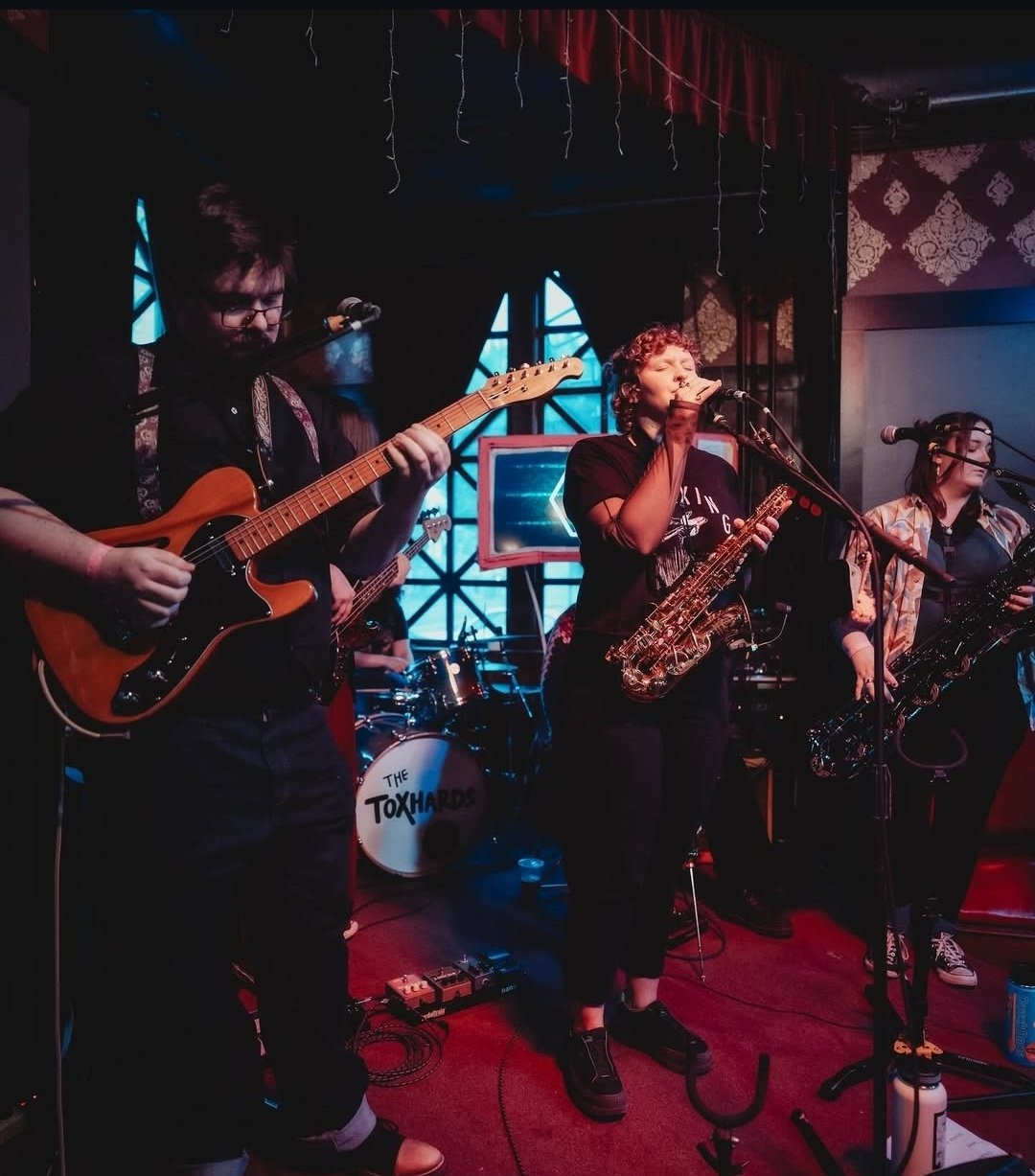
A singer on stage with band members, holding a saxophone.

Stuwe performs with her band. She can play numerous instruments including carious saxophones, flute, guitar and bass.

Sharing science with the next generation

Experiences like these helped Stuwe realize how much communicating science serves the broader community. An Oregon native, she earned her undergraduate degree in biochemistry and molecular biology at Oregon State before spending several years working in industry research and development. While she valued the technical experience, she said she missed academia.

“I missed the kinds of questions we ask and the broad research topics. A lot of the basic science feels really important to me,” she said.

She returned to OSU for graduate school and is now in the final stages of her Ph.D.

"I really want people to walk away feeling inspired and empowered to use their positions, whether that’s as scientists or academics or community members."

The same commitment to access and community care that guides her work in music also shapes how Stuwe brings science to young people. Through her research lab, she developed a hands-on activity that allows visiting middle and high school students to purify a green fluorescent protein, a molecule that glows under ultraviolet light, from bacterial cells. The experience gives students a chance to handle real research materials and see science come to life.

She has led the activity with student groups from rural communities, schools with a majority of Spanish-speaking students and coastal regions, and has seen firsthand how early exposure can shift the way students imagine their futures. “I’ve seen kids become really excited about science,” she said.

Bringing it all together

In her Inclusive Excellence Multimedia Experience, Stuwe will bring all of these experiences together, blending storytelling, live music and scientific insight to expand how scientists think about their role in society.

“I really want people to walk away feeling inspired and empowered to use their positions, whether that’s as scientists or academics or community members. I want them to feel empowered and realize they do have power to enact change in the community around them,” she said.