In a rare study of snakes as nest predators, scientists found nesting birds were loath to strike rattlesnakes even though they likely had no previous experience with vipers.
The research, published in Behavioral Ecology, examined the response of red-winged blackbirds to a host of western Oregon nest predators that also included scrub jays, ground squirrels and nonvenomous gopher snakes.
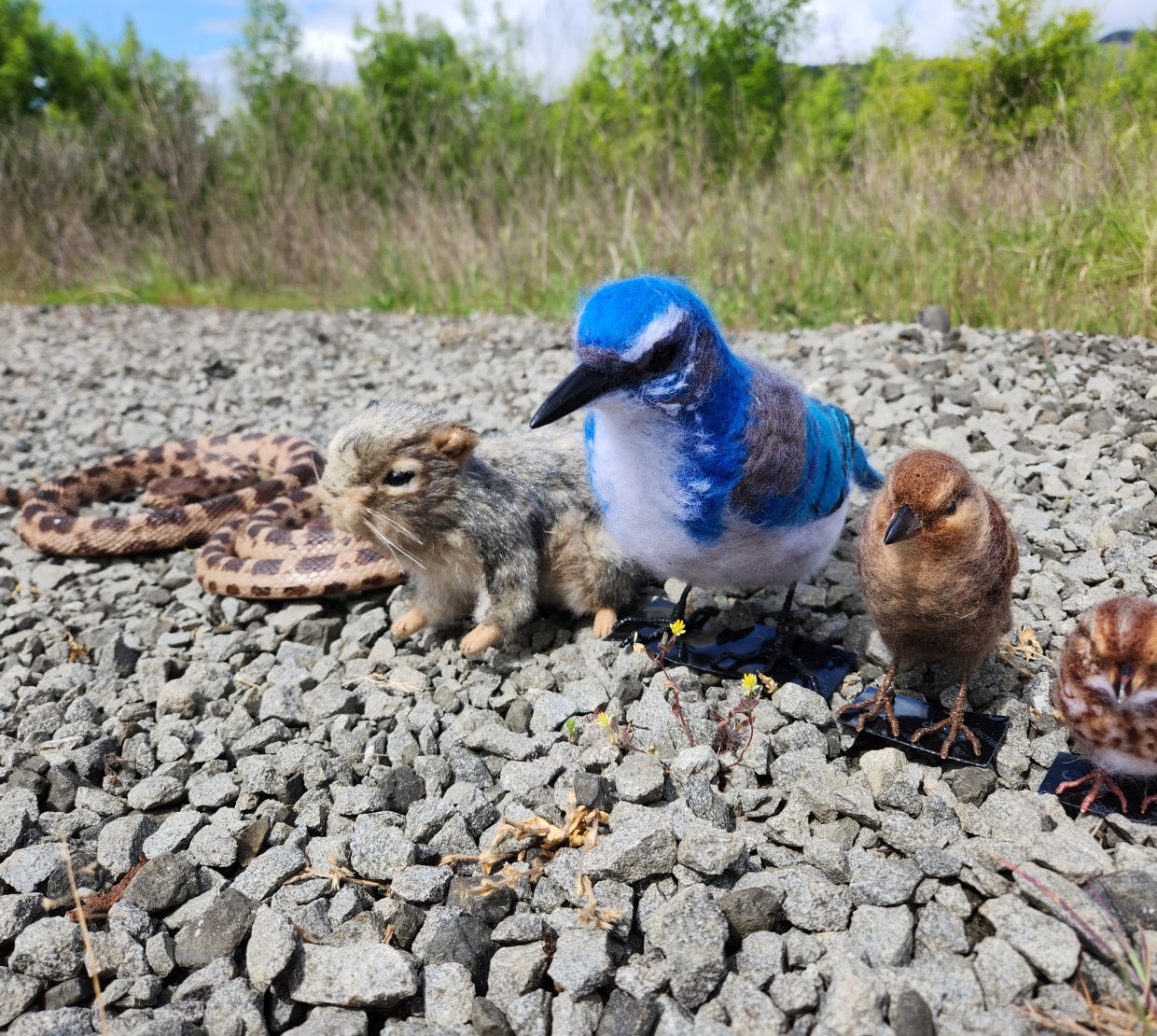
The predators in the study, which was led by Shelby Lawson of the Department of Integrative Biology, were inanimate but lifelike facsimiles placed on platforms a few meters from the nests of blackbirds, known to be aggressive nest defenders. Lawson is a postdoctoral researcher in David Kikuchi’s integrative biology lab.
The blackbirds were also exposed to cowbirds, a brood parasite – they lay their eggs in someone else’s nest, forcing another species to expend resources raising them – as well as song sparrows (as a control species; sparrows don’t prey on blackbird nests) and rattlesnakes.
Rattlesnakes are native to western Oregon but were largely extirpated west of the Cascade Range in the 1800s, meaning modern-day blackbirds in the region are probably not encountering them. Nevertheless, in tests at dozens of nests – roughly half featuring eggs and half containing nestlings – blackbirds physically struck a rattlesnake just once, compared to more than 80 gopher snake strikes.
“We don’t know whether that’s because they recognized the danger or if there's something about the viperid features or the rattle that gave the birds pause,” said Lawson.


