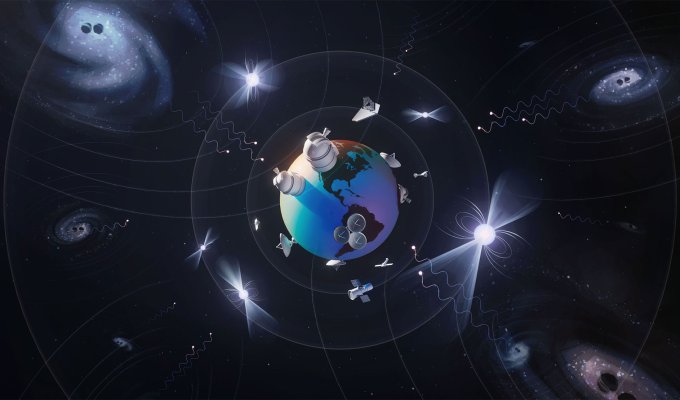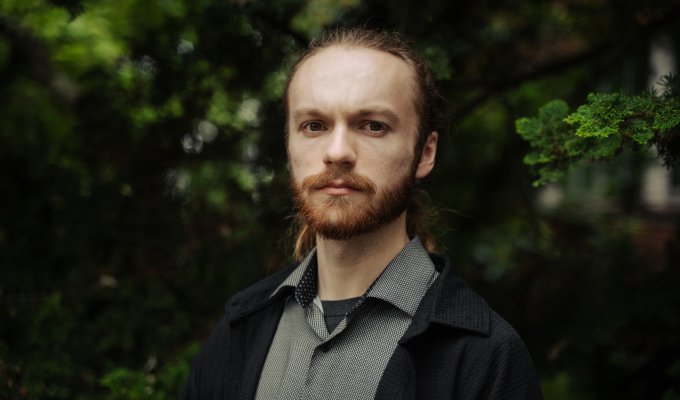
In the inaugural Val Nereo Lecture, presented by the Dept. of Statistics, UCSB professor Annie Qu discusses the challenges associated with multi-modal datasets, proposing a a novel Representation Retrieval (R2) framework.
On Thursday, January 15, the lecture, “A chemist’s journey: Unlocking new battery chemistries for a sustainable future,” will showcase his pioneering work developing safer, lower-cost, high-energy batteries by uncovering new chemistry principles. He will also share how he went from a small town in northeast China to Canada and then leading breakthroughs on a global scale.
Giulia Wood has been named one of 43 Marshall Scholars in 2026, a prestigious scholarship offered by the United Kingdom to a select group of Americans to study at graduate level in a UK institution of their choice for up to three years.
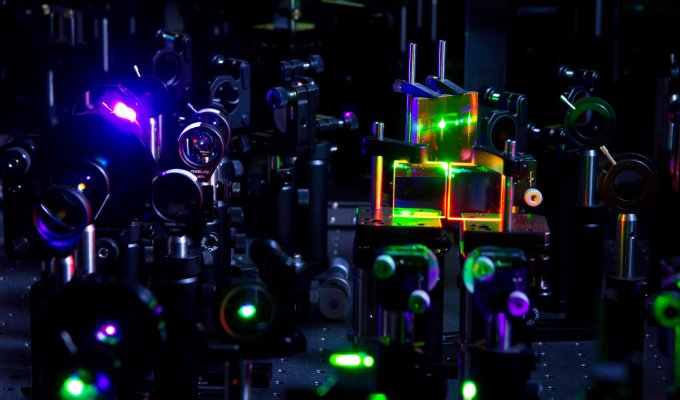
Four College of Science research teams have been awarded funding through SciRIS Stage 2 and Stage 3 categories. Their projects span quantum materials, nanotechnology, spectroscopy, and cell-based computing — exploring spin waves for future computing, tracking nanoplastics in living systems, developing single-pixel spectrometers, and advancing cell-based artificial intelligence.
Oregon State’s 2025 Faculty Innovator Award celebrates Carter’s efforts to strengthen university innovation as his company, Valliscor, launches a major expansion in the Willamette Valley.
Meet a two new members of the Department of Microbiology, one who studies how pathogens survive and cause disease and the other loves teaching students how molecular mechanisms connect to evolutionary patterns.
Meet a new member of the Department of Chemistry whose lab explores stimuli-responsive molecules for applications in drug delivery, tissue engineering and biomimicry.
A long-term analysis shows that a major Oregon reservoir abruptly swapped one type of toxic algae for another midway through the 12-year study period, absent any obvious cause.