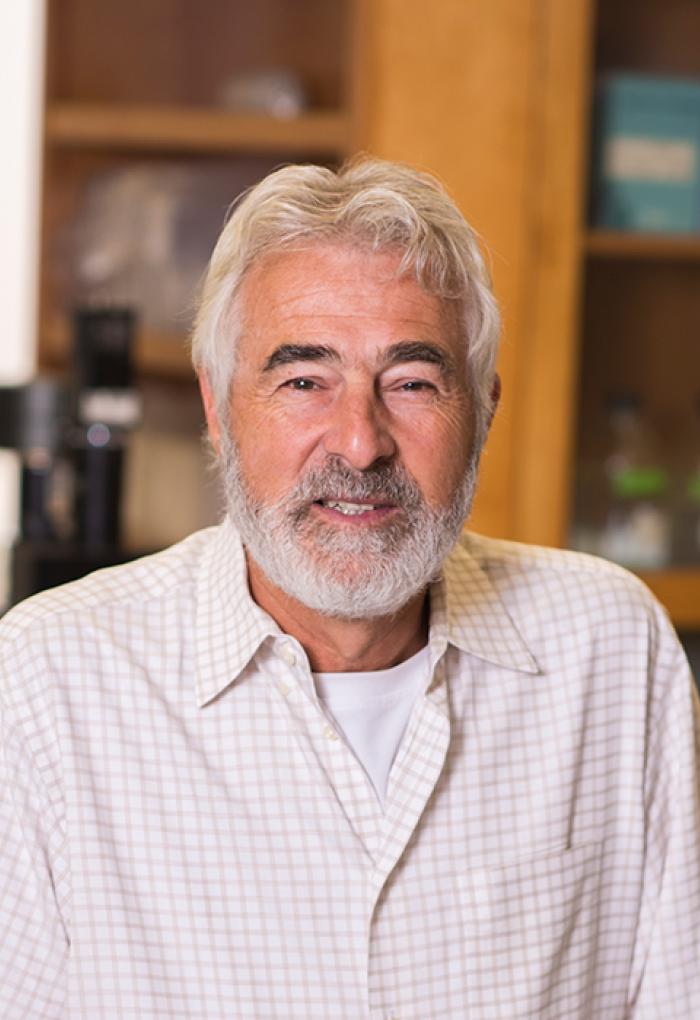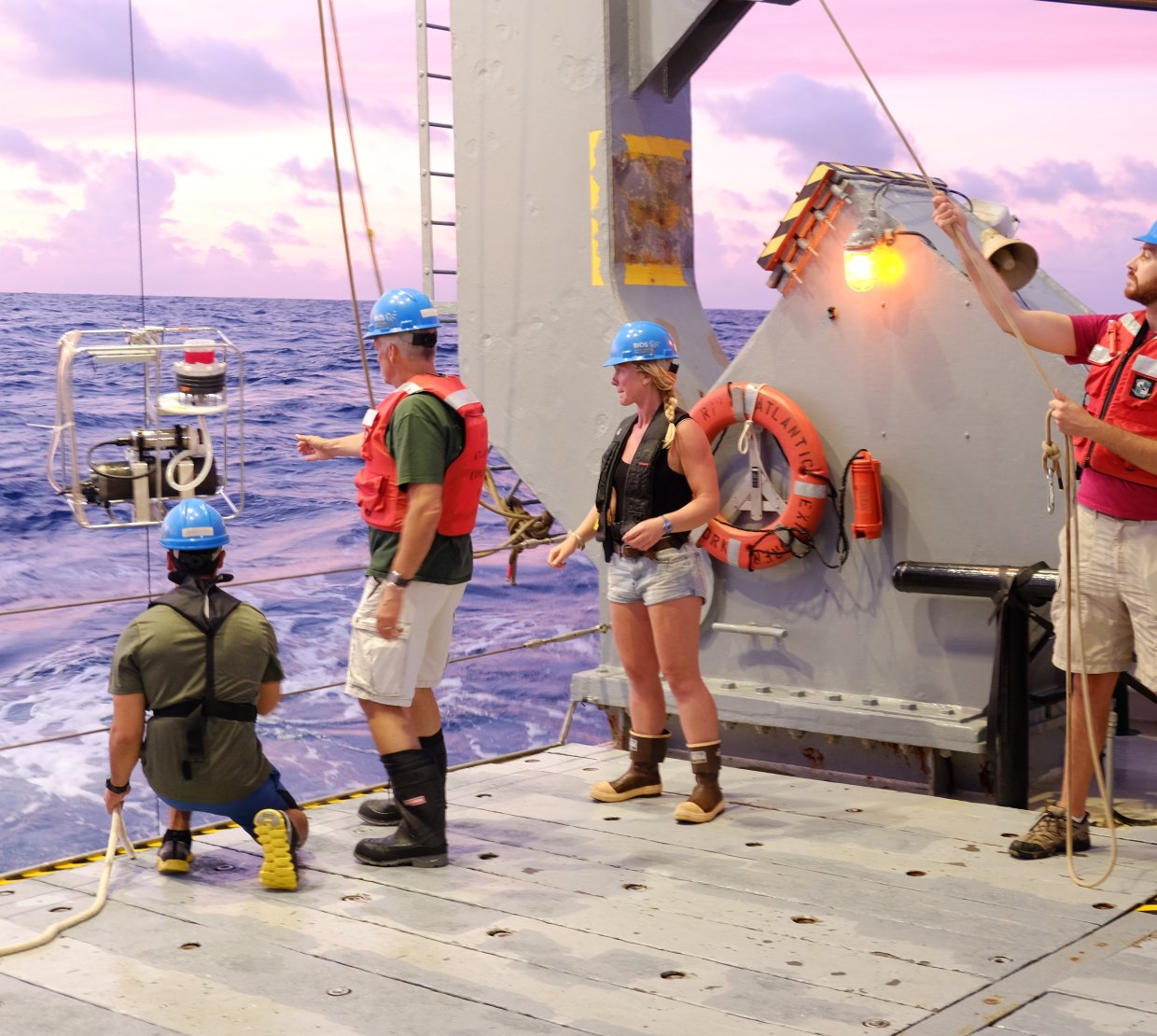
Microbiologist Stephen Giovannoni received a 5-year $1.2 million award to continue studying the microbiology of the Sargasso Sea, an ocean gyre that is representative of ocean regions with extremely low productivity that are expanding globally due to the warming of the ocean’s surface.
The award, from the Simons Foundation International, is part of the BIOS-SCOPE program, a consortium of scientists established in 2015 to jointly investigate the biology, chemistry and physics of this ocean region. While an assistant professor at Oregon State in the 1990s, Giovannoni began the longest ocean-time series of plankton DNA collections, exactly the type of data now needed to understand life on a changing planet.
The new aim is to understand how the decline in nutrients caused by ocean warming impacts the evolution of microbial cells, forcing them to simplify their genomes and use resources more efficiently. This information is used to predict carbon cycling globally and the biology of the future ocean.
The Sargasso Sea is an ideal study site because the ocean rhythmically transitions between cool, productive winters when nutrients are mixed to the surface, and nutrient-poor summers, when chlorophyll levels drop to extreme lows. These seasonal oscillations help scientists model how ocean biology responds to the global expansion of thermally stratified waters.