Head shot of an individual with short blonde hair wearing all black.

Fieldwork, internships and study abroad: Oregon State biology student expands career path

By Hannah Ashton

Isabel (Dorian) Planken didn’t expect a summer internship in oncology research to complicate their plans. When they arrived at Oregon State, they were convinced their future was in marine science, shaped by years of interest in aquatic ecosystems and growing up near the California coast.

But working in a Pfizer laboratory, running experiments on cancer cell lines, forced Planken to reconsider what kind of scientist they wanted to become.

“A little part of me was hoping that I would hate it,” Planken said.

They didn’t.

Instead, the experience broadened their sense of possibility. “Now, I have more options. I am toying between cellular biology, like biotech or microbiology. It didn’t help narrow things down, but it did make me way more confident in my ability to be a good scientist,” Planken said.

This sense of possibility didn’t happen by accident. At Oregon State, Planken was encouraged to test their interests through hands-on coursework and real-world experiences early in their academic career. From field-based marine science classes to lab-intensive biology courses, the College of Science gave them the preparation to pursue opportunities beyond campus, including a competitive internship in industry research and studying abroad in Australia.
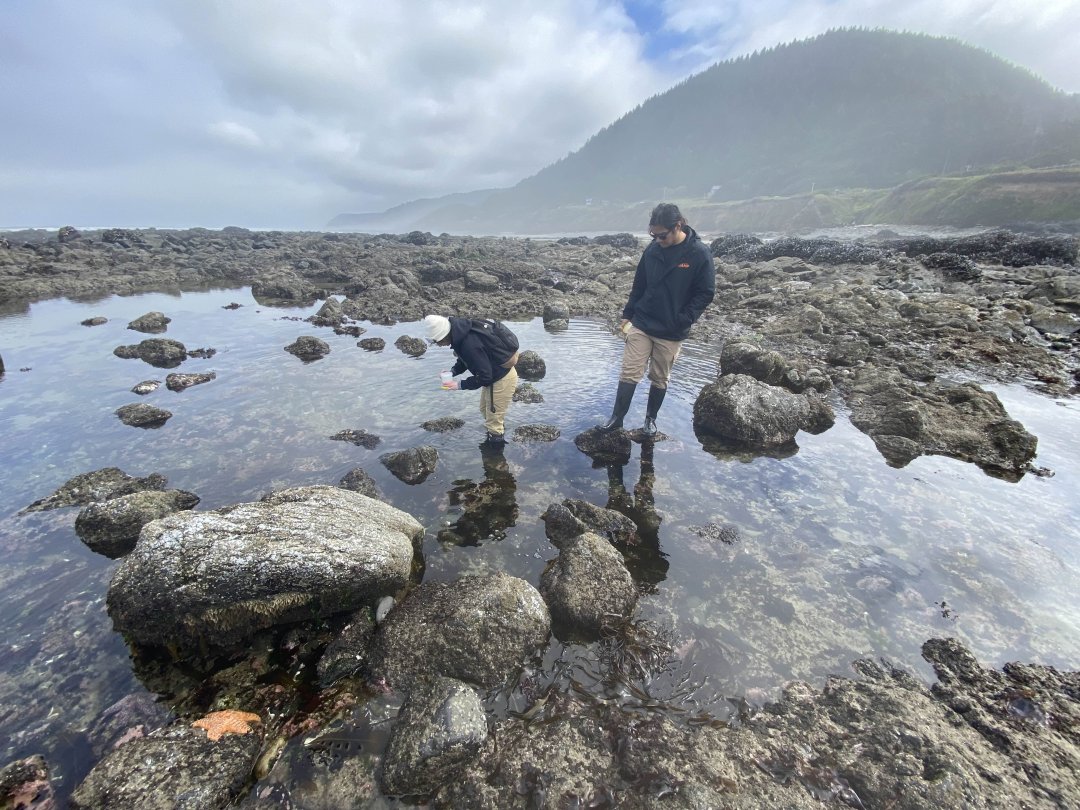
Two individuals stand on a beach looking at rocks in the water.

Dorian Planken collecting Rostanga pulchra, a species of sea slug, for their BI 450 research project with classmates Hailey and Harrison.

Exploring science beyond the classroom

Planken, an Honors senior biology major with a marine biology and ecology concentration, came to Oregon State from San Diego specifically for the opportunities.

“I was interested in the study abroad funneling for my major concentration and the BI 450 class. That was a big hook,” Planken said.

BI 450 is a field-intensive course based at OSU’s Hatfield Marine Science Center. Students eat, breathe and sleep marine biology for 10 weeks through lectures, field studies and laboratory research. The course offers unique access to the facility’s state-of-the-art wet labs where specimens can go from the coast, to under the microscope and back again. For Planken, it was a defining experience that helped them experience fieldwork before graduation.

“It was so wonderful,” they said, even if they realized that early morning tide-dependent sampling might not be their long-term calling. Still, the course offered a valuable, hands-on opportunity: a complete research project built around a student-generated question and hypothesis.

A person in a black sweatshirt and white beanie stands on a beach holding a small red sea slug.

Planken holds a Rostanga pulchra sea slug for their BI 450 research project on the Oregon coast.

“I learned a lot about the research process, and especially how to speak my mind.” Planken said. “I came up with the study idea myself and my fellow peers thought it was interesting enough to want to be in my group. It really made me feel like a researcher.”

The group studied Rostanga pulchra, a bright red sea slug that feeds on an equally bright sponge. “We were testing to see what it was that attracted them specifically to the red sponge,” Planken said. The team hypothesized that a pigment called astaxanthin might be responsible.

The early research experience helped build confidence and open the door to an even bigger opportunity: a 12-week paid internship with Pfizer in La Jolla, California.

Planken found the internship listing on their own and applied after their father, a Pfizer employee, encouraged them. This was their first professional internship after summers spent working as a barista, and the scale of the company was intimidating. “I was so nervous because it’s a huge company. I had to be professional,” they said.

Once they arrived, the nerves eventually faded. Planken was placed in an oncology research group, where they worked on “antibody-based assays for specific cancer cell lines, studying which types of cancers were susceptible to certain drug combinations.” Their microbiology coursework proved especially helpful, but they also learned new techniques from scratch, including Western blots and cell culture maintenance.

The experience itself helped Planken imagine more future opportunities, and a supportive mentor made a difference, too. “I had the best mentor I could ask for,” Planken said. “He did a really good job at uplifting me as a learning student intern.” Before they left, he told them, “If you need a letter of recommendation from Pfizer, I will write one.”

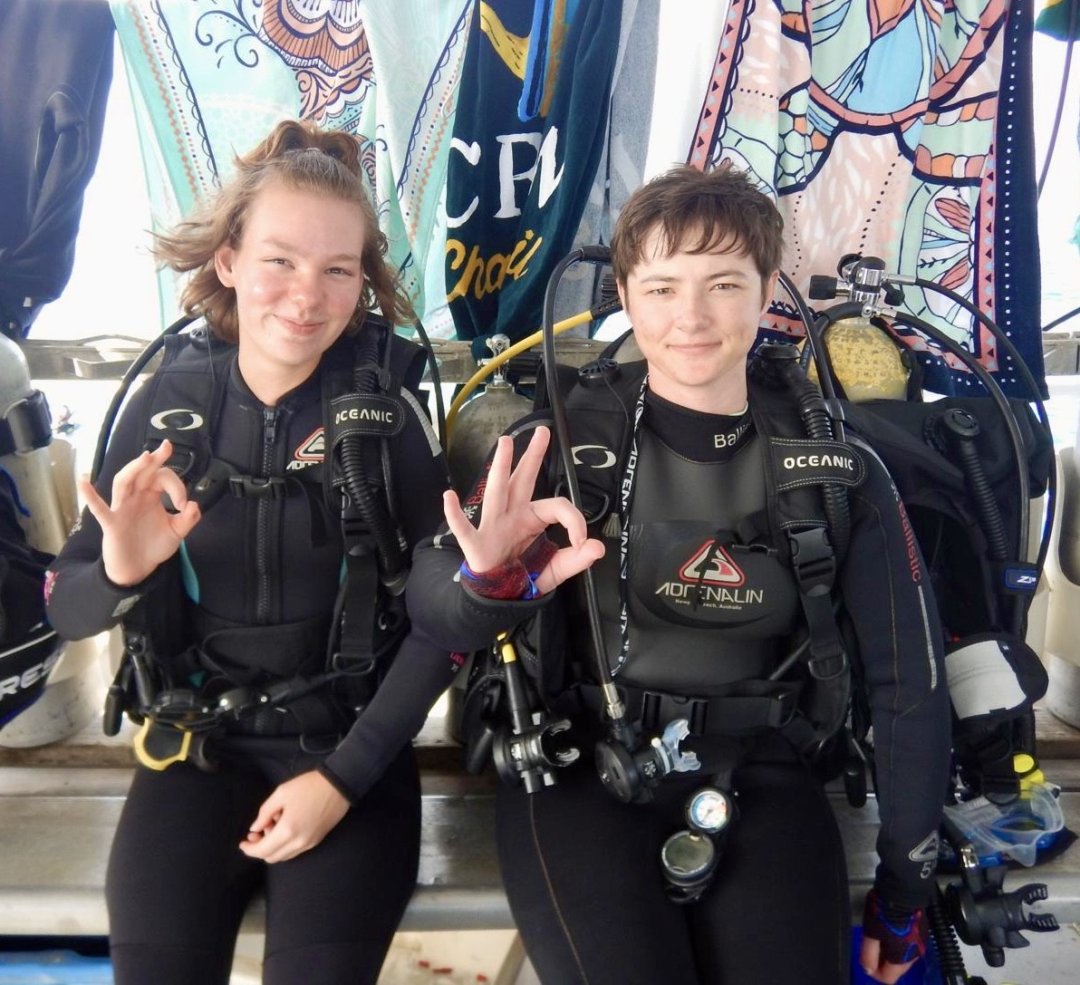
Two scuba divers hold up the ok symbol while sitting on a boat.

Planken and their friend Polina before a dive on the Great Barrier Reef off the coast of Townsville, Queensland.

Before Hatfield and Pfizer, Planken also spent nearly five months studying abroad at James Cook University in Townsville, Queensland, one of the world’s top institutions for marine science. They selected the program through OSU GO after seeing it highlighted during their first year. “I wanted to be in a warmer climate, go to the beach and be able to dive while I was there.”

The coursework was demanding, but the experience was unforgettable. During breaks, Planken and friends explored the coast, and they completed more than 10 dives on a four-day liveaboard trip to the Great Barrier Reef. “We essentially just dove and then slept,” they said. “It was really, really cool.”

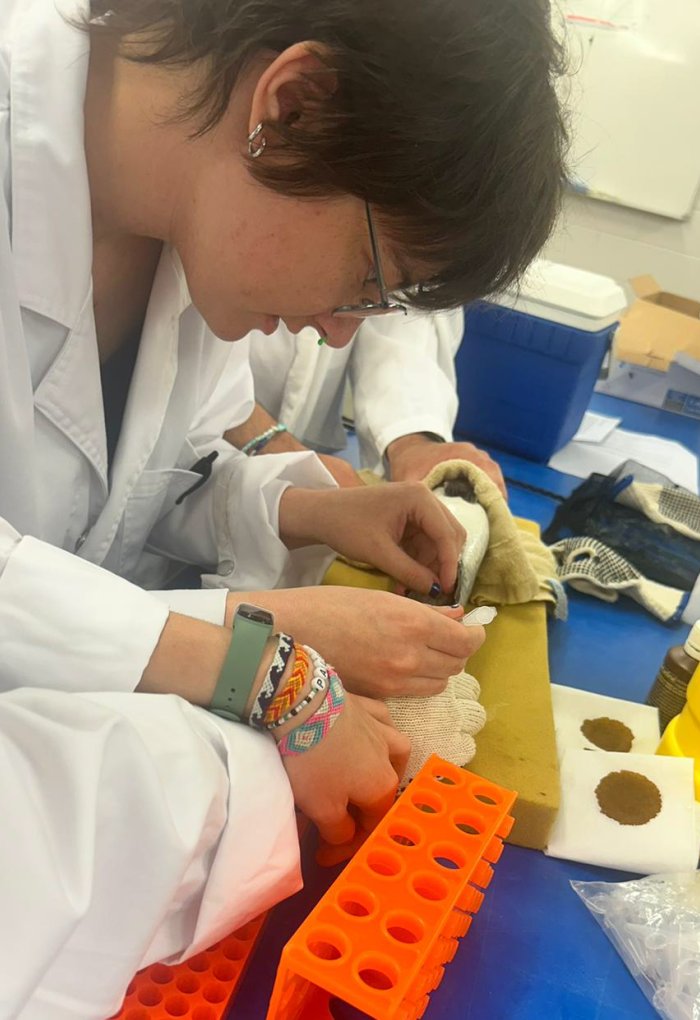
A person in a white lab coat takes a sample.

Planken takes a blood sample from a barramundi, also known as an Asian sea bass, as part of an aquatic animal ecophysiology lab at James Cook University, Townsville.

Back on campus, Planken continues to build research experience through the Honors College. Their thesis, advised by Priya Rajarapu in the College of Forestry, examines pesticide use among Oregon Christmas tree growers. The Head Academic Advisor in the Honors College, Beau Baca, connected Planken with the study opportunity. “We’re trying to fill a knowledge gap for OSU Extension,” they said. The project surveys growers about “their uses of pesticides and how their chemical use impacts their farms,” as well as which pests and chemicals are most common in the region.

Outside the lab and classroom, Planken is an artist. “I love to draw and paint,” they said. Digital art is their current focus, “paint is expensive and I live in a dorm,” but creativity has been part of their life as long as science has.

Looking ahead, Planken is still weighing their next step. “I honestly have no idea what I’m going to do when I graduate,” they said, though they know they want to return to school through a graduate program eventually. Their family, especially their mother and father, have been a steady source of encouragement. “My family has been the biggest supporter.”

If there’s a common thread through Planken’s OSU experience, it’s discovery — of new environments, new research fields, new confidence and new possibilities. Whether in a coastal field station, a pharmaceutical lab or the waters of the Great Barrier Reef, they’ve embraced every opportunity that Oregon State helped make possible.