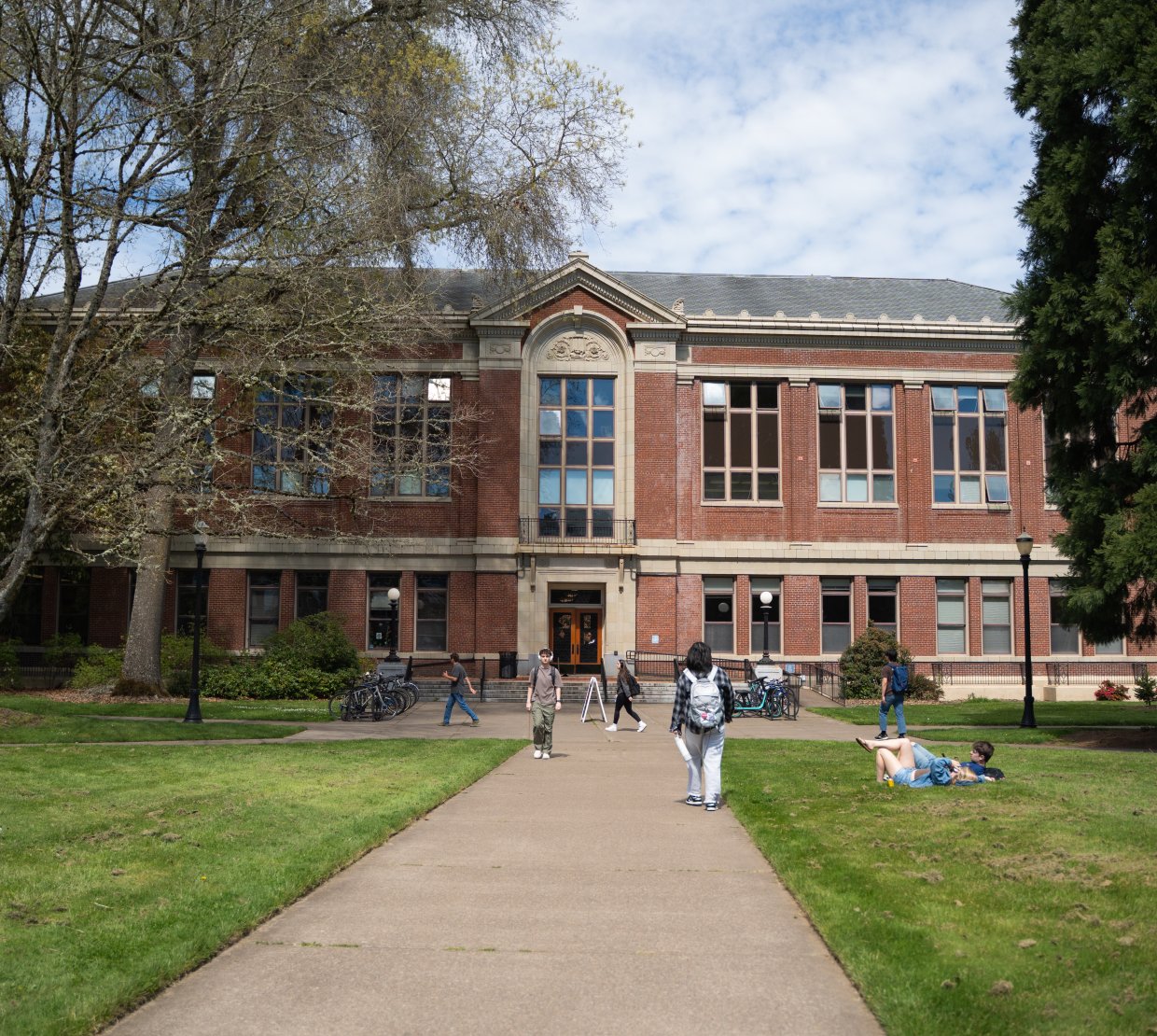
The impact of College of Science faculty extends far beyond the classroom and laboratory. At the university’s 2026 University Day celebration, faculty, staff and postdoctoral scholars were recognized for exceptional teaching, mentorship, research and service, from shaping international marine conservation and reducing the cost of a college education to preparing the next generation of scientists.
Impact Award for Outstanding Scholarship
Associate Professor Kirsten Grorud-Colvert received the Impact Award for Outstanding Scholarship for research that transformed how the world understands and governs marine protected areas (MPAs).
Grorud-Colvert led the team behind The MPA Guide, published in Science in 2021, which introduced a science-based framework classifying MPAs by their actual level of protection and the conditions needed for them to succeed. She and her collaborators then translated that framework for a general audience through the 2023 MPA User Guide and Video, hosted on a United Nations Environment Program website and used by policymakers, Indigenous communities, and coastal states worldwide.
The Guide’s influence reached the highest levels of international diplomacy: nominators credit it with resolving decades of confusion that had stalled negotiations over the UN’s High Seas Treaty, giving governments the clarity and confidence to finally sign and ratify the agreement, which became international law in January 2026. At least 19 countries have used the Guide to design or evaluate their own MPAs, the paper has been accessed more than 49,000 times, and major international conservation bodies have adopted its framework as a global standard. Grorud-Colvert was also invited to co-author a Science editorial marking the treaty’s passage, recognition her nominators call exceedingly rare for a single research program.
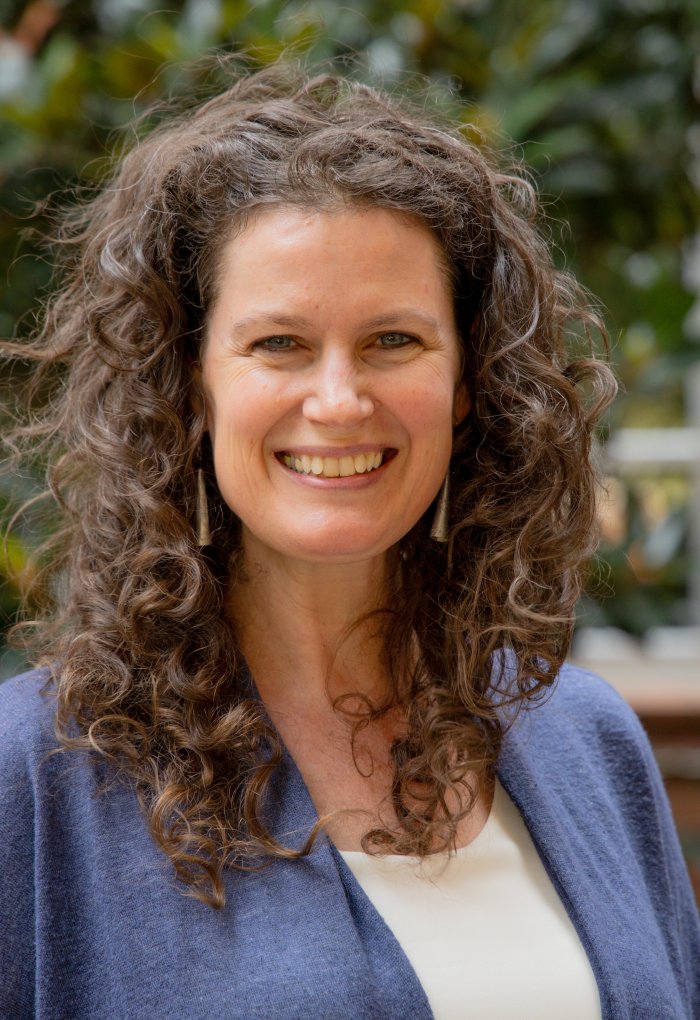
Associate Professor Kirsten Grorud-Colvert received the Impact Award for Outstanding Scholarship for research that transformed how the world understands and governs marine protected areas (MPAs).
Faculty Affordability Award
Associate Professor of Teaching Lindsay Biga received the Faculty Affordability Award for leading the team that adapted OpenStax’s Anatomy & Physiology into a free, openly licensed textbook now used by hundreds of OSU students each term, and by millions more worldwide.
Biga spearheaded the original adaptation of the 1,000-plus-page text, a multiyear project that has since grown into a second edition built with the university’s Open Educational Resources Unit. Students in the BI 231-233 anatomy and physiology series now pay $0 for their lecture textbook and student response system, down from a prior cost of roughly $150. The only required purchase is a $24 lab manual, on which Biga and her co-authors take no royalties. She is now writing a free OER lab manual as well, which would make the entire course sequence cost-free.
Beyond cost savings, nominators highlighted the quality and reach of the work: the text logged over a million page views on Pressbooks’ publishing network in 2025 alone, and it’s used by institutions across the country and internationally. Biga’s team also rebuilt the book’s images to represent gender and ethnic diversity and ensured the content meets accessibility standards. Since the OER was adopted in 2019, nominators estimate it has saved students nearly $500K, while student survey scores for “course materials were accessible to me” have held steady at 5.9-6 out of 6, and Drop, Fail, Withdraw rates in the course sequence have declined significantly.
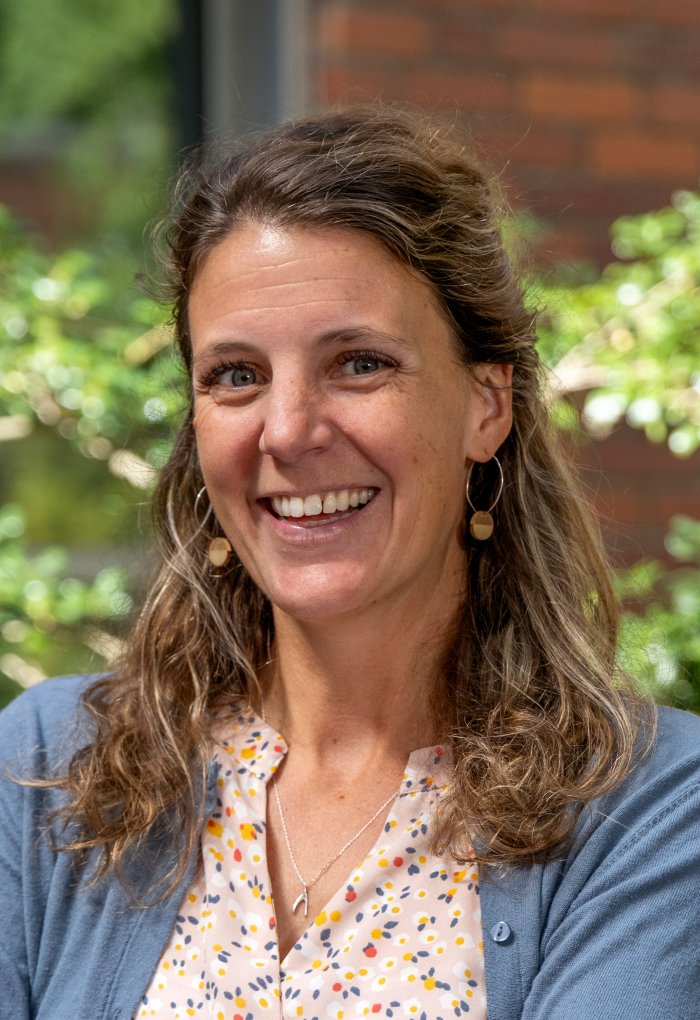
Associate Professor of Teaching Lindsay Biga received the Faculty Affordability Award for leading the team that adapted OpenStax’s Anatomy & Physiology into a free, openly licensed textbook now used by hundreds of OSU students each term, and by millions more worldwide.
Faculty Excellence in Online Teaching Award
Associate Professor of Teaching Meta Landys received the Faculty Excellence in Online Teaching Award for spending over a decade proving that online classes can be just as rigorous and personal as in-person ones. All three of her Ecampus courses, spanning writing-intensive coursework, genetics and environmental physiology, hold Quality Matters certification, a national benchmark for online course quality that she’s earned and renewed year after year.
What sets her apart, according to nominators, is how she treats teaching itself as something to study and improve. She built a “public exam” approach, releasing part of the exam content in advance, and published peer-reviewed research showing it eased student anxiety without sacrificing academic rigor. After she redesigned one of her courses using these findings, the drop rate fell from nearly 9%, while quiz scores and assignment completion rose sharply, providing concrete evidence that thoughtful design translates into real student success.
Beyond her own classroom, colleagues describe her as unusually responsive and caring for an online instructor. She’s mentored other faculty in online teaching, stepped in to finish a colleague’s course mid-term when needed, and become the person her department turns to first on questions about online learning. One student summed up the experience simply: it was “hands down the best online class I have ever taken.”
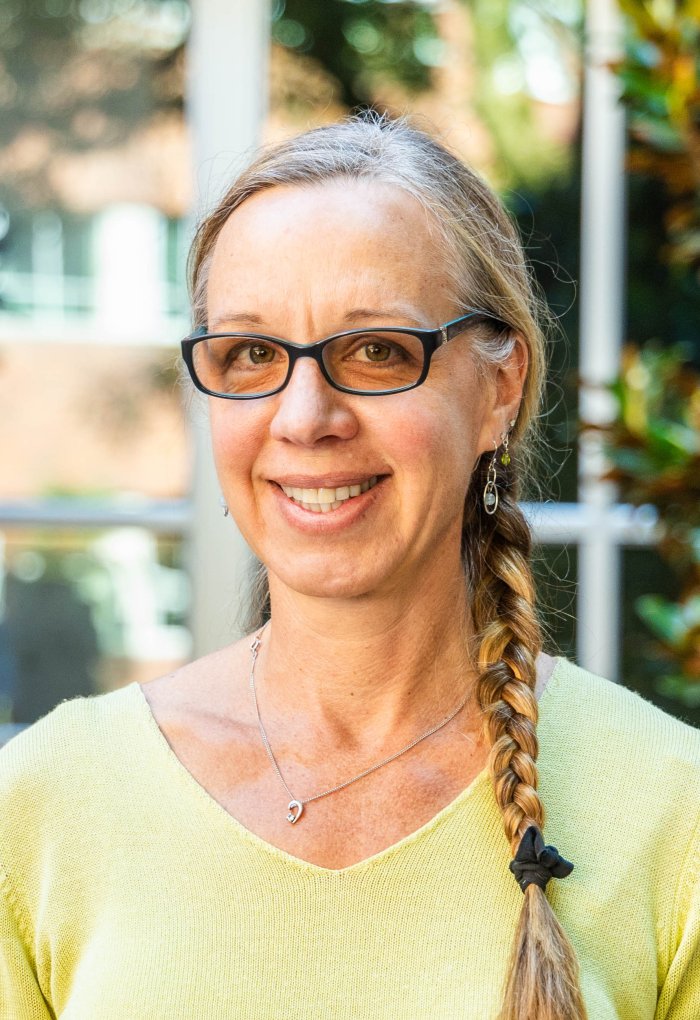
Associate Professor of Teaching Meta Landys received the Faculty Excellence in Online Teaching Award for spending over a decade proving that online classes can be just as rigorous and personal as in-person ones.
Dar Reese Excellence in Advising Award
Senior Instructor II Margie Haak received the Dar Reese Excellence in Advising Award after 33 years at Oregon State, most recently as head advisor for the Department of Chemistry. Nominators credit her with a dramatic rise in chemistry majors alongside her push to modernize advising practices and training for faculty advisors.
Colleagues describe her as someone who treats advising as more than logistics. She’s known for pairing students with research opportunities, TA positions and mentoring roles at exactly the moments they’re considering giving up. One student, a transfer and readmit who struggled to find footing at Oregon State, wrote that he wasn't sure he’d have graduated without her guidance, crediting her with steering him toward research, teaching and a sense of belonging in the department. Haak has been especially influential for students in the Chemistry Education track, many of whom now teach in high-need schools.
Her advising work is intertwined with a long record of teaching innovation: she developed courses like CH 101 and CH 199 to catch students struggling in first-year general chemistry, ran an early-warning system for at-risk students years before it became standard practice and helped grow the “Mole Hole” into a high-traffic chemistry help center. She also extends that commitment beyond campus through the Family Science & Engineering Nights program, which brings hands-on STEM activities to thousands of K-6 students in underserved Oregon communities.
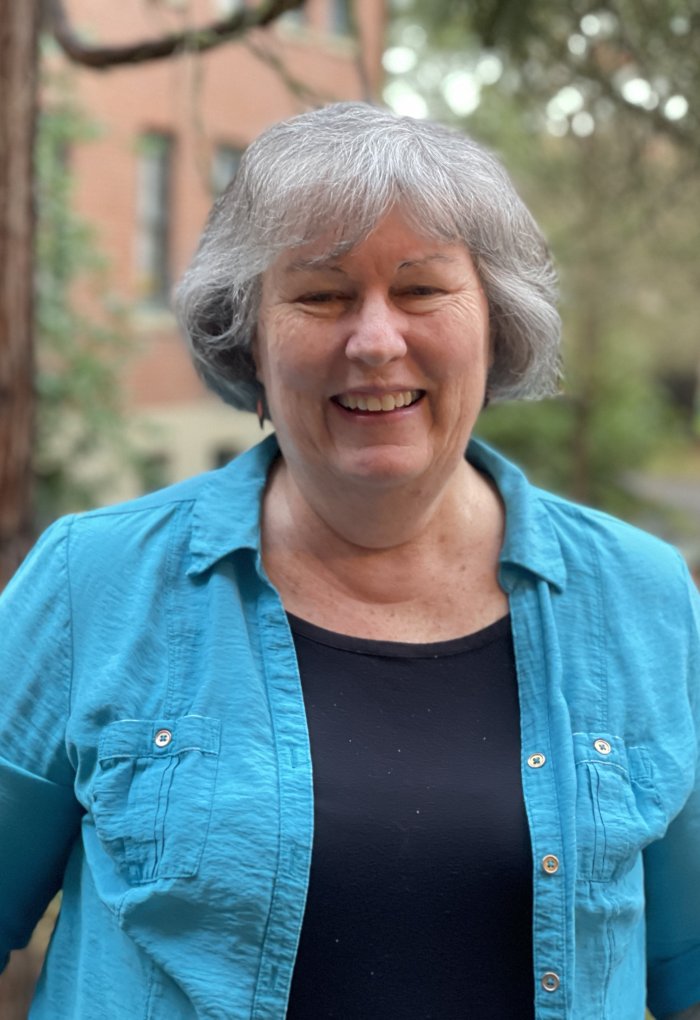
Senior Instructor II Margie Haak received the Dar Reese Excellence in Advising Award after 33 years at Oregon State, most recently as head advisor for the Department of Chemistry.
D. Curtis Mumford Faculty Service Award
Bob Mason, professor of integrative biology and J.C. Braly Curator of Vertebrates, received the D. Curtis Mumford Faculty Service Award. This award recognizes exceptional, ongoing and dedicated interdepartmental, interdisciplinary and interinstitutional service to the faculty and Oregon State.
Mason has served the university at every level since arriving at OSU in the early 1990s, chairing the Biology Program for 12 years and the Animal Care and Use Committee for four. He spent more than two decades as a Faculty Senator, served as Faculty Senate President in 2017-2018, and was elected president of the Inter-Institutional Faculty Senate. His committee record includes 15 years on the College of Science Promotion and Tenure Committee, participation in numerous administrative search committees, service on the Honors College Council and involvement in diversity and inclusion initiatives such as ADVANCE and the Values-Based Academic Leadership Trajectories for Women in STEM program.
One faculty nominator in a high-ranking central position noted that in his eight years in that role, “not once has Bob declined a university-level request” for guidance or service, calling him "extraordinarily meritorious” of the award. Another nominator described Mason as a service “king” whose leadership has left “a lasting impact on OSU’s governance.” A former graduate student pointed to additional examples of Mason’s generosity, recalling how he loaned his lab’s only environmental chamber to a new faculty member and offered his lab truck to help with a departmental move. Alongside this record of service, Mason remains an internationally recognized researcher on snake pheromones and reproductive behavior, with an h-index of 49 and research that has been featured by National Geographic, the BBC and NPR.
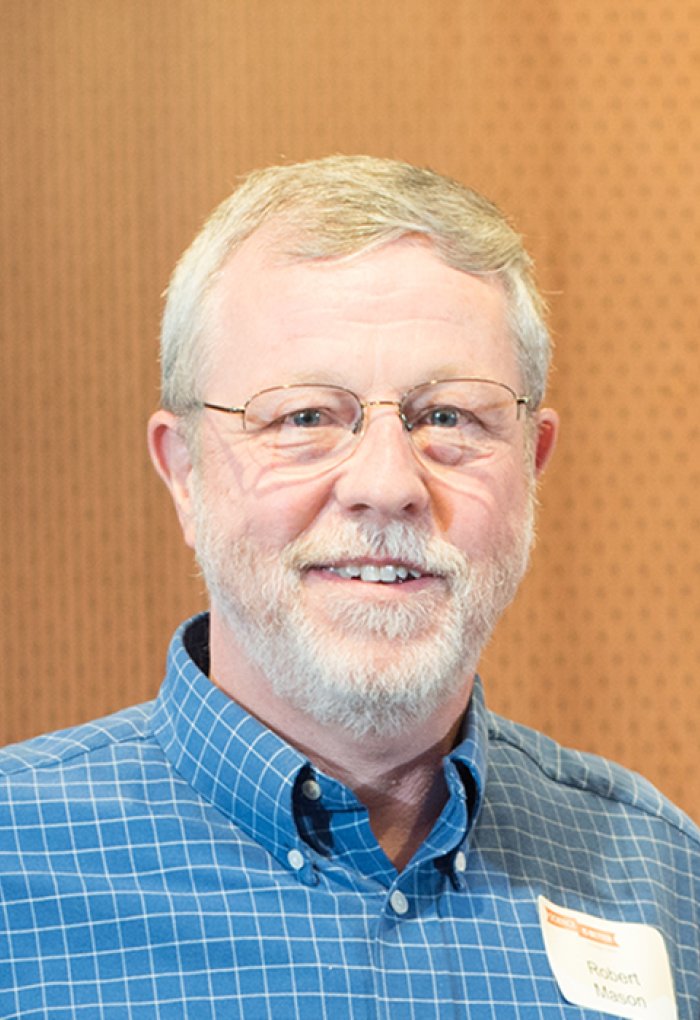
Bob Mason, professor of integrative biology and J.C. Braly Curator of Vertebrates, received the D. Curtis Mumford Faculty Service Award.
Herbert F. Frolander Award for Outstanding Graduate Teaching Assistants
PhD student Karlie Bach received the Herbert F. Frolander Award for Outstanding Graduate Teaching Assistants for her leadership in the general chemistry program. As head TA, she trains more than 30 undergraduate and graduate TAs and helps coordinate instruction for more than 1,200 students each year.
Nominators highlighted Bach’s role in completely redesigning the first-term general chemistry lab, shifting the focus toward foundational skills and mastery-based learning. She also helped develop a metal-organic framework lab that gives students hands-on experience with authentic research, work that led to a 2024 Journal of Chemical Education paper. She has also created creative approaches such as a Lewis structure escape room to make challenging concepts more engaging.
Beyond her own teaching, colleagues describe Bach as a dedicated mentor and advocate who consistently goes beyond the requirements of her role. She has mentored undergraduate and graduate researchers, pursued a Graduate Certificate in College and University Teaching and maintained a 4.0 GPA while conducting research on materials for direct air carbon capture.

PhD student Karlie Bach received the Herbert F. Frolander Award for Outstanding Graduate Teaching Assistants.
Excellence in Undergraduate Research Mentoring by a Graduate Student Award
Ph.D. student Jun Cai received the Excellence in Undergraduate Research Mentoring by a Graduate Student Award for his extraordinary commitment to helping undergraduates become confident, independent researchers. He has mentored 26 students in the lab, integrating them into his research on coral bleaching and sea anemone biology. Three of his four dissertation chapters will become manuscripts featuring undergraduate co-authors.
Cai’s mentoring extends beyond the lab. He has helped students secure research funding, prepare abstracts and applications, and present their work at conferences including SACNAS and the Society for Integrative and Comparative Biology, where one mentee received a best poster award. Several students have remained in his lab for multiple terms, progressing from basic animal care and laboratory skills to independently leading experiments.
Nominators describe Cai as an approachable, patient and attentive mentor who makes students feel supported while teaching them the reasoning behind their work. His own experience struggling to access research opportunities as an undergraduate shaped his commitment to creating welcoming pathways into science. As one mentee wrote, Cai not only cared about the research, but consistently checked in on students as people, helping them build confidence, technical skills and a sense of belonging in the lab.

Ph.D. student Jun Cai received the Excellence in Undergraduate Research Mentoring by a Graduate Student Award.
Exemplary Employee Award
Science Laboratory Preparator Jenna Moser received the Exemplary Employee Award for nearly 14 years of keeping Oregon State’s general chemistry laboratories running smoothly. She supports four lab classrooms serving more than 1,000 students each term, preparing chemicals and equipment, troubleshooting problems and coordinating the Issue Room so students and teaching assistants have what they need.
Nominators say Moser’s impact goes well beyond keeping supplies organized. She has improved laboratory projects by testing more relatable chemicals and materials, found ways to share equipment across campus to reduce costs and helped the program operate with two full-time staff instead of three through greater efficiency. She also played a key role in scaling the redesigned first-term chemistry labs from a small summer pilot to hundreds of students in the fall.
Colleagues also point to Moser’s warmth and care for students and coworkers. She trains and mentors student employees, helps new staff get up to speed and is often the person TAs and students turn to when they feel overwhelmed. Whether solving a laboratory problem or walking a sick student to the health center, nominators say Moser brings the same combination of organization, resourcefulness and compassion to her work.

Science Laboratory Preparator Jenna Moser received the Exemplary Employee Award.
Postdoctoral Excellence Award
Postdoctoral scholar Shelby Lawson received the Postdoctoral Excellence Award for building an ambitious research program while making a significant impact as a mentor and educator. Since joining Oregon State in 2024, Lawson has led laboratory and field research examining how birds recognize and respond to threatening visual and acoustic cues. Her work has already produced a manuscript under review, with several additional projects in development.
Nominators highlighted Lawson’s ability to combine rigorous research with meaningful opportunities for undergraduate students. She has involved students in fieldwork, captive bird research, behavioral analysis and scientific writing, with multiple students earning co-authorship on manuscripts and developing their own honors theses. She also leads an online research team that includes Ecampus students and has helped students present their work at scientific conferences.
Students describe Lawson as a thoughtful and encouraging mentor who builds confidence while teaching them to work independently. She adapts her guidance to each student, creates an environment where mistakes are part of learning and helps mentees pursue grants, publications and graduate programs. Lawson’s strength as a science communicator has also led to teaching opportunities in animal behavior and introductory biology.

Postdoctoral scholar Shelby Lawson received the Postdoctoral Excellence Award.
Excellence in Undergraduate Mentorship Award
Postdoctoral scholar Ben Sonnenberg received the Excellence in Undergraduate Mentorship Award for making research more accessible while helping students develop the skills and confidence to become independent scientists. Since joining Oregon State in 2025, Sonnenberg has directly mentored more than 16 undergraduates, including students in LURE, URSA, STEM Leaders and honors programs, while also advising graduate students across the Little Bird Lab.
Nominators highlighted Sonnenberg’s hands-on approach to mentorship. He teaches students everything from microscopy and blood-cell identification to data analysis and scientific writing, while helping them pursue research funding, conference presentations, publications and graduate school. One student he mentored progressed from having no research experience to independently completing hundreds of hours of laboratory work and presenting her research at a national conference.
Students describe Sonnenberg as welcoming, patient and deeply invested in their success. Rather than simply providing answers, he asks questions that help students develop their own solutions and builds their independence over time. He also provides individualized career guidance, including CV reviews, recommendation letters and connections to research and employment opportunities. His mentorship philosophy is shaped by his own experience navigating the path to a research career and his goal of helping students access the same opportunities and guidance.

Postdoctoral scholar Ben Sonnenberg received the Excellence in Undergraduate Mentorship Award.
Excellence in Postdoctoral Mentoring by a Faculty Member Award
Associate Professor Kyriakos Stylianou received the Excellence in Postdoctoral Mentoring by a Faculty Member Award for preparing postdoctoral scholars to become independent scientists. His mentorship of postdoctoral scholar Andrzej Gładysiak over three years helped Gładysiak secure a tenure-track assistant professor position at the University of Texas Rio Grande Valley, where he will begin in 2027. During that time, Gładysiak co-authored 12 publications and served as corresponding author on two.
Nominators highlighted Stylianou’s balance of autonomy and accountability. He supports trainees in pursuing research directions beyond their primary projects, provides access to national laboratories and specialized workshops and encourages conference participation and professional networking. He also supported Gładysiak in taking on a general chemistry teaching role, recognizing its importance to his long-term academic goals, even though it reduced his research output.
Trainees describe Stylianou as accessible, trusting and attentive to individual goals. He uses regular meetings and individualized development plans to help researchers chart their progress, encourages them to lead projects and develop their own ideas and connects them with collaborators and future employers. His mentorship extends across career stages, creating a research environment where students and postdocs are encouraged to develop the confidence and independence needed for their next steps.

Associate Professor Kyriakos Stylianou received the Excellence in Postdoctoral Mentoring by a Faculty Member Award.
Related Stories
Across the College


Data, AI and Robotics
College of Science AI showcase: From proteins to predators

Health and Biotechnology
OSU's TRACE initiative to become part of the nation's historical record

Data, AI and Robotics