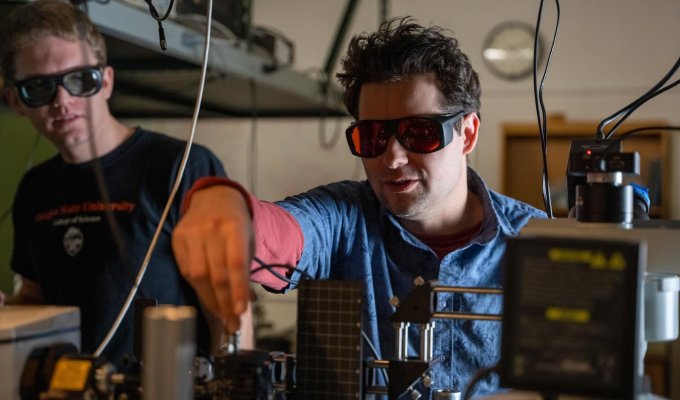
Minot, who has served as interim head since September 2025, is a leading researcher in quantum materials and nanoscale systems with applications in semiconductors and emerging technologies.
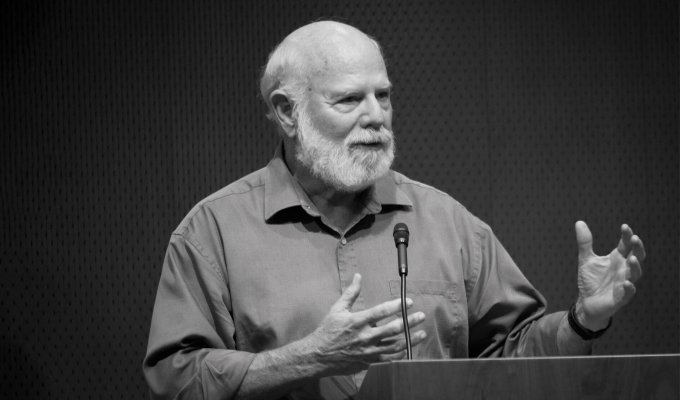
Stevan J. Arnold, emeritus professor of integrative biology at Oregon State University, has been elected to the National Academy of Sciences, one of the highest honors in science.
The College of Science and Department of Biochemistry and Biophysics at Oregon State University have received a $450K award from the M.J. Murdock Charitable Trust to establish the Partners in Science program on the Corvallis campus.
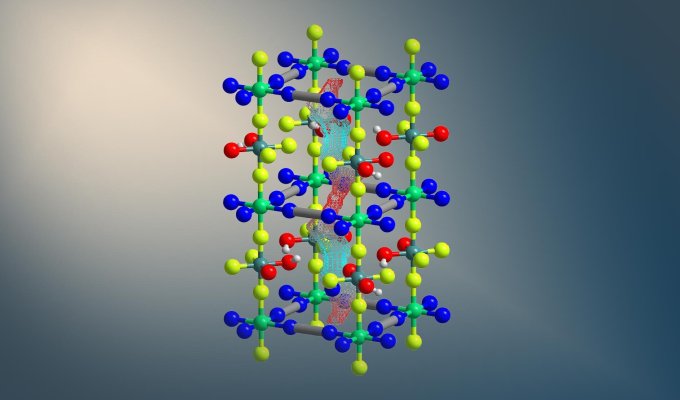
The novel sensor, which also has potential applications in health care and environmental monitoring, is based on the design principle of engineered interfacial chemistry. Funded by the National Science Foundation, the study by scientists at Oregon State and researchers in Taiwan was published in Applied Nano Materials, a journal of the American Chemical Society.
"Math circles are for kids who like math and for kids who want to like math, so it's possible that they just don't like the math they're doing in classes, and they'll enjoy this more,” said founder Nathan Gibson.
A spinning bicycle wheel can flip your expectations—and your sense of motion—on its head. At Oregon State, hands-on physics demonstrations are making complex concepts tangible while a new effort aims to ensure every student can experience them.
The honors general chemistry sequence is one of the longest-running honors offerings at OSU, and the three-term series gives participating students access to advanced laboratory experiences, faculty mentorship and a learning community that often shapes their academic paths in their very first year.
How statistics students can land jobs at top companies like AbbVie — the power of conferences at Oregon State University. Alumna Chenyang Duan (Ph.D. Statistics, ‘23) landed a full-time position as senior statistician at AbbVie, one of the top pharmaceutical companies in the world.
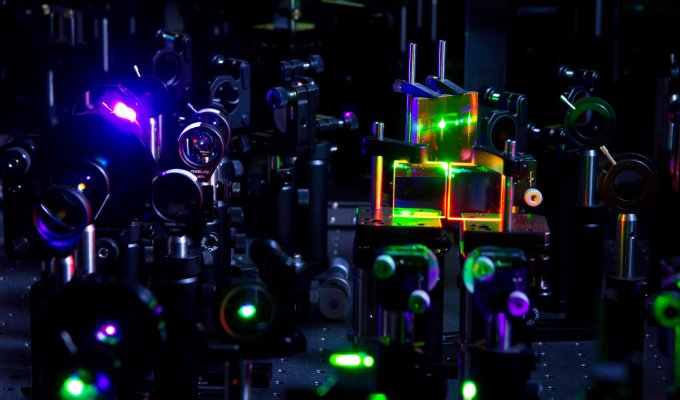
Physicist Oksana Ostroverkhova is studying organic semiconductors in her laboratory at Oregon State, exploring how light interacts with these materials and how those interactions can be harnessed to create new optoelectronic and photonic devices.
In the College of Science, materials scientist May Nyman and doctoral student Esther Julius are designing molecules that could help push the limits of traditional semiconductor manufacturing.