Anyone shopping for a new TV is likely to notice the term OLED, short for organic light-emitting diode. Unlike traditional inorganic semiconductors, OLED displays use thin, carbon-based organic semiconductor layers to emit light, delivering better picture quality, faster response times and thinner displays. That flexibility opens the door to new kinds of devices.
The materials that make that flexibility possible are chemically different from silicon and other high-performance inorganic semiconductors, which allows the materials to be printed on a variety of surfaces, bent or stretched, and manufactured at lower temperatures – capabilities impossible with inorganic alternatives.
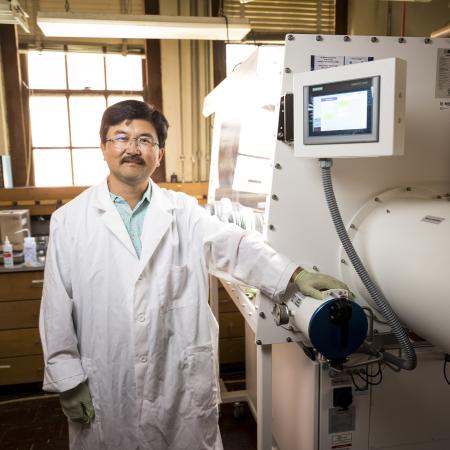
Physicist Oksana Ostroverkhova studies similar organic semiconductors in her laboratory at Oregon State, exploring how light interacts with these materials and how those interactions can be harnessed to create new optoelectronic and photonic devices.
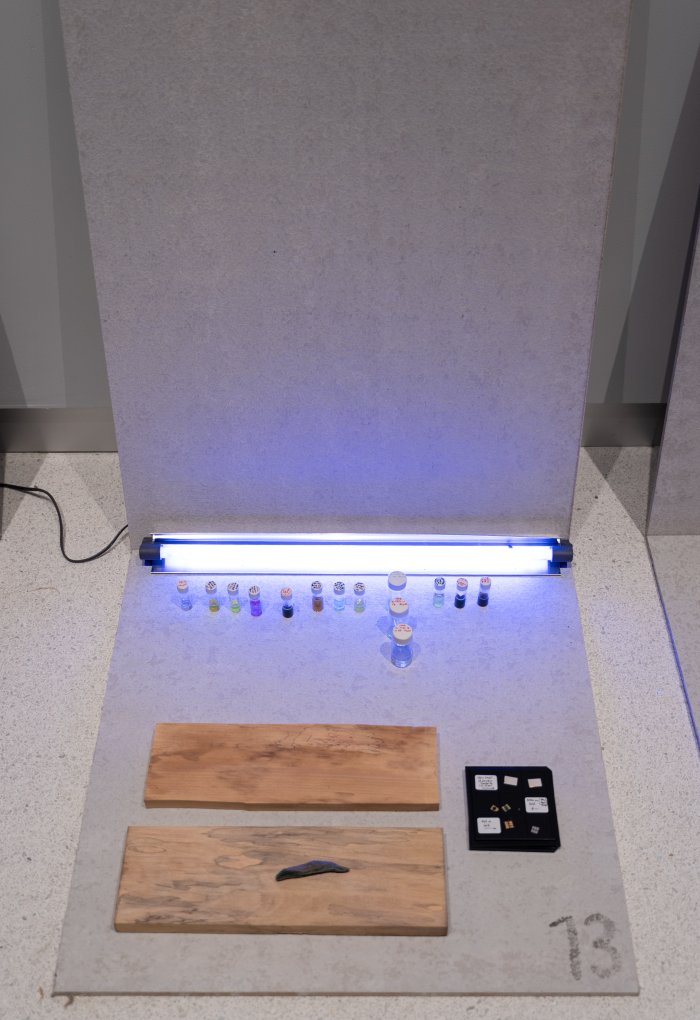
Her work extends beyond semiconductors to organic, carbon-based compounds — including pigments from fungi that can bend, guide light or change color in response to electricity. She is also advancing spintronics, an emerging approach that transmits information via spin waves rather than electric current.
From televisions to solar cells, the technologies she studies are already part of everyday life, even if most people don’t realize it.
“If we can make them sustainable, low-cost and wearable, that’s an added bonus,” Ostroverkhova said. “Right now, the performance of organic molecules isn’t as good as silicon, and the stability isn’t as high. We want to understand how we can make them perform better and what kinds of tricks we can use to improve them. They’re not going to replace silicon everywhere, but we want to find their niche.”
"You don’t want to have an expensive silicon sensor telling you whether your milk is still OK to use"
Focusing on the unique needs of specific products helps narrow down where organic versions can shine.
“For example, disposable sensors. You don’t want to have an expensive silicon sensor telling you whether your milk is still OK to use,” she said. “We are also thinking about toys and games and other products which shouldn’t need the high performance of silicon.”
Her team is also exploring how organic materials can complement, rather than compete with, traditional versions. “Can we use a carbon-based layer on a silicon solar cell and boost its performance?” she wonders.
The advantages of organic materials could be especially meaningful when it comes to sustainability. Although organic semiconductors don’t produce as many toxic substances during processing, they are still synthesized in laboratories. Ostroverkhova is working with collaborators to explore a natural alternative.