neuron spheroids on a chip designed to control the communication channels between the neuron cells. Color shows the firing activity of the cells.

From nanoplastics to quantum magnets: Four teams selected for SciRIS awards

By Hannah Ashton

Bo Sun's project focusing on cell based artificial intelligence is one of four SciRIS awards announced in the latest round of funding.

The College of Science’s Research and Innovation Seed (SciRIS) program is continuing to fuel bold, foundational, interdisciplinary and transdisciplinary science with the potential for high societal impact through collaborative research.

Four College of Science research teams have received funding during our Spring 2025 competition which is focused on selecting proposals submitted to our large awards categories; SciRIS Stage 2 and Stage 3.

This round of awards includes three projects funded through Stage 2 and one project through Stage 3, designed to help research teams in developing a proof of concept and in preparing proposals for large-scale external funding opportunities.

The funded projects span breakthroughs in environmental health, nanotechnology and quantum materials — from the impacts of nanoplastics on human health and the environment to the exploration of spin waves in quantum magnets.
Transforming Computing through Spintronics

SciRIS Stage 3 Award

Members of the physics, mathematics and chemistry departments are leading a collaborative project to design and control spin waves in quantum magnets for future spintronic technologies.

Spintronics is an emerging field that could transform computing by using magnons — tiny packets of spin waves — instead of electrons to process and store information. Because magnons do not produce resistive heating, they offer a path to faster, more energy-efficient devices. Yet, scientists still need to understand how these waves behave and how to manipulate them for practical applications.

The cross-disciplinary team includes Oksana Ostroverkhova from the Department of Physics, Axel Saenz Rodriguez from the Department of Mathematics and Chong Fang and Tim Zuehlsdorff from the Department of Chemistry.

The group will focus on two-dimensional magnetic materials with highly tunable properties. Using OSU’s ultrafast laser facility and advanced theoretical models, the researchers aim to uncover the physical mechanisms behind spin-wave propagation in emerging 2D magnetics and develop innovative ways to control spin-wave properties for next-generation spintronics.

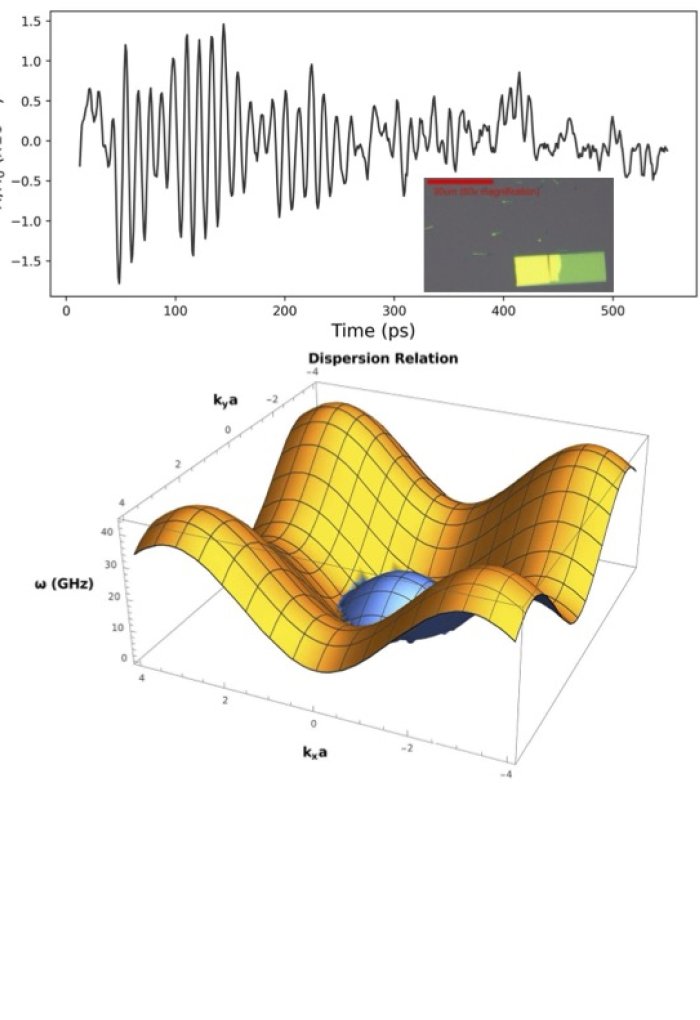
A graph showing oscillations.

(top) Oscillations in time-resolved reflectance due to laser pulse-launched spin waves in a two-dimensional magnet CrSBr (inset). (bottom) Quantum field theory prediction for spin wave dispersion in a cubic lattice.


Cell Based Artificial Intelligence

Stage 2 Award

Bo Sun is building a transdisciplinary team to address key challenges in cell-based artificial intelligence, a groundbreaking approach in the field of computation, leveraging the inherent processing capabilities of biological cells to perform complex calculations and tasks.

With modern science, these cells can be engineered to process information, sense environmental changes, and produce outputs in response to specific inputs, much like traditional computer systems. Cell-based computing is energy efficient, environmentally friendly and capable of self-replication and repair. Advancements in cell-based artificial intelligence may also help researchers better understand brain functions to treat neurological and cognitive disorders.

Collaborating with Patrick Chappell in the College of Veterinary Medicine and an external partner at the University of Pittsburgh, Sun aims to address key challenges in cell-based artificial intelligence using a transdisciplinary approach.

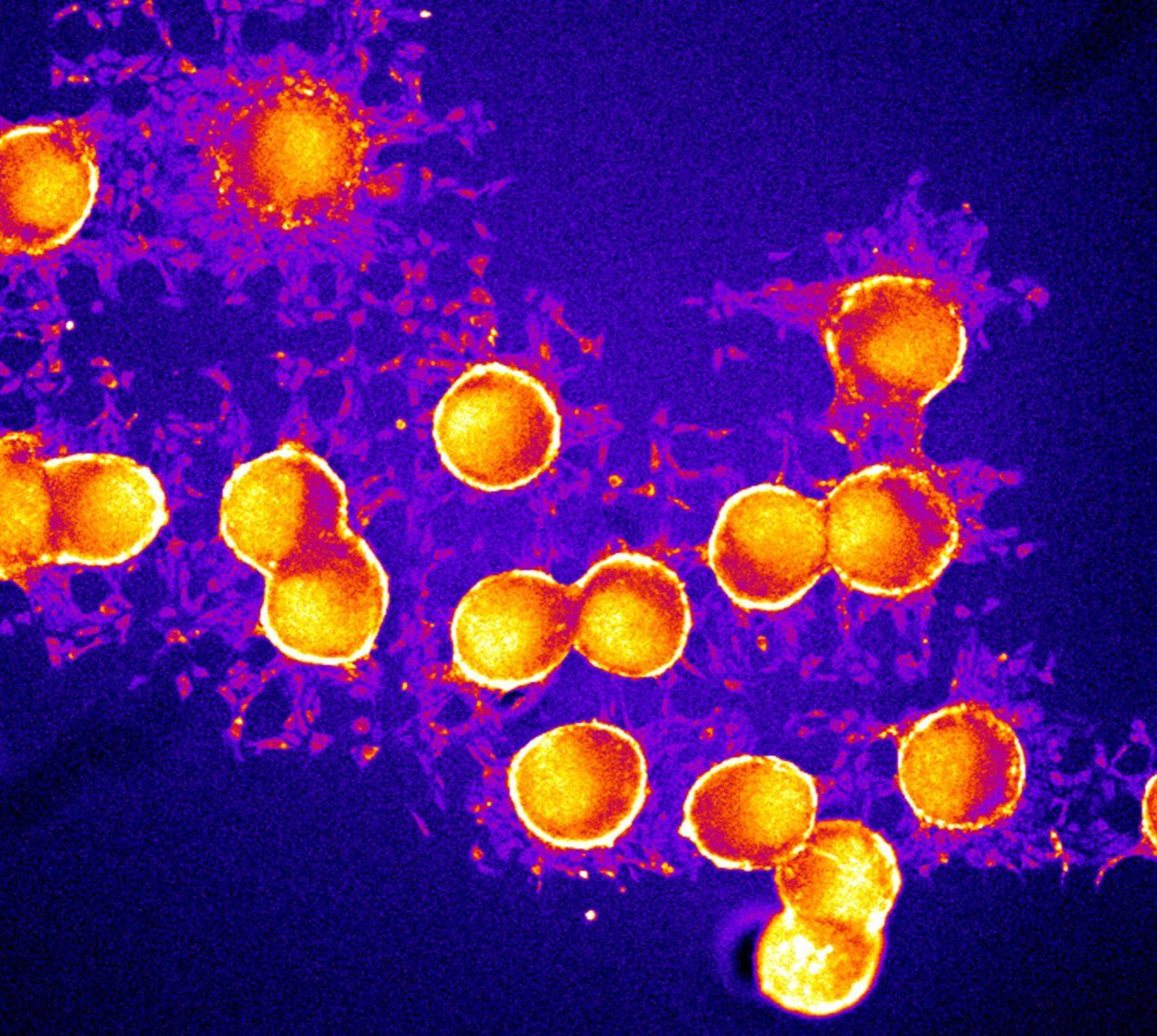
neuron spheroids on a chip designed to control the communication channels between the neuron cells. Color shows the firing activity of the cells.

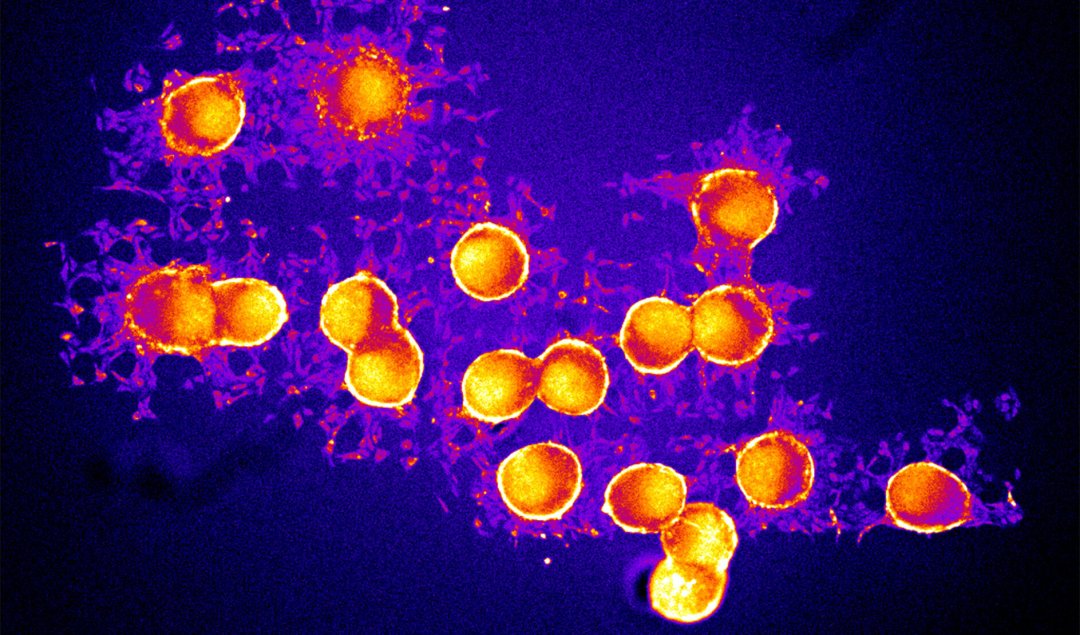
Neuron spheroids on a chip designed to control the communication channels between the neuron cells. Color shows the firing activity of the cells.

Using Machine Learning to Develop Single Pixel Spectrometers

Stage 2 Award

Experimental physicist Ethan Minot is leading a pioneering effort to reinvent how we measure light. His team is developing “single-pixel spectrometers,” ultra-compact devices built from atomically thin semiconductors that can provide detailed spectral data without the bulky components used in traditional systems.

Working with electrical engineering professor Xiao Fu, Minot’s group is pairing these next-generation photodetectors with advanced machine-learning algorithms. Their goal is to enable new uses of spectroscopy through these ultra-compact photodetectors.

Future applications could include drone-based crop monitoring and wearable sensors to record ambient environmental data and manage health and well-being. Together, the team will lower barriers to deploying spectroscopy, enabling new scientific discovery and commercial opportunities.

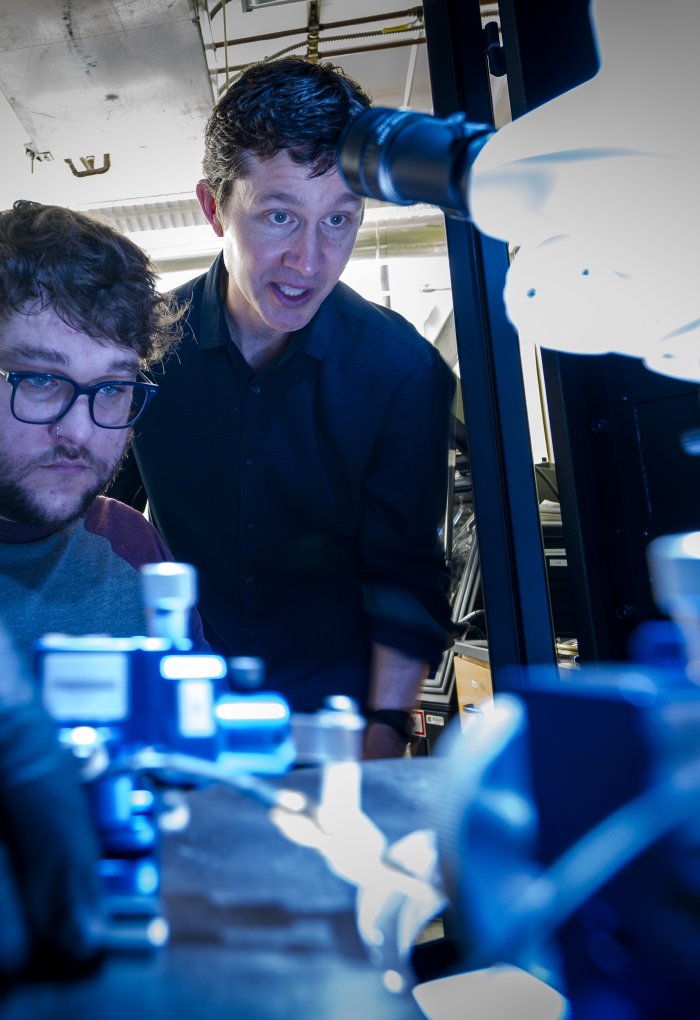
A professor shows a student how to use a piece of lab technology.

Physicist Ethan Minot and graduate student Brett Clark operate a machine to dry-transfer van der Waals materials. This process enables the precise peeling and stacking of single atomic layers, allowing researchers to create ultrathin, layered materials for advanced scientific exploration.

Labeling Nanoplastics

Stage 2 Award

Marilyn Mackiewicz, associate professor of chemistry, leads a transdisciplinary project developing a metal nanoparticle-based tracker for visually tracking nanoplastic uptake in cells and in embryonic zebrafish models.

Nanoplastics, created by the breakdown of larger plastic debris, are increasingly found in water, soil and even the human body. However, concerns about the health implications of widespread exposure to micro- and nanoplastics remain largely unanswered. While toxicity studies are being conducted, visualizing these plastics in living systems is difficult due to their small size and composition.

Along with a Stacey Harper, from the Colleges of Agricultural Sciences and Engineering, Mackiewicz plans to develop a customized, stable nanotracer designed to label nanoplastics ranging from just a few billionths of a meter, slightly wider than a DNA strand, to the size of microscopic bacteria.

This tool would allow researchers to increase their understanding of nanoplastics, nanoparticle-biological interactions, and their mechanisms of uptake and toxicity. This information would be valuable to a diverse array of experts, including scientists in bioengineering, imaging and analytics, as well as climate scientists, waste management professionals and toxicologists.

A woman holds a petridish.

Juliana Betancourt from the Mackiewicz Lab works with silver nanoparticles to track hidden nanoplastics.