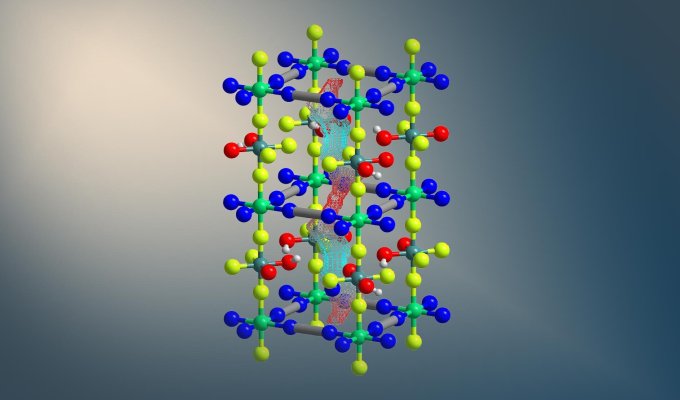
Published in Angewandte Chemie, the findings show that the new MOF, dubbed BVR-X, essentially directs water and carbon dioxide to different regions inside its pores, preventing water from blocking the places where carbon dioxide is captured.
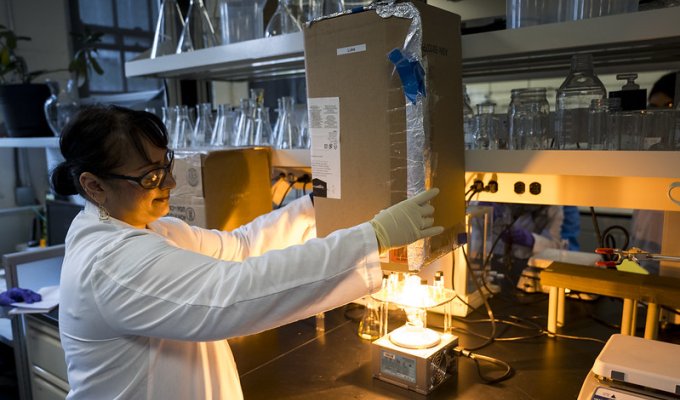
The research team used a water-based solution rather than a toxic organic solvent to separate zirconium, vital in nuclear power generation, from hafnium, which is crucial for both nuclear energy and semiconductor manufacturing.
Physicist Oksana Ostroverkhova is studying organic semiconductors in her laboratory at Oregon State, exploring how light interacts with these materials and how those interactions can be harnessed to create new optoelectronic and photonic devices.
In the College of Science, materials scientist May Nyman and doctoral student Esther Julius are designing molecules that could help push the limits of traditional semiconductor manufacturing.
On Thursday, January 15, the lecture, “A chemist’s journey: Unlocking new battery chemistries for a sustainable future,” will showcase his pioneering work developing safer, lower-cost, high-energy batteries by uncovering new chemistry principles. He will also share how he went from a small town in northeast China to Canada and then leading breakthroughs on a global scale.
Four College of Science research teams have been awarded funding through SciRIS Stage 2 and Stage 3 categories. Their projects span quantum materials, nanotechnology, spectroscopy, and cell-based computing — exploring spin waves for future computing, tracking nanoplastics in living systems, developing single-pixel spectrometers, and advancing cell-based artificial intelligence.
Oregon State’s 2025 Faculty Innovator Award celebrates Carter’s efforts to strengthen university innovation as his company, Valliscor, launches a major expansion in the Willamette Valley.
The work centers around crystalline, porous materials known as metal organic frameworks, often abbreviated as MOFs, and points toward next-generation materials that may end reliance on rare earth metals.
Nathan Clay-Ehart (‘24) had just graduated with a zoology degree when he boarded a plane to Aruba. The nine-day study abroad opportunity was his first chance to meet Oregon State classmates face-to-face after earning his degree entirely online.
Two College of Science faculty members — Maude David and Oksana Ostroverkhova — are helping bridge science and art in FutureFarmers: Silicon Forest, a thought-provoking new exhibition exploring the entangled relationship between ecology, technology and human agency.
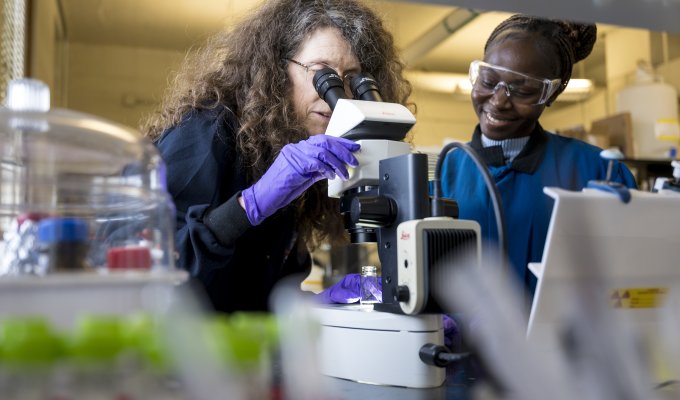
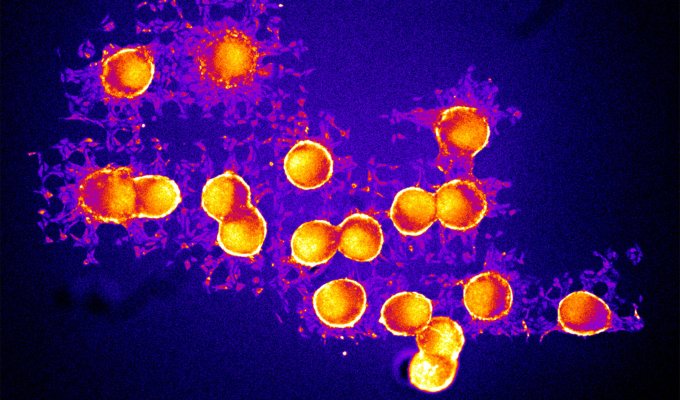
Marilyn Rampersad Mackiewicz, a materials scientist at Oregon State, led a study that used ultraviolet light to precisely control the shape and size of silver nanoparticles – and discovered a way to make them stable in light and oxygen, boosting their potential for medical, environmental and electronic applications.
The College of Science gathered on Feb. 26 to recognize and celebrate our high achieving faculty and staff at the 2025 Combined Awards Ceremony. The evening celebrated the very best in the College, from teaching, advising and research to inclusive excellence, administration and service. The following faculty and staff received awards in research.