The researchers used a molecule measuring technique to observe in a laboratory setting how certain metals can promote the protein clumping that leads to the blocked neural pathways associated with Alzheimer’s.
This year’s research honorees are advancing knowledge at the frontiers of statistics, microbiome science and astrophysics, with discoveries that shape public health, global policy and our understanding of the universe. Their scholarship reflects both international impact and a deep commitment to mentoring, collaboration and research excellence at Oregon State.
This year’s honorees are advancing inclusive excellence, strengthening research infrastructure and shaping policy and programs that impact thousands of students and faculty. Their leadership and sustained service are transforming systems across the college, from the classroom to statewide collaboration.
From inspiring graduate and undergraduate classrooms to transformative academic advising, this year’s awardees exemplify the very best of the College of Science. Their passion, rigor and commitment to student success continue to shape an inclusive, high-impact learning community.
This award is one of the state’s highest honors and recognizes scientific achievement, leadership, mentorship and contributions that advance science in Oregon and beyond. The recognition comes as Barbar is also leading a new $1.3 million NIH-funded training program to prepare the next generation of molecular biophysicists.
On Thursday, January 15, the lecture, “A chemist’s journey: Unlocking new battery chemistries for a sustainable future,” will showcase his pioneering work developing safer, lower-cost, high-energy batteries by uncovering new chemistry principles. He will also share how he went from a small town in northeast China to Canada and then leading breakthroughs on a global scale.
Oregon State’s 2025 Faculty Innovator Award celebrates Carter’s efforts to strengthen university innovation as his company, Valliscor, launches a major expansion in the Willamette Valley.
Meet a new member of the Department of Chemistry whose lab explores stimuli-responsive molecules for applications in drug delivery, tissue engineering and biomimicry.
Meet a two new members of the Department of Microbiology, one who studies how pathogens survive and cause disease and the other loves teaching students how molecular mechanisms connect to evolutionary patterns.
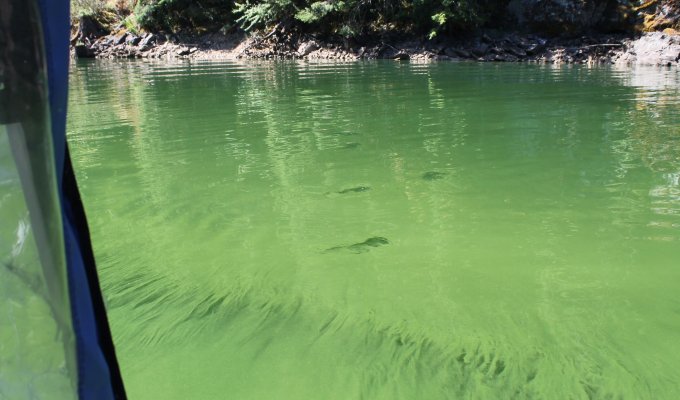
A long-term analysis shows that a major Oregon reservoir abruptly swapped one type of toxic algae for another midway through the 12-year study period, absent any obvious cause.