College of Science researchers have filed a patent application for a new carbon capture material that turns water in factory flue emissions from a problem into an advantage.
The study involving metal-organic frameworks, or MOFs, is important because industrial activities, among them burning fossil fuels for energy, account for a significant percentage of the carbon dioxide in the Earth’s atmosphere. In the United States, 30% of total greenhouse gas emissions are from industry, according to the Environmental Protection Agency.
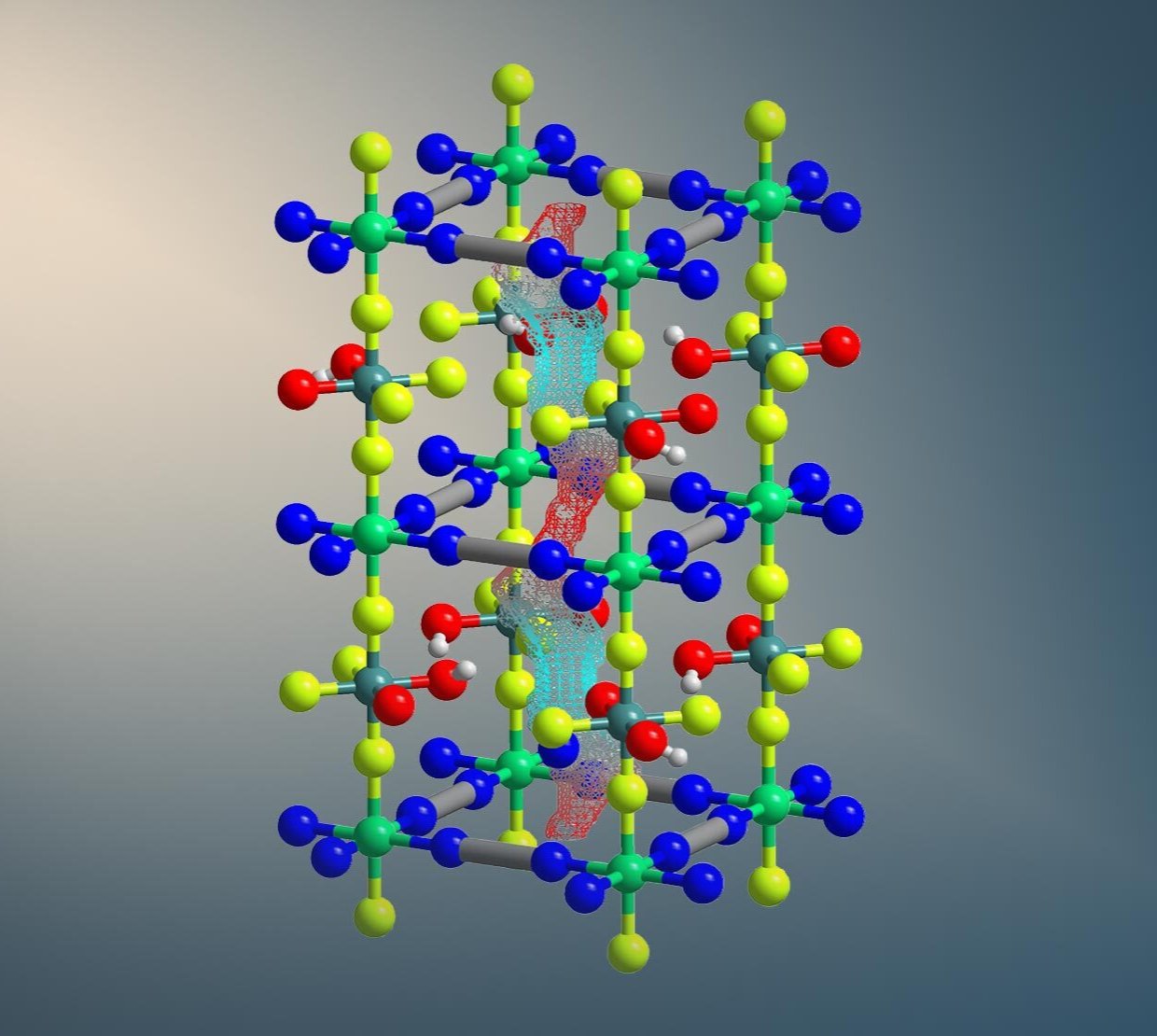
Published in Angewandte Chemie, the findings show that the new MOF, dubbed BVR-X, essentially directs water and carbon dioxide to different regions inside its pores, preventing water from blocking the places where carbon dioxide is captured.
“This internal organization helps the material work under conditions that more closely resemble real industrial emissions,” said Kyriakos Stylianou, professor of chemistry.
MOFs are crystalline materials made up of positively charged metal ions surrounded by organic “linker” molecules known as ligands. The metal ions make nodes that bind the linkers’ arms to form a repeating structure that looks something like a cage; the structure has nanosized pores that adsorb gases, similar to a sponge.
MOFs can be designed with a variety of components, which determine the MOF’s properties, and there are millions of possible MOFs, Stylianou said. More than 100,000 of them have been synthesized by chemistry researchers, and the properties of hundreds of thousands of others have been predicted.
“The capture of CO2 is critical for meeting net-zero emission targets,” said Stylianou, who directs OSU’s Materials Discovery Laboratory, known as the MaD Lab. “MOFs have shown a lot of promise because of their porosity and their structural versatility.”