Dee Denver and Emily Taylor from the Department of Integrative Biology led a laboratory study that showed the effect of a biotool marketed as Nemaslug on Pacific banana slugs.
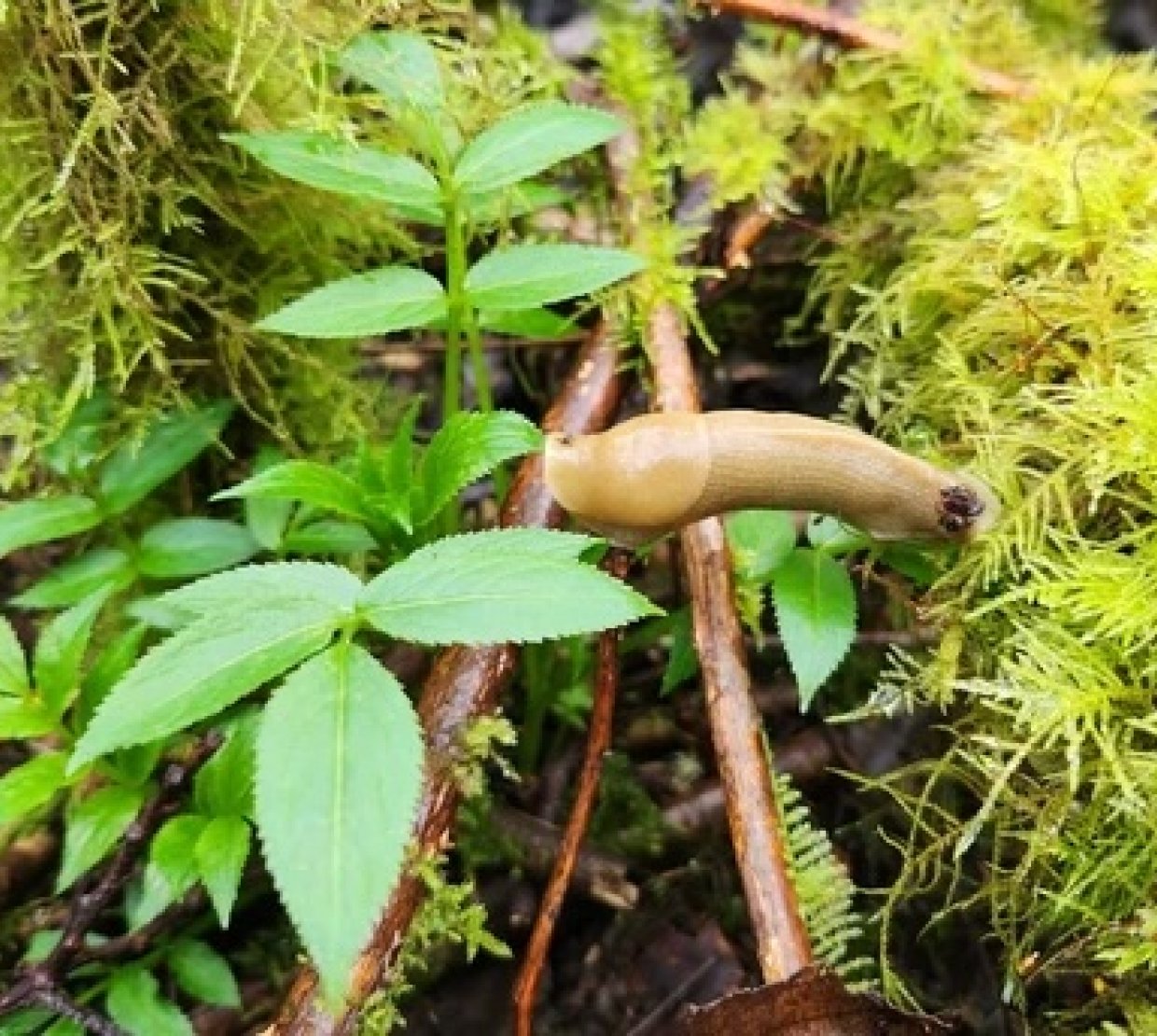
Photo by Casey Richart
Researchers at Oregon State University say a product used to control pest slugs on farms in multiple countries is harmful to an iconic West Coast slug and that more research is needed before the product is approved for use in the United States.
Dee Denver and Emily Taylor of the OSU College of Science led a laboratory study that showed the effect of a biotool marketed as Nemaslug on Pacific banana slugs.
Ranging from Alaska to California, the Pacific banana slug is the world’s second largest terrestrial slug, smaller only than Europe’s ash-black slug. Pacific banana slugs, one of several banana slug species within the genus Ariolimax, can reach lengths of nearly 10 inches.
Also among banana slugs’ claims to fame is being the mascot for athletic teams at the University of California, Santa Cruz.
“It’s a pretty iconic and charismatic species,” said Denver, adding with a smile, “at least for a slug.”
The original Nemaslug is based on the organism Pellioditis hermaphrodita, a species of tiny, parasitic worm known as a nematode. The parasites enter small openings in the bodies of pest slugs such as the gray field slug, fatally infect them, then reproduce inside the dead host and disperse in search of new hosts.
A follow-up product, Nemaslug 2.0, is based on a similar nematode, P. californica, which was discovered in 2013 as a species new to science.
Presently, Nemaslug is sold in Kenya (as Slugtech) and throughout Canada (as NemaNights) and Europe, and Nemaslug 2.0 is available in England, Scotland, Wales, Austria and Germany. Efforts are under way to bring the products to the U.S. as well, said Denver, professor of integrative biology.
“They are currently not permitted in the United States due to limited knowledge on their effects on non-target and native species and on their North American distribution,” Denver said.
In 2018, a paper by some of the same collaborators described the first report of P. hermaphrodita in Oregon, and in 2024, another paper was the first report of a P. californica in Washington state. Denver and co-author Rory McDonnell of the OSU College of Agricultural Sciences found P. californica in Oregon for the first time during a 2018-19 nematode survey.
How widespread either species is in the Northwest has not been determined, Denver said.
Denver, McDonnell, Taylor and their collaborators – biologists and crop and soil scientists at OSU – note that the history of biocontrol of agricultural pest snails and slugs is somewhat checkered, in part because unintended consequences for non-target species remain understudied and hard to predict.
One biocontrol effort involving the introduction of a non-native snail, they point out, led to the extinction of hundreds of native snail species on Hawai‘i and other Pacific islands.
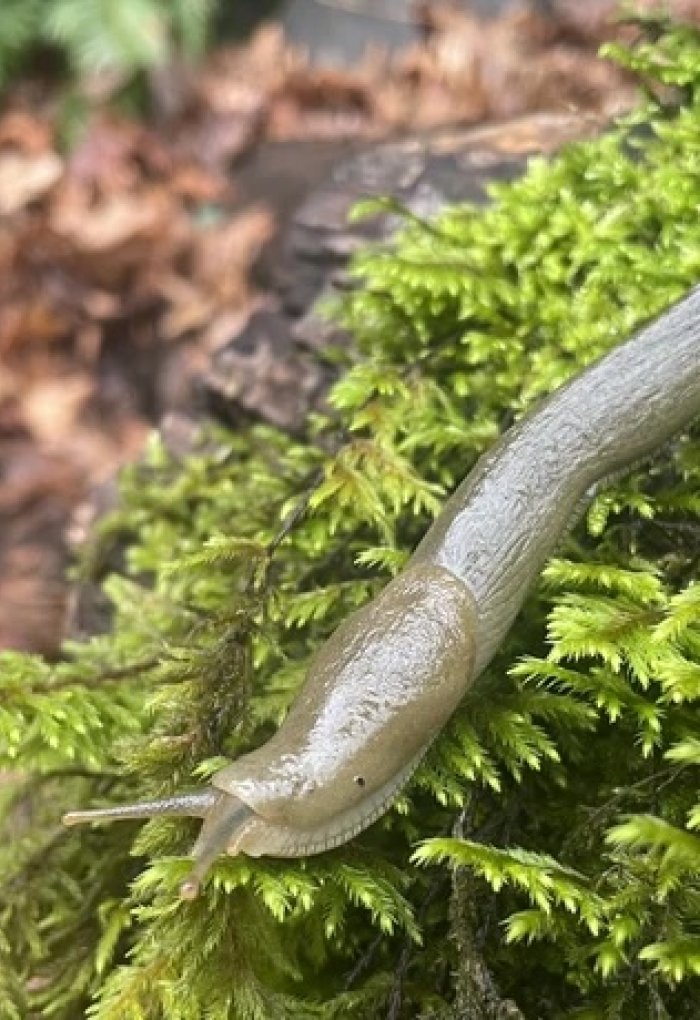
Photo by Emily Taylor.
Related Stories
Across the College


Faculty and Staff

