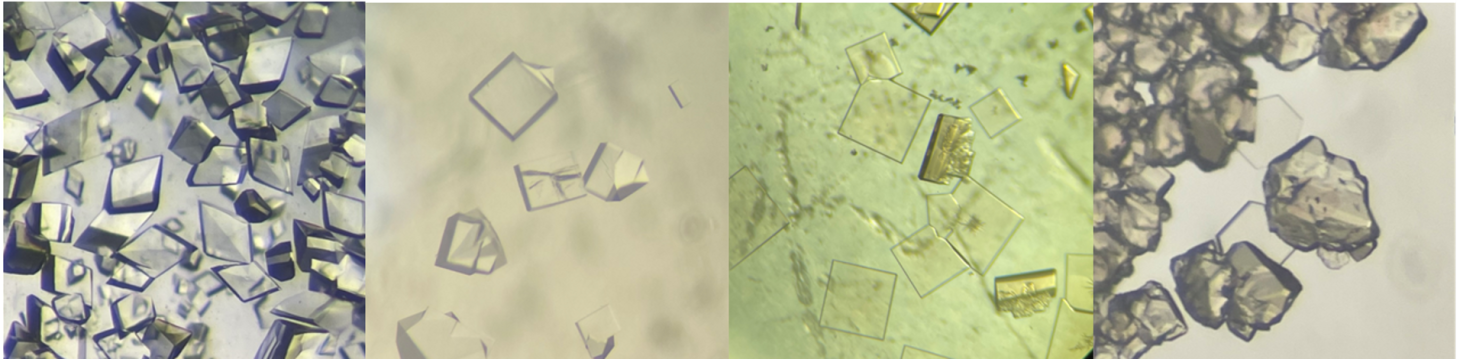
Department of Chemistry scientists have patented a better and more eco-friendly process for separating two metals that are critical in their pure forms for the semiconductor and atomic energy industries.
The research team used a water-based solution rather than a toxic organic solvent to separate zirconium, vital in nuclear power generation, from hafnium, which is crucial for both nuclear energy and semiconductor manufacturing.
The study led by graduate research assistant Alex Roseborough and May Nyman, professor of chemistry, explored one of the most difficult separations on the periodic table, made challenging by the elements’ similarity. They are so closely related that the mineral zirconium silicate (ZrSiO4), commonly known as zircon, almost always contains trace amounts of hafnium; zircon mining is the principal economic source of both elements.
But though they are nearly identical, separating one from the other at high purity is necessary for microelectronics and nuclear reactors. Only two facilities in the United States – ATI Specialty Alloys & Components in Albany, Oregon, and Westinghouse Electric in Ogden, Utah – are equipped to perform that separation on an industrial scale, each using millions of pounds of flammable organic solvent annually.