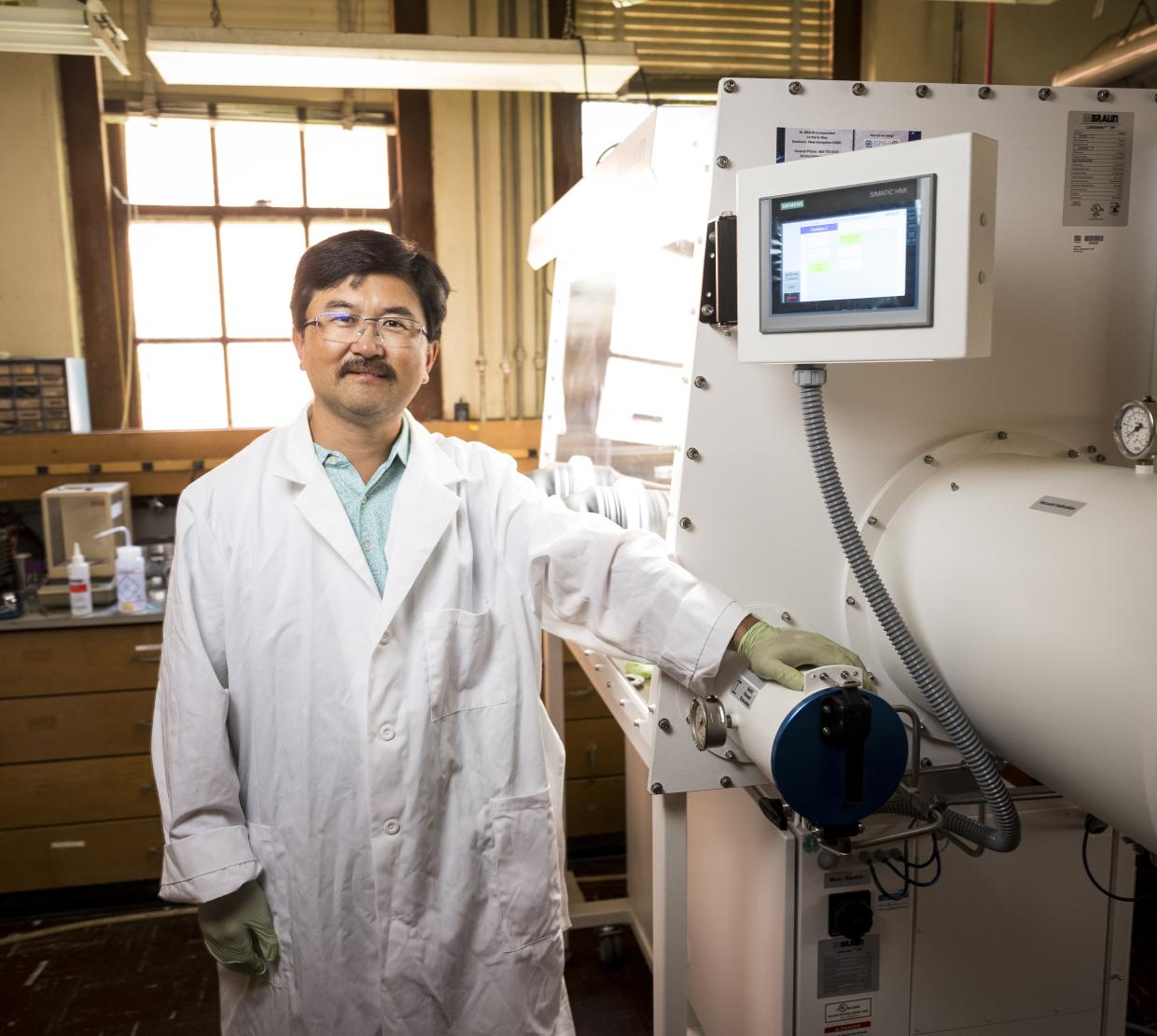
A man in a lab coat stands in front of a white machine used for battery science.

2026 Gilfillan Lecture: "A chemists journey: Unlocking new battery chemistries for a sustainable future"

By Hannah Ashton

Xiulei “David” Ji doesn’t follow assumptions in chemistry — he questions them. From challenging long-held beliefs about which ions move in batteries to developing entirely new battery chemistries, Ji has built a career proving that innovation often comes from asking, “Why not?”

A globally recognized leader in energy research, Ji won the 2025 F.A. Gilfillan Award for Distinguished Scholarship in Science, one of the College of Science’s highest honors. He will deliver the Gilfillan Memorial Lecture, highlighting pivotal moments in his career when confronting the status quo led to critical discoveries.

A highly cited researcher, Ji’s work ranks among the most influential in the world. With more than 48,000 citations and an H-index of 99, a measure of both the volume of his publications and how often they are cited by other scientists, Ji’s research has helped shape the direction of battery science for the past decade.

On Thursday, January 15, the lecture, “A chemist’s journey: Unlocking new battery chemistries for a sustainable future,” will showcase his pioneering work developing safer, lower-cost, high-energy batteries by uncovering new chemistry principles. He will also share how he went from a small town in northeast China to Canada and then leading breakthroughs on a global scale.

His story is a window into how chemistry can tackle some of the world’s most pressing energy challenges.
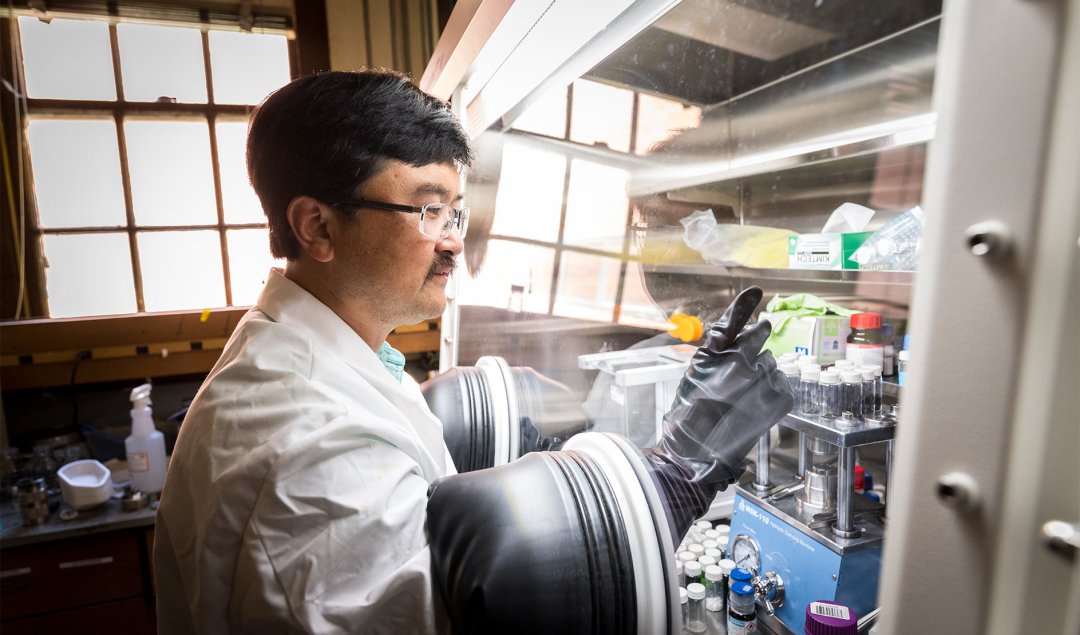
David Ji works in a chemistry lab wearing gloves in a tank.

Xiulei "David" Ji works to improve battery sustainability and energy storage.

Why this matters

As the demand for renewable energy and electric transportation grows, reliable energy storage is a critical bottleneck. Solar and wind are intermittent, power is only generated when the sun shines or wind blows, which makes it difficult to ensure a stable electricity supply. Traditional lithium-ion batteries are limited by cost, safety concerns and the scarcity of metals used, creating barriers to scaling renewable energy or fully electrifying transportation. “We need new ways to store energy efficiently and sustainably,” Ji said.

Ji’s lab approaches the problems from two complementary directions. One focus is to discover inherently safe and non-explosive battery chemistry designed to pair with solar and wind energy. The other centers on new scalable materials for high-energy batteries designed to meet the demands of electric transportation, a sector closer to the market where breakthroughs could have an immediate impact.

“Right now, we are limited to some of the battery chemistries that are 50 or so years old, and these conventional chemistries use scarce resources,” Ji said. “With all these layers added up, we are very motivated to address these challenges. We should invent new chemistries, bearing in mind early on the manufacturing cost, sustainability and environmental impact.”

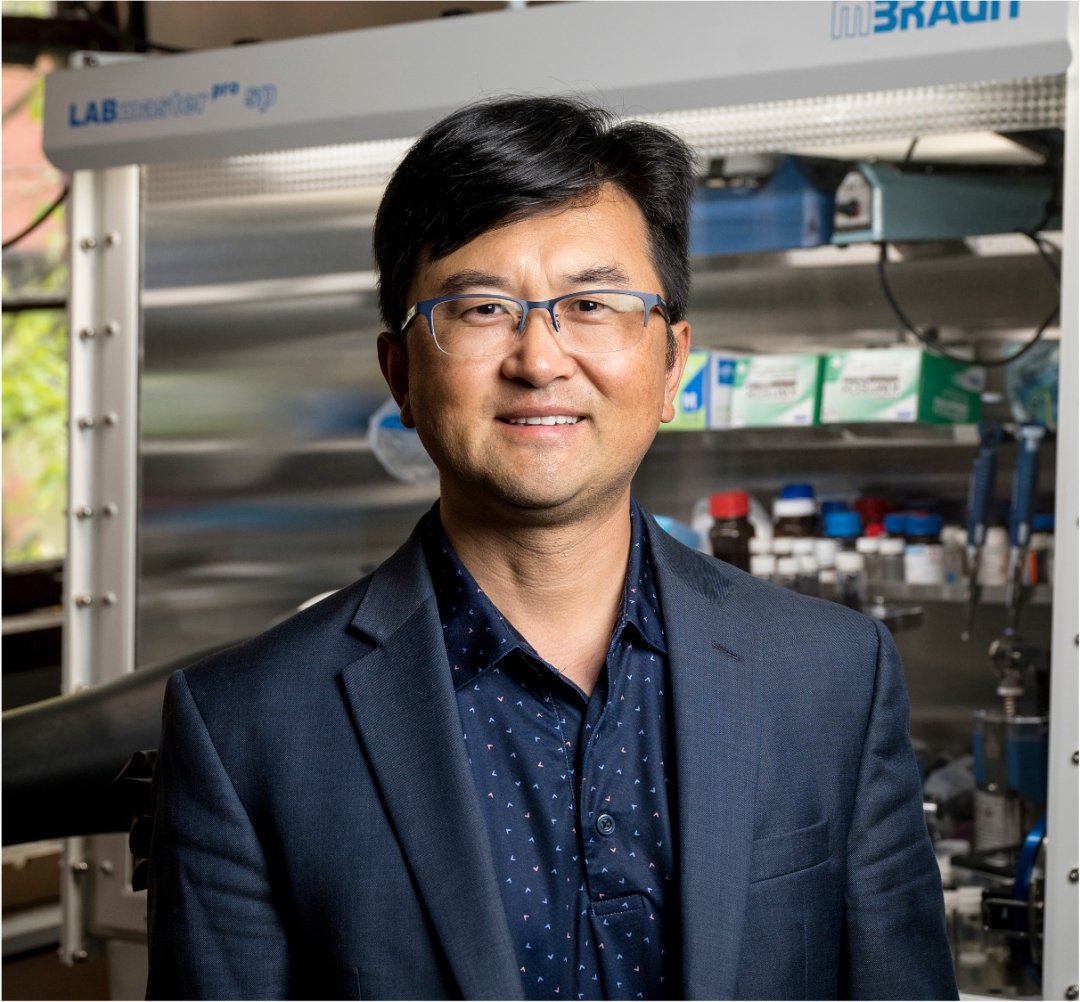
David Ji headshot wearing a blue suit.

Ji joined Oregon State in 2012, drawn by the university’s supportive environment for ambitious research and entrepreneurship, which meant he could pursue both fundamental science and real-world applications.

Breaking assumptions

The supportive environment in the College of Science has been critical to Ji’s willingness to challenge assumptions. From proving that potassium ions can be reversibly inserted into graphite, something long considered impossible, to exploring unconventional ions for batteries like ammonium, he emphasizes testing what others take for granted.

“I don’t like to follow any status quo assumptions. I enjoy challenging those. That’s something our lab has been practicing over the past 13 years,” he said.

"Again, we don’t take that for granted. We ask, ‘Why not?’”

Some of his recent work explores anions (negatively charged ions) for energy storage.

“People think anions are so big and you can’t get them moving, or you can’t oxidize them because they’re stable. Again, we don’t take that for granted. We ask, ‘Why not?’” Ji said. This led to the discovery that common anions, such as carbonate and sulfate, can be transformed to lose electrons. His battery chemistry is uniquely positioned to enable next-generation battery technology.

That same philosophy shapes how Ji mentors students in his lab. He emphasizes curiosity, collaboration and the freedom to question assumptions, creating an environment where students are encouraged to take intellectual risks. Most of his group members have gone on to careers in academia, industry and national laboratories, extending the impact of his work far beyond his own publications.

A journey across continents

Ji’s path to Oregon spans the globe. He grew up in a small town in northeast China, where access to laboratories was nonexistent. He pursued chemistry because of a passion for discovery and a nationally renowned program available in his home province. His early experience in a laboratory studying fluorescent nanocrystals inspired him to pursue research at a higher level. Working with an ambitious Ph.D. student mentor showed him how far research could take him if he was ambitious and determined.

After earning his undergraduate degree in China, Ji opted to study in Canada and received his master’s and Ph.D. from the University of Waterloo.

The Canadian government then awarded him a postdoc fellowship that allowed him to conduct semi-independent research at the University of California, Santa Barbara. “I think the most important thing I learned during that time was their way of collaborating. UCSB has a strong culture of collaboration and interdisciplinary research,” he said.

In 2012, he joined Oregon State, drawn by the university’s supportive environment for ambitious research and entrepreneurship, which meant he could pursue both fundamental science and real-world applications.

Since then, Ji has been honored with the prestigious NSF CAREER award and multiple DOE grants, speaking to the distinguished quality of his work, which pursues practical solutions to some of society’s most pressing challenges.

“At OSU, if you have a goal and you’re ambitious, you are allowed to explore it,” he said.

For Ji, progress in science has never come from following a prescribed path. It comes from questioning assumptions, testing the improbable and refusing to accept “impossible” as an answer. That mindset is what he hopes to share through his Gilfillan lecture and with the next generation of scientists.